Overview: Selecting the correct internal squeaker material dictates the physical longevity and chemical compliance of wholesale TPR dog toys. This article contrasts Thermoplastic Rubber (TPR) and Polyvinyl Chloride (PVC) components, examining their durometer ratings, phthalate concentrations, and sonic welding compatibility during factory-scale production.
Last quarter, a European buyer approached us after a severe product failure. Their previous supplier utilized standard PVC squeakers inside heavy-duty chewers. These internal units shattered under merely 25 lbs of bite force during cold-weather transit, leaking plasticizers. Resolving these material incompatibilities is a daily procedure in our workshop.
Material Deformation Under Compression Testing
During our tensile testing procedures, we subject internal sound mechanisms to cyclic compression evaluations. We consistently observe that standard PVC units suffer fatigue cracking along the injection seam after approximately 5,000 compressions. This structural degradation mutes the acoustic mechanism prematurely.
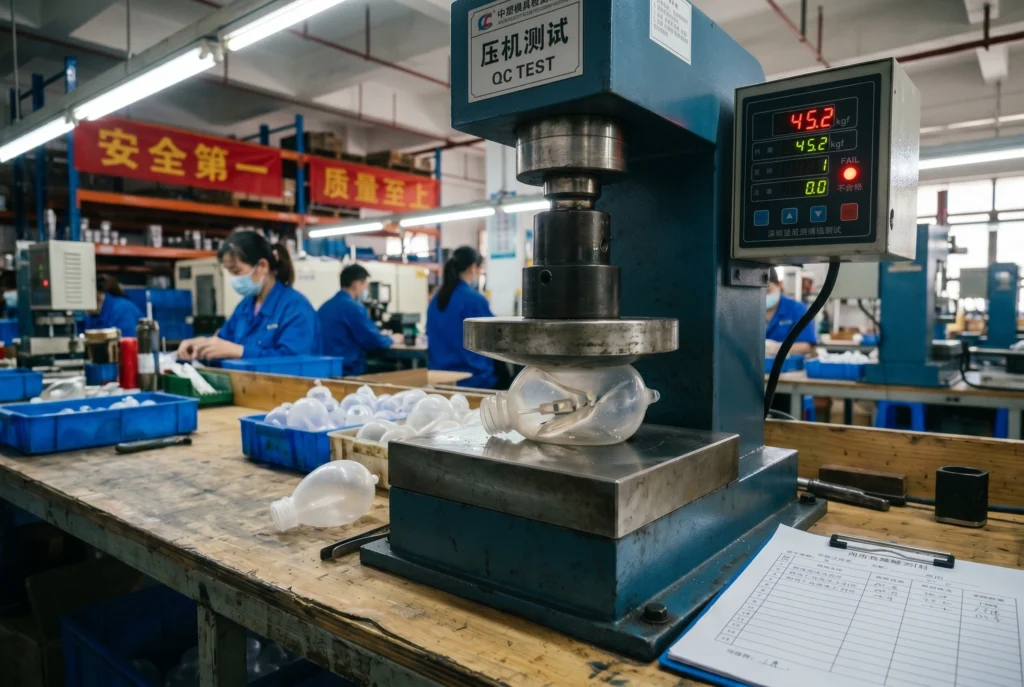
Thermoplastic rubber exhibits superior rebound elasticity. When manufacturing wholesale TPR dog toys, utilizing a matching TPR internal squeaker ensures the component returns to its original durometer state even after severe compression. This material synergy extends the functional lifecycle of the acoustic chamber.
Chemical Compliance Across Global Markets
Sourcing materials for the USA and European regions means chemical compliance is non-negotiable. Standard PVC requires heavy plasticizers to maintain ambient flexibility. These chemical softeners routinely trigger compliance failures during independent phthalate testing protocols.
Our factory relies on strict incoming material audits. We specify non-toxic, medical-grade TPR for internal mechanisms to eliminate the risk of heavy metal or phthalate leaching. This rigorous material selection ensures our custom dog toy manufacturing passes stringent chemical screening without friction.
To satisfy the rigorous physical safety benchmarks mandated by international buyers, we align our internal bite force testing directly with published ASTM F963 mechanical standards.
Manufacturing Integration and Sonic Welding Compatibility
Binding the squeaker housing to the external shell requires precise thermal control on the production line. TPR shares distinct polymer chain similarities with the outer casing. This chemical compatibility allows for a superior hermetic seal when our operators utilize ultrasonic welding equipment.
Conversely, bonding a PVC mechanism inside a non-PVC shell introduces structural weakness. The differing melting points complicate thermal adhesion. Understanding these polymer relationships is a core part of our manufacturing capability when structuring heavy-duty chew products for commercial retail brands.
Technical B2B Frequently Asked Questions
What is the unit cost variance between TPR and PVC squeaker mechanisms?
PVC generally presents a lower upfront procurement cost due to mature, high-volume extrusion processes. However, this marginal saving is frequently offset by higher defect rates during final quality control checks. Incorporating TPR sound mechanisms requires a slightly higher initial capital outlay. We advise procurement teams to calculate total landed cost, factoring in the reduced risk of shipment rejections and customs holds.
Can modified PVC components pass European chemical safety regulations?
Yes, factories can source low-phthalate or phthalate-free PVC blends. Achieving this requires strict control over the plasticizer additives during the compounding phase of the raw material. Despite this availability, cross-contamination remains a high risk in unregulated facilities. We strictly isolate these polymers during production to guarantee the integrity of our compliance documentation.
How does extreme cold affect the acoustic performance of these materials?
Temperature fluctuations severely impact polymer flexibility. Standard PVC experiences a noticeable drop in its durometer rating below freezing, becoming brittle and prone to structural shattering. TPR retains its elastomeric properties across a much broader thermal gradient. This thermal stability ensures the internal air chamber functions properly, regardless of regional shipping climates.
Selecting the precise acoustic mechanism directly impacts the durability and compliance of your commercial pet product lines. For technical data sheets or to request a material swatch book for your upcoming production run, we encourage you to connect with our facility. Please contact our wholesale team to discuss engineering requirements and bulk pricing configurations.