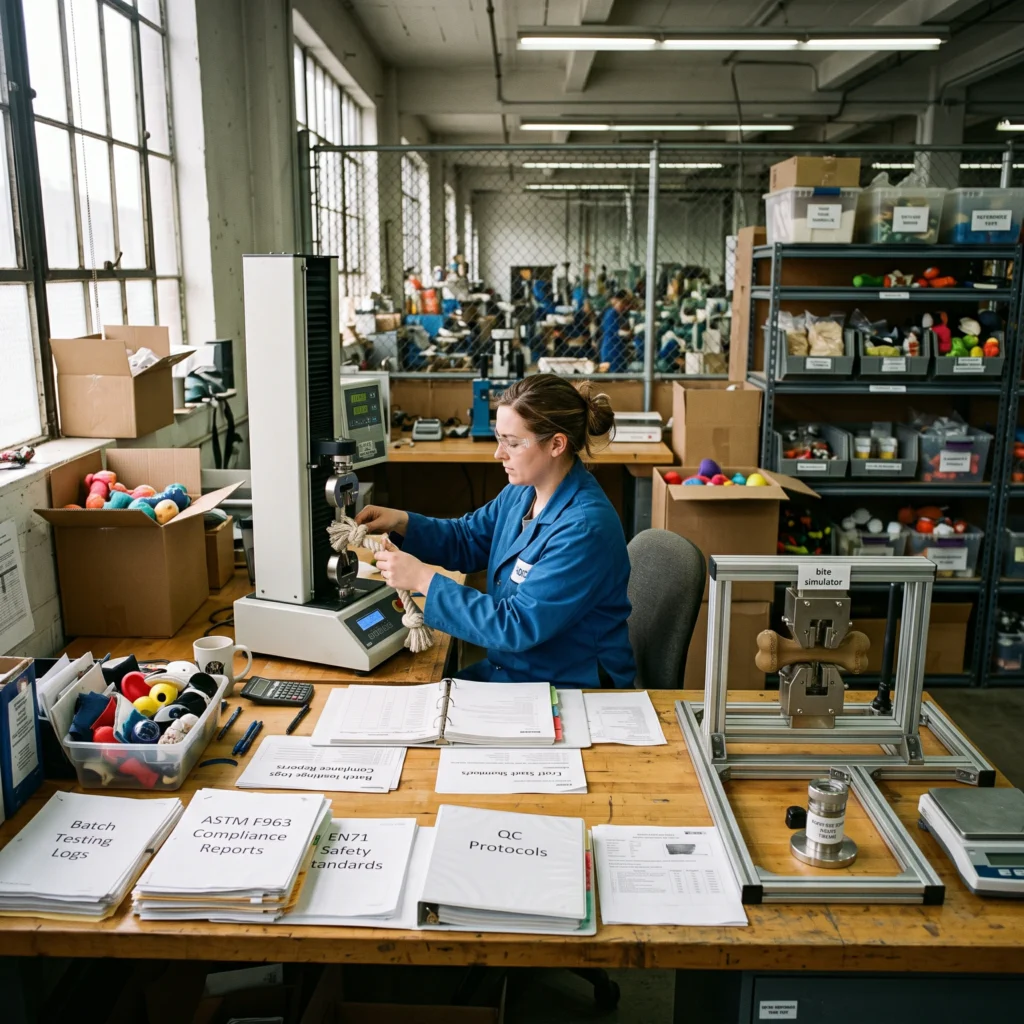
Overview For US-bound shipments, wholesale pet toy compliance with ASTM F963 and CPSIA regulations prevents costly customs holds and product recalls. This technical framework details essential chemical restrictions, mechanical hazard thresholds, and heavy metal limits required to secure third-party certification and maintain seamless supply chain operations.
Last quarter, an international sourcing agent approached us after their previous shipment of 15,000 squeaky plush toys was seized by US Customs and Border Protection. The outgoing supplier failed to provide valid CPSIA-compliant third-party lab reports demonstrating acceptable lead and phthalate levels. The resulting container hold cost the brand their entire Q4 retail launch window.
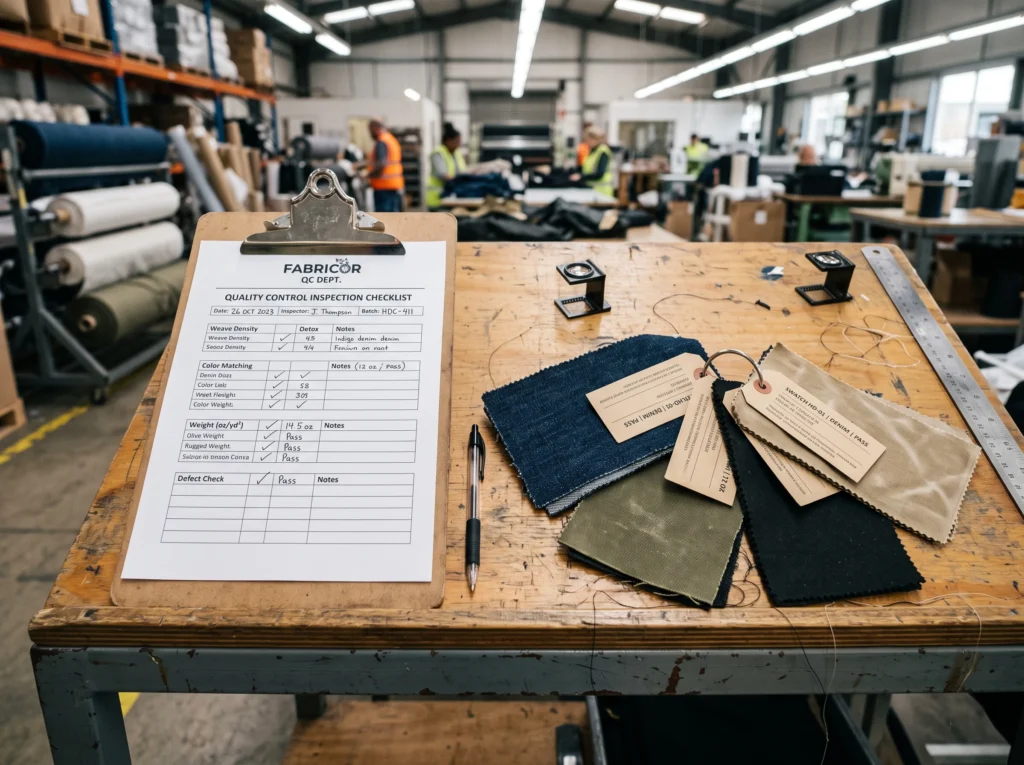
Navigating the intersection of ASTM F963 (Standard Consumer Safety Specification for Toy Safety) and CPSIA (Consumer Product Safety Improvement Act) requires strict laboratory protocols. As a specialized pet toy safety standards factory, our QA team integrates these regulatory demands directly into the raw material procurement and assembly phases.
Mechanical Hazard Mitigation and Structural Integrity
In our testing lab, structural failure in plush goods is evaluated as a severe choking hazard. While dog toys are technically exempt from mandatory children’s toy regulations, major US retailers require ASTM F963 mechanical testing protocols as a baseline liability defense before issuing purchase orders.
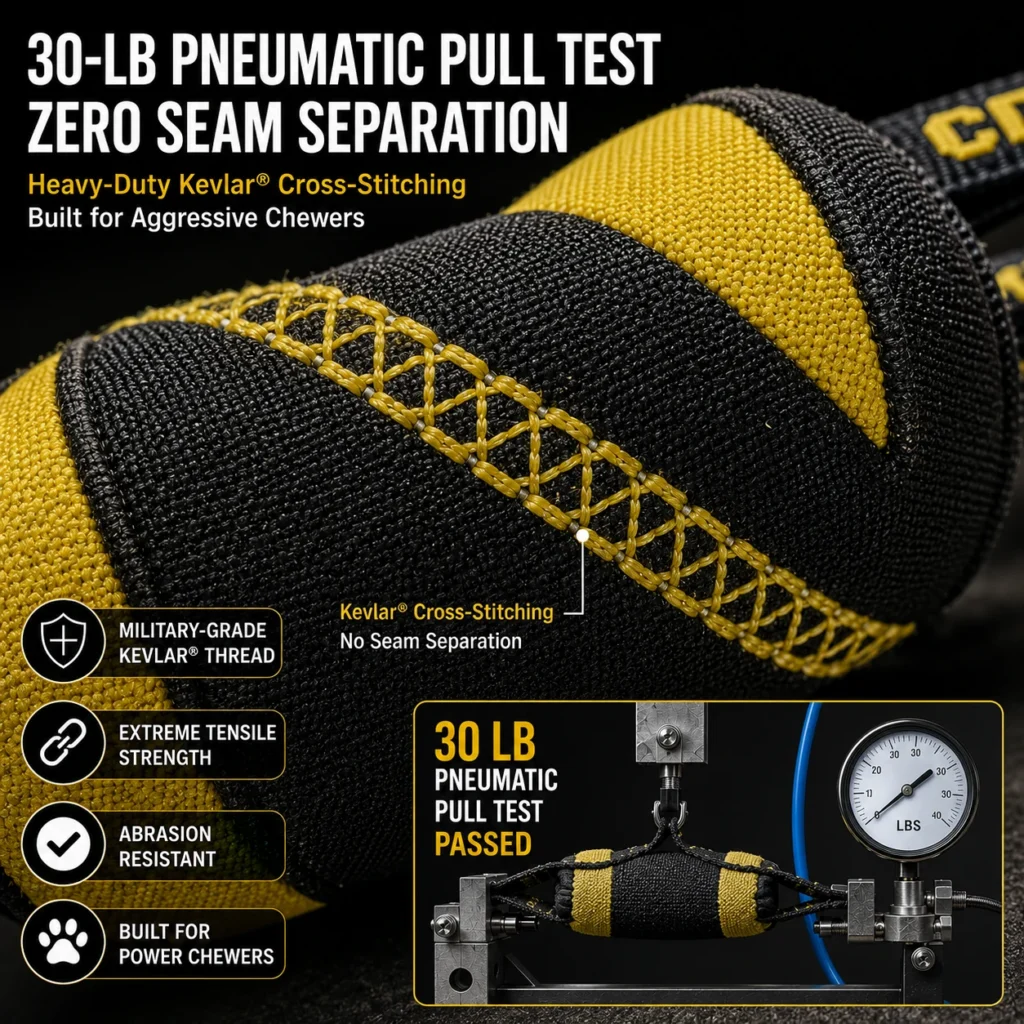
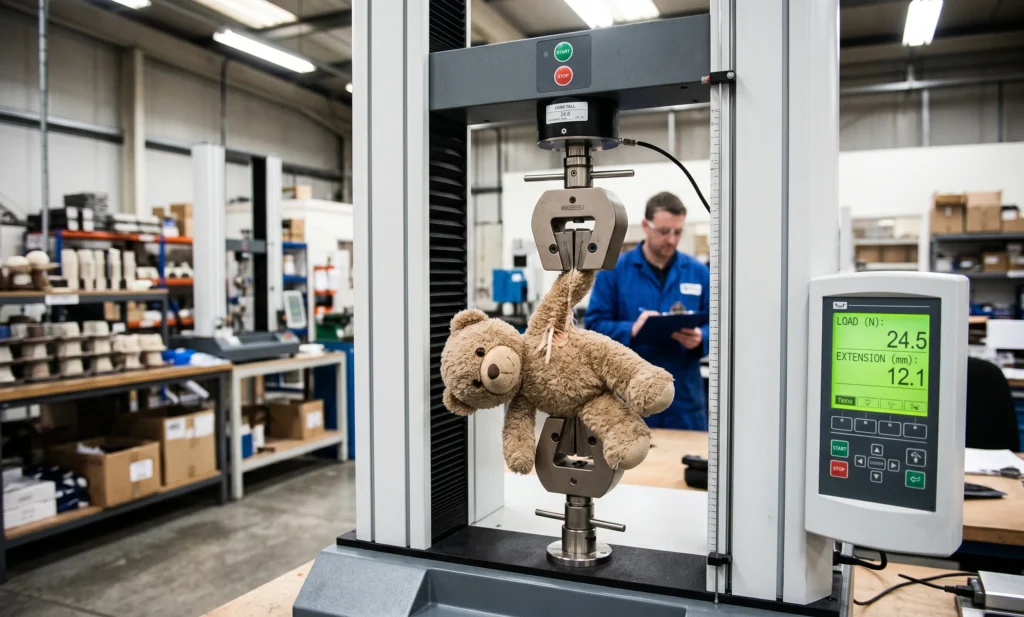
During our destructive tensile testing, we subject all primary seams and sewn-in appendages to a sustained 30-lb pull force. We engineer our custom plush dog toys using reinforced double-stitching and high-denier backing fabrics to consistently exceed these mechanical stress thresholds before mass production begins.
Chemical Compliance and Heavy Metal Limits
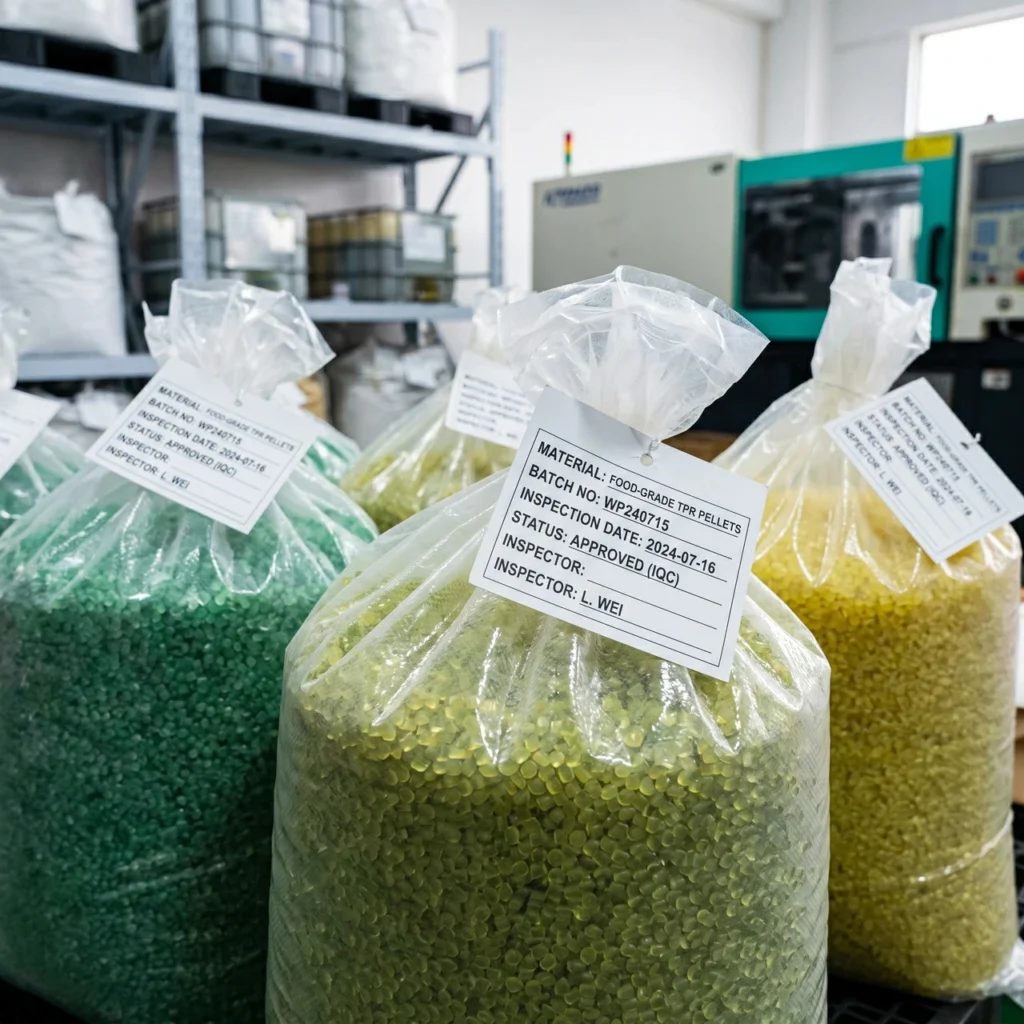
Surface coatings and accessible synthetic materials must comply with strict chemical regulations. CPSIA mandates that total lead content in accessible parts cannot exceed 100 parts per million (ppm). Furthermore, specified phthalates (including DEHP, DBP, and BBP) must remain below concentrations of 0.1%.
Our QC inspectors use handheld XRF analyzers on the factory floor for preliminary heavy metal screening. However, formal certification requires submitting our pre-production samples to CPSC-accepted third-party laboratories to verify compliance with heavy metal limits and issue an official General Certificate of Conformity (GCC).
Foreign Object Detection and Final AQL Inspection
Metallic contamination during the sewing process represents a critical manufacturing failure. To eliminate this risk, we mandate strict needle control logs and process every completed unit through a conveyor-belt metal detector calibrated to a 1.2mm ferrous sensitivity limit.
Final shipment authorization is governed by standard industrial sampling. Operating under ISO 2859-1, we enforce AQL 2.5 for major defects and 4.0 for minor defects. Our stringent factory quality control protocols ensure that dimensional variances, seam integrity, and material safety consistently align with your procurement specifications.
Technical FAQs
Does the FDA regulate plush dog toys imported into the US?
No, the FDA does not have regulatory authority over pet toys, nor does the CPSC technically mandate children’s toy standards for pet products under federal law. However, major retail chains and specialized distributors enforce ASTM F963 and CPSIA compliance as private contractual requirements to mitigate product liability regarding hazardous materials and severe choking risks.
What is the required sampling rate for third-party lab testing?
Standard compliance protocols require submitting one composite sample set per material color and type used in the final production run to an accredited facility. If a plush toy utilizes four different dyed fabrics and one plastic squeaker, each distinct material component must be tested independently for heavy metals and phthalates to generate a valid compliance report.
How do you prevent dye transfer in plush pet products?
Colorfastness is evaluated during the pre-production phase using standard rubbing and artificial saliva simulation tests to ensure dyes do not leach when exposed to severe moisture. We exclusively source textiles from standardized dye houses that provide chemical safety data sheets, ensuring all raw materials meet heavy metal restrictions prior to factory assembly.
Ending
Securing your supply chain requires a manufacturing partner fluent in complex regulatory standards. Do not risk customs rejections or retail non-compliance due to undocumented raw materials or structural failures. To discuss your upcoming wholesale production run or to request our standard AQL and lab testing documentation, please contact our compliance and wholesale team today to streamline your manufacturing process.