Overview: To withstand a 238-PSI canine bite force, our heavy-duty toys require high-density textiles that frequently fracture industrial sewing needles during assembly. Consequently, our mandatory needle detection protocol utilizes a dual-sensor magnetic flux conveyor to isolate ferrous fragments down to 0.8mm, ensuring absolute baseline safety before any tensile load testing begins.
The Mechanical Challenge: Bite Force Dynamics vs. Substrate Density
The structural integrity of a pet toy is not a matter of aesthetics; it is a strict calculation of applied mechanical physics. When engineering a safe plush dog toy, our initial computational models must account for the immense localized pressure exerted by canine dentition. The bite force of an average German Shepherd routinely exceeds 238 PSI (Pounds per Square Inch), while larger molosser breeds can generate concussive shear forces upwards of 550 PSI.
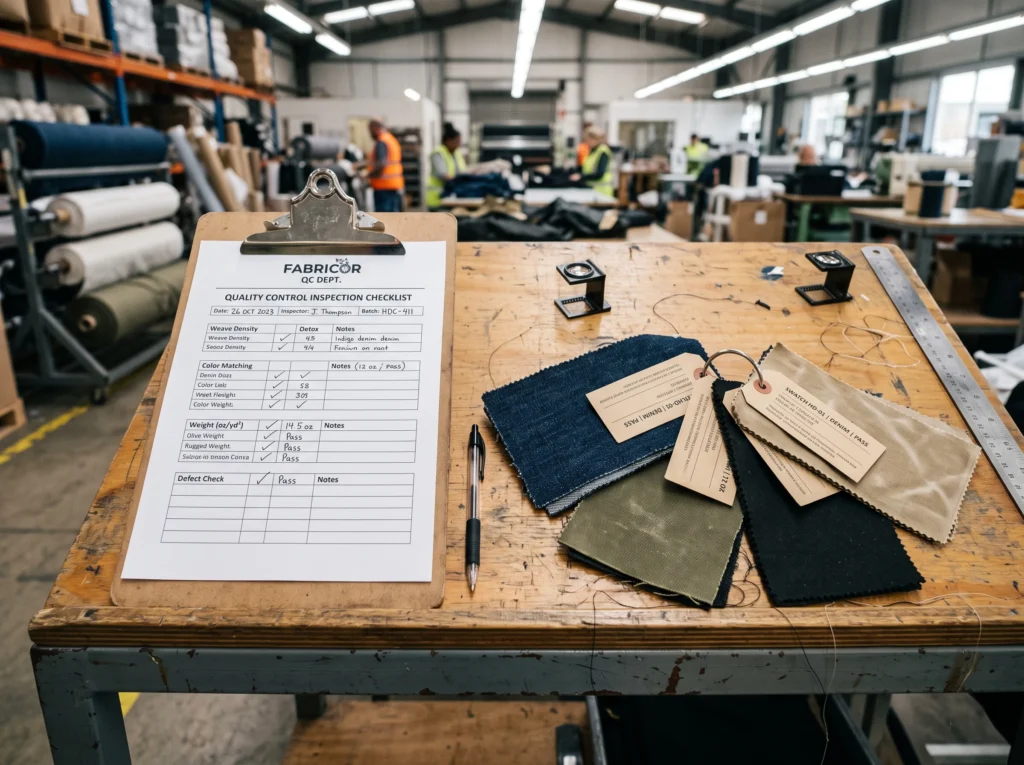
When a standard 210D or even 420D Oxford cloth is subjected to this magnitude of localized point-load stress, the woven matrix undergoes immediate catastrophic shear failure. The threads separate, the fabric yields, and the internal components are exposed within seconds. To counter this, our laboratory engineers specify highly aggressive, multi-layer composite substrates. We utilize a proprietary lamination of 1000D ballistic-grade nylon, fused with a non-woven reinforced mesh backing, and bound entirely by Kevlar-threaded, double-stitched cross-seams.
However, resolving the exterior mechanical failure introduces a severe manufacturing complication on the assembly line: needle fracture. Penetrating multiple layers of Kevlar-reinforced 1000D nylon requires extreme mechanical force. This exact engineering tradeoff is precisely why a rigorous needle detection protocol is an absolute, non-negotiable mandate for any heavy-duty dog toys wholesale production run.
Analyzing Needle Fracture Mechanics During Industrial Stitching
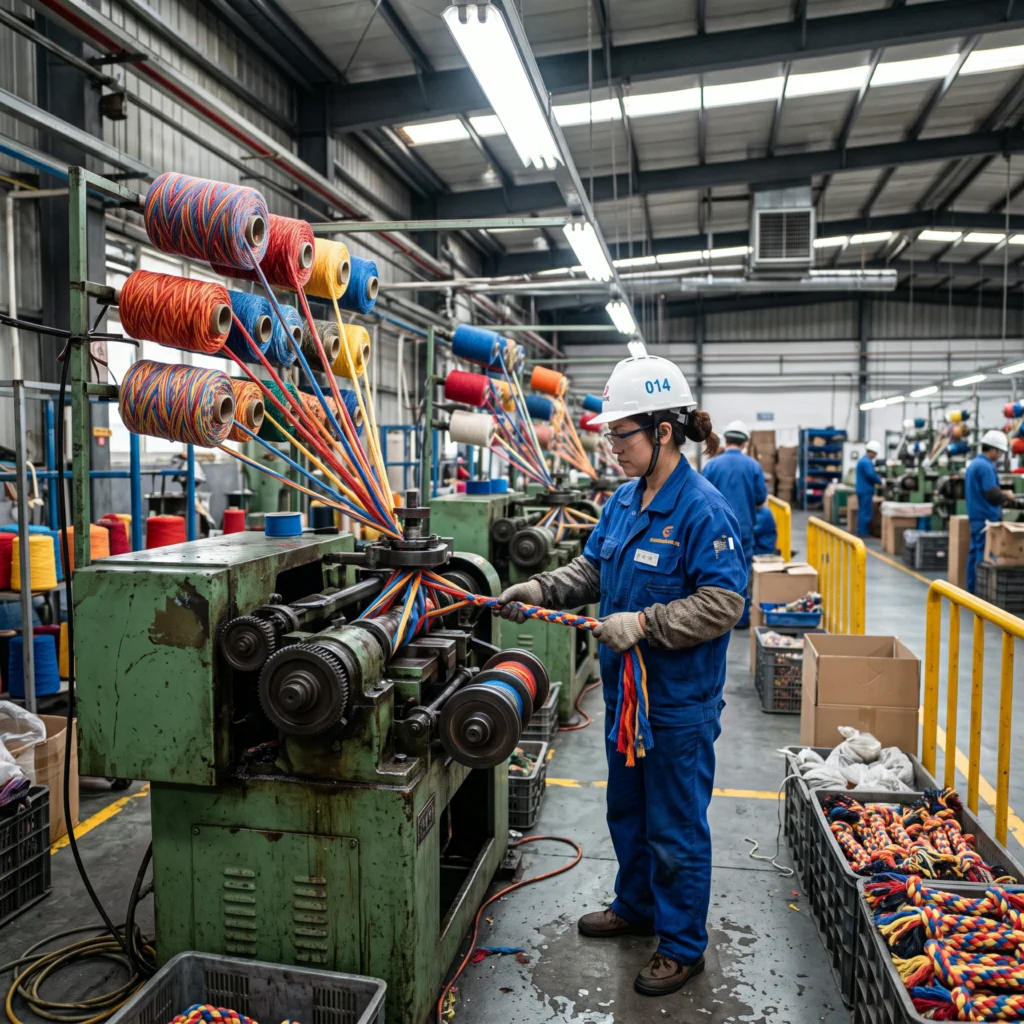
In our manufacturing facility, the assembly of high-density pet products requires industrial automated sewing machinery operating at speeds exceeding 3,500 SPM (Stitches Per Minute). At this velocity, the kinetic energy transferred from the needle shaft into the high-denier textile matrix generates immense thermal friction. Thermocouple readings from our assembly floor indicate that needle temperatures can transiently spike above 280°C during continuous heavy-duty cycles.
This extreme thermal cycling, combined with the rapid deceleration/acceleration of the needle striking dense, laminated nodes (such as overlapping seam junctions or internal TPR squeaker housings), introduces micro-fractures into the chromium-plated carbon steel needle shafts.
As the needle continuously cycles through the thick substrate, these microscopic stress fractures propagate. Eventually, the mechanical deflection exceeds the tensile yield strength of the steel, resulting in a sudden shear break. When a needle snaps at 3,500 SPM, the fragmented tip—often measuring barely 1.5mm to 3mm in length—is violently driven deep into the interior poly-fill or fibrous matrix of the toy. If undetected, this microscopic shard of jagged steel transforms a consumer product into a critical internal laceration hazard. A needle detection plush toy protocol is therefore not an optional quality check; it is a fundamental pillar of our mechanical safety mandate.
The Physics of Magnetic Flux and Calibration of Detection Machinery
To isolate and eliminate these embedded ferrous fragments, visual inspection is mathematically and physically insufficient. Our testing lab relies on high-aperture, dual-sensor conveyor needle detection systems based on the principles of electromagnetic induction.
The machinery operates by generating an oscillating magnetic field across the aperture tunnel. When a non-ferrous, safe plush dog toy passes through this field, the magnetic flux lines remain undisturbed, and the baseline voltage in the receiver coils remains stable. However, if a severed steel needle fragment enters the tunnel, its ferrous composition instantly distorts the magnetic field. This distortion induces a micro-current (eddy current) in the secondary receiver coils, generating a quantifiable voltage spike that triggers the system’s pneumatic rejection protocols.
The efficacy of this process relies entirely on precise, data-driven calibration. The sensitivity of the magnetic flux is inversely proportional to the aperture height. By lowering our detection gantry to a 100mm clearance, we aggressively compress the magnetic field, drastically elevating our signal-to-noise ratio.
Before any production batch is scanned, our lab technicians must calibrate the machinery using NIST-traceable standardized ferrous test cards. We utilize a 0.8mm ferrous sphere encased in a sterile acrylic block. The machine must detect this 0.8mm sphere with a 100% success rate. If the voltage threshold fluctuates by even 0.1mV during the calibration sequence, the entire machine is locked out, dismantled, and realigned by our senior technicians.
Executing the 9-Point Grid Detection Protocol
Passing a product through a magnetic field is not a linear science. A broken needle fragment operates as a magnetic dipole. If a needle shard happens to be embedded perfectly parallel to the magnetic flux lines of the detector, it generates a significantly weaker distortion signature, potentially creating a “blind spot” in standard single-axis machines.
To eliminate this physical loophole, our engineers have instituted a mandatory 9-Point Grid Detection Protocol. This requires a dual-axis, multi-orientation pass for every single toy.
- Longitudinal Pass: The toy is placed lengthwise on the anti-static conveyor belt and passed through the primary sensor array.
- Transverse Pass: The toy is rotated precisely 90 degrees on its Z-axis and passed through a secondary perpendicular magnetic field.
Furthermore, during the daily calibration cycles, the 0.8mm test block is not simply placed in the center of the belt. It is passed through the machine at nine specific coordinates: top-left, top-center, top-right, mid-left, dead-center, mid-right, bottom-left, bottom-center, and bottom-right. This maps the entire three-dimensional volume of the tunnel, ensuring there is absolutely zero degradation in magnetic flux density at the outer peripheries of the scanning aperture. Only when a needle detection plush toy clears this exhaustive 9-point, dual-axis scan is it cleared for the next phase of physical destruction testing.
Quarantine and Failure Point Analysis Protocols
When the dual-sensor system detects a magnetic anomaly, the response is immediate and automated. The machine halts the primary conveyor and triggers a pneumatic reverse arm, forcefully ejecting the contaminated unit into a lockable, high-visibility red quarantine bin.
The assembly line does not merely discard the toy and move on; we conduct a rigorous failure point analysis. Our lab engineers extract the quarantined toy and utilize localized, handheld high-gauss magnetic wands to isolate the exact coordinates of the embedded shard. The toy is surgically dismantled on our stainless-steel dissection tables. Once the ferrous fragment is extracted, its dimensions and fracture angle are measured using digital calipers.
This data is immediately cross-referenced with the specific sewing station that assembled the unit. If station #4 shows a standard deviation in needle fracture rates exceeding our acceptable control limits, the station is shut down. The servo motors, needle plates, and timing belts of that specific sewing machine are recalibrated to reduce the torque load causing the fractures. This closed-loop feedback system ensures that our needle detection protocol actively optimizes our manufacturing efficiency while guaranteeing absolute product safety.
Post-Detection Tensile Strength and Mechanical Load Testing
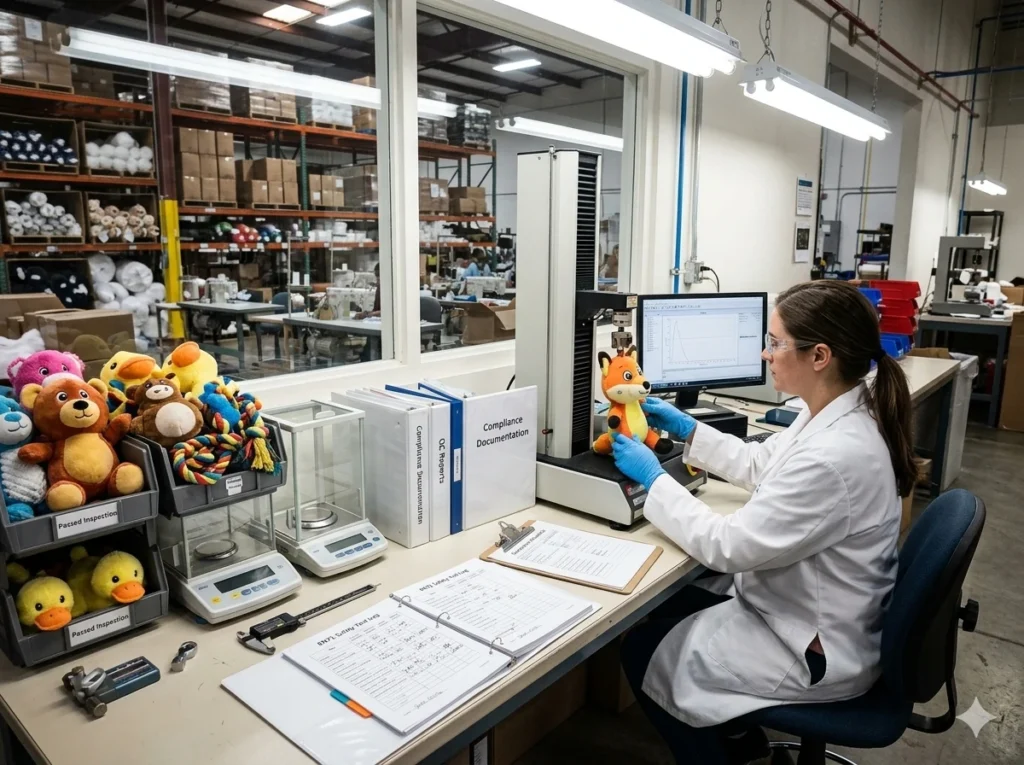
Needle detection only confirms the absence of ferrous contaminants; it does not validate the structural integrity of the seams. Once a batch is certified 100% metal-free, random samples are pulled and transported to our mechanical destruction lab to verify our strict pet product safety standards.
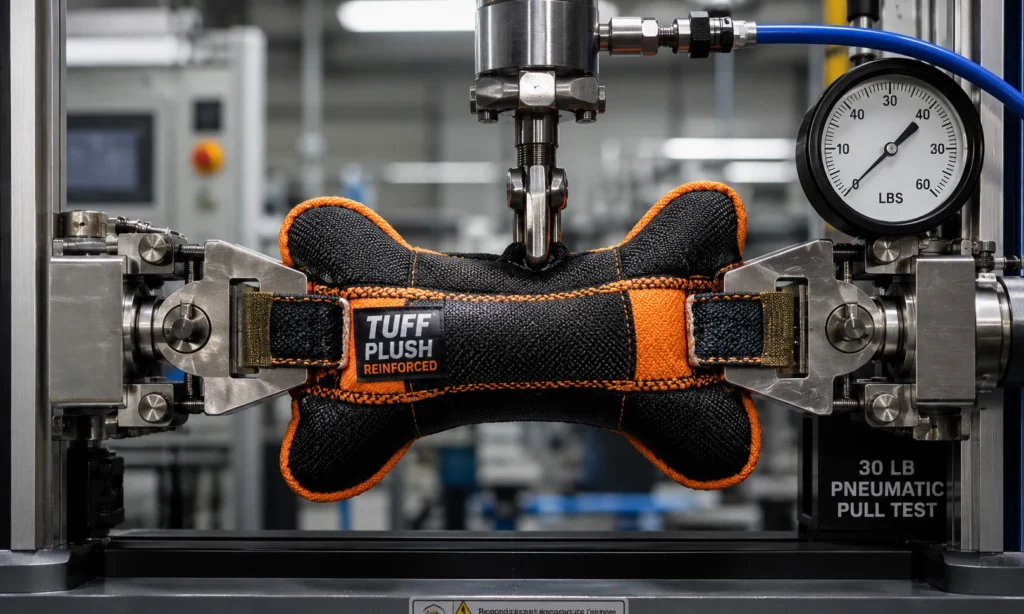
Our testing apparatus utilizes INSTRON-style tensile testing rigs outfitted with 90-PSI pneumatic clamps. Standard mechanical jaws would slip against the high-denier nylon, so our engineers utilize custom knurled jaw faces to achieve absolute material lock without premature surface tearing.
The safe plush dog toy is secured by its extremities, and the pneumatic cylinders apply a slow, controlled divergence. Our baseline metric for heavy-duty classification requires the toy to survive a continuous 30-lb (13.6 kg) static pull test for a minimum of 15 seconds.
During this 15-second load period, our engineers use high-resolution digital microscopes to monitor the seam junctions in real-time. We are measuring the exact millimeter of thread elongation. If the seam separation exceeds 2.0mm under the 30-lb load, the structural matrix is deemed a failure. The thread tension on the factory floor is recalibrated, the stitch density is increased, and the entire batch is remanufactured. We do not rely on assumptions; we rely on quantifiable failure thresholds.
Ensuring Absolute Compliance with International Standards
For B2B wholesalers importing into the United States, Canada, and the European Union, theoretical safety is irrelevant. Customs and border protection, alongside major retail compliance boards, require documented, empirical proof of mechanical safety.
Our internal protocols are strictly aligned with global testing frameworks. We engineered our needle detection and physical destruction methodologies to comply with and exceed ASTM F963 mechanical testing protocols, specifically the sections governing sharp points, small parts, and tension testing for consumer safety.
By integrating high-gauss magnetic flux scanning with extreme pneumatic load testing, we provide our B2B partners with a mathematically proven, liability-free product. When you bulk-order from our facility, you are not just purchasing a textile; you are purchasing a mechanically verified, precisely engineered unit designed to survive extreme biological torque without catastrophic failure.
Request a Mechanical Testing Sample
Do not take our data at face value. We invite all prospective B2B clients, wholesale distributors, and retail brand managers to verify our engineering tolerances in their own facilities.
Contact us today to request a factory-direct sample of our high-density, heavily stitched pet products. Clamp it, pull it, and tear it apart in your own laboratory, or request unedited video footage of our pneumatic tensile testing and dual-sensor needle detection machines in active operation. Partner with a manufacturer that prioritizes industrial data over marketing rhetoric.
Frequently Asked Questions (FAQ)
Q: Why is needle detection required for heavy-duty plush dog toys?
A: Heavy-duty plush dog toys require dense, multi-layer fabrics like 1000D ballistic nylon. Sewing these high-denier materials at 3,500 stitches per minute generates extreme thermal friction and mechanical deflection, frequently causing industrial sewing needles to snap. Needle detection is mandatory to locate and extract these hazardous ferrous shards before the product leaves the factory.
Q: How does your needle detection machinery isolate metal fragments?
A: Our laboratory utilizes dual-sensor magnetic flux conveyor systems. When a ferrous needle fragment passes through the aperture, it distorts the oscillating magnetic field, inducing a quantifiable eddy current. We calibrate these machines daily with a 0.8mm ferrous sphere to ensure a 100% detection rate for microscopic metal shards.
Q: What is the 9-Point Grid Detection Protocol?
A: The 9-Point Grid Detection Protocol is our calibration and scanning methodology. It requires passing the 0.8mm calibration block through nine distinct spatial coordinates within the machine’s aperture to ensure uniform magnetic sensitivity. Subsequently, every toy undergoes a dual-axis pass (longitudinal and transverse) to eliminate magnetic blind spots caused by the orientation of the broken needle.
Q: What mechanical tests are performed after a toy passes needle detection?
A: Once verified 100% metal-free, samples undergo destructive tensile load testing using 90-PSI pneumatic clamps. The toy must survive a continuous 30-lb static pull force for 15 seconds. If seam separation exceeds 2.0mm during this mechanical load test, the batch fails our structural integrity threshold and is remanufactured.