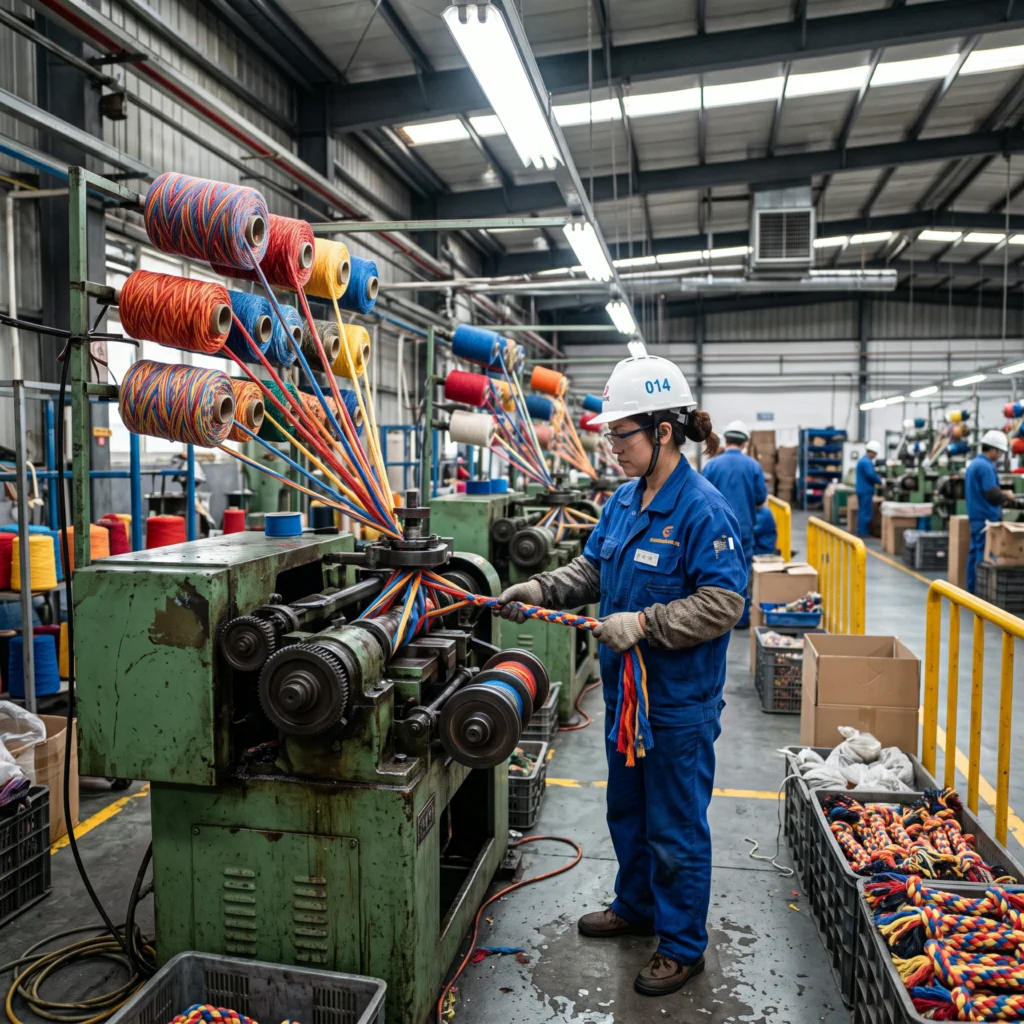
Overview: Securing a CE mark pet toy certification requires strict adherence to EN 71 safety standards, REACH chemical limits, and robust technical documentation. This guide outlines the mandatory mechanical, flammability, and chemical testing protocols necessary to ensure customs clearance, mitigate recall risks, and achieve seamless European market compliance for bulk pet toy imports.
Last quarter, a prospective client approached us after their entire 40HQ container of interactive squeaker toys was detained at the Port of Rotterdam. The reason for the detention was straightforward but catastrophic to their supply chain. Their previous supplier failed to provide valid REACH testing reports for phthalates and lacked proper CE marking documentation. For procurement managers, sourcing agents, and brand founders importing into Europe, these compliance disruptions are incredibly costly and entirely preventable.
In our testing lab at Wehao Pets, we encounter these exact compliance gaps frequently when auditing third-party shipments. Navigating the regulatory landscape of the European Economic Area (EEA) demands precision. European customs authorities do not operate on assumptions; they require empirical testing data, standardized declarations, and verifiable factory audit trails.
This technical manual outlines the precise engineering, testing, and documentation requirements necessary to successfully secure and maintain a CE mark pet toy certification for your upcoming production runs. We will detail the specific lab protocols our QA team utilizes to ensure your bulk shipments pass European customs without delay or destructive sampling at the border.
Understanding the Regulatory Scope for a CE Mark Pet Toy
Technically, pet accessories are not universally classified as “children’s toys” under the EU Toy Safety Directive 2009/48/EC. However, a critical friction point arises when an item possesses dual-use appeal. If a product resembles a child’s plush item—featuring cartoonish eyes, soft textures, or interactive elements—customs authorities will conservatively classify it under the Toy Safety Directive to protect human consumers.
Even when strictly categorized and marketed for animal use, the General Product Safety Directive (GPSD) 2001/95/EC applies. This directive mandates that all products placed on the European market must be demonstrably safe. Consequently, adopting the EN 71 standard framework is the most universally accepted and legally defensible method to demonstrate this safety and secure the CE mark.
Our QA team standardizes production against these strict parameters regardless of the target demographic. When procurement agents source custom dog plush toys from our facility, we apply these rigorous protocols to mitigate any risk of border detention or post-market recall. By engineering the product to meet human safety standards from the initial CAD design phase, we eliminate regulatory ambiguity.
EN 71 Mechanical and Physical Property Testing
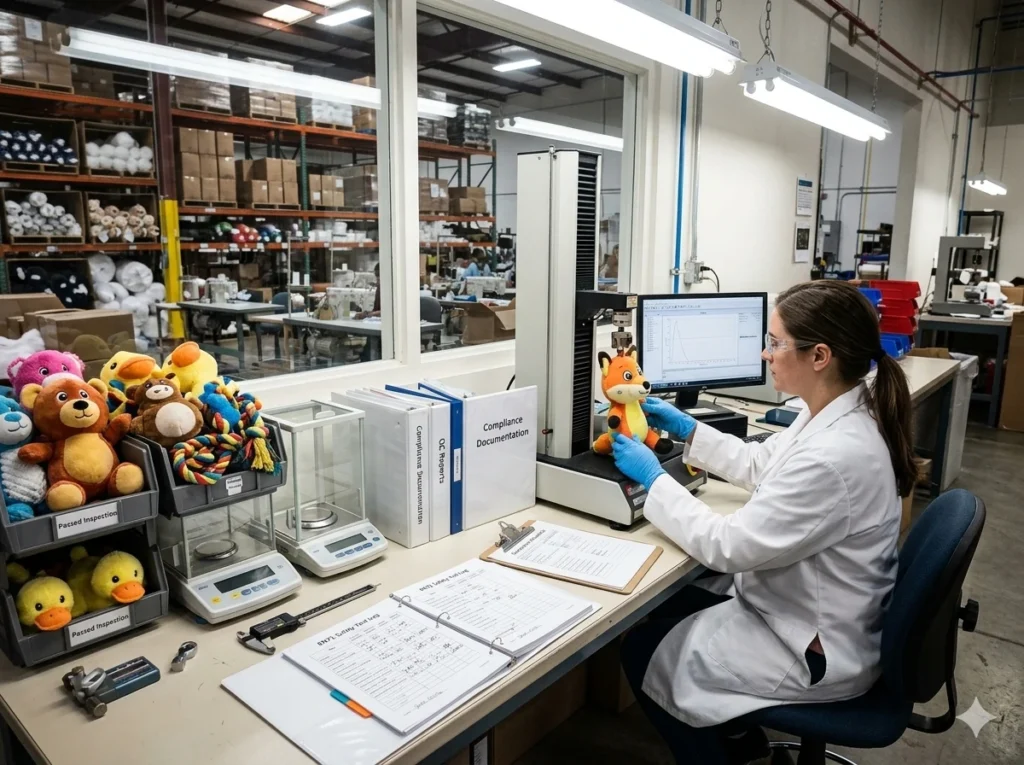
The physical integrity of your product is the first line of defense against compliance failure. Under EN 71-1 protocols, we subject all pre-production samples to extreme physical stress testing. Our primary objective is to identify potential mechanical hazards, specifically small parts that could present a choking or intestinal blockage hazard if detached during vigorous use.
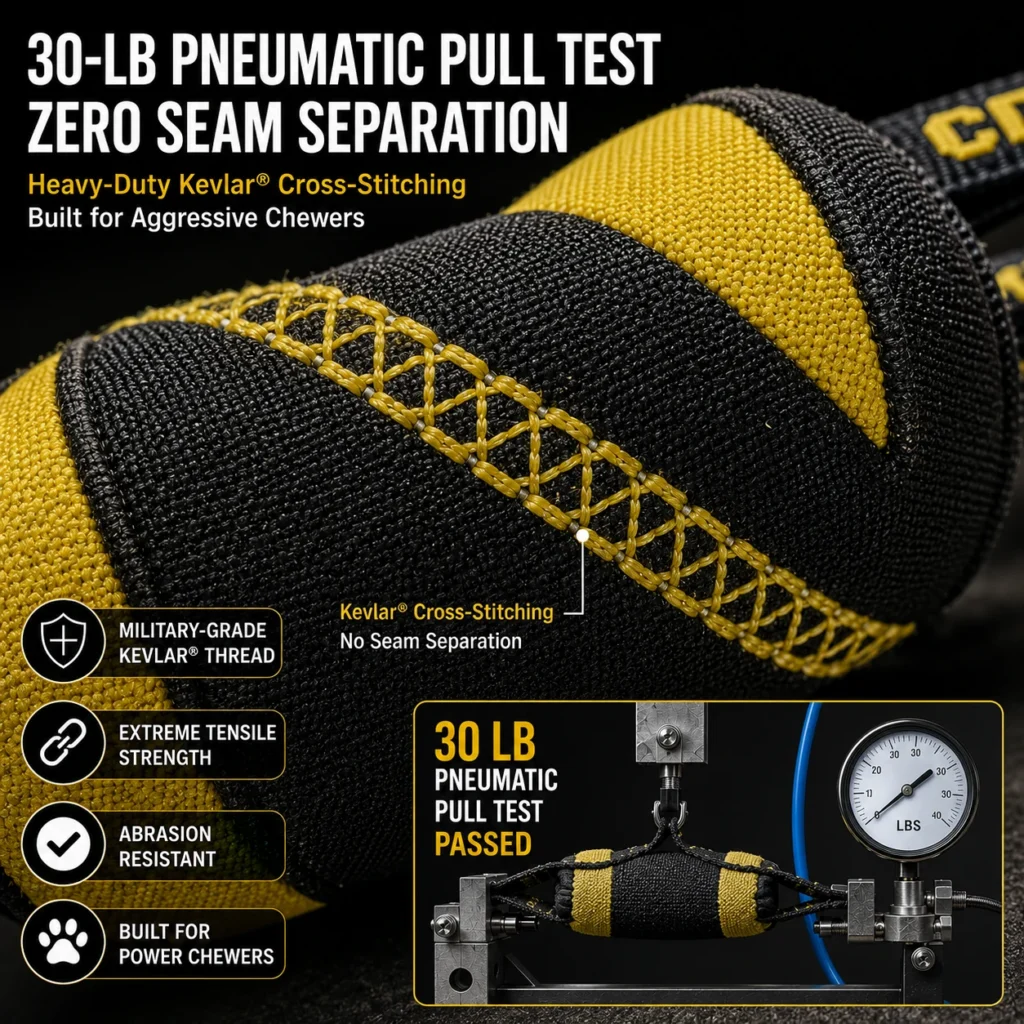
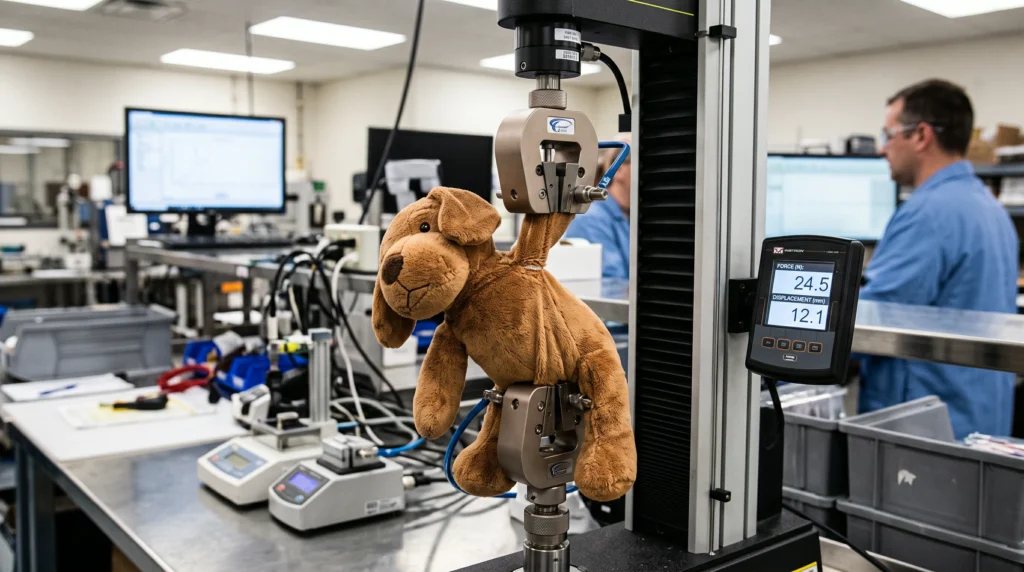
During our destructive tensile testing, we utilize calibrated force gauges to apply continuous tension to seams, appendages, embroidered eyes, and attached components. A standard baseline benchmark in our facility requires critical structural seams to withstand a 30-lb pull force for a sustained period without material separation or thread failure.
To ensure comprehensive mechanical compliance, our testing lab executes the following structural assessments on every new SKU before mass production is authorized:
- Tensile Seam Testing: We apply a minimum of 90 Newtons of force to all primary structural seams using a pneumatic clamp system. This ensures the structural integrity of the outer shell prevents internal polyester stuffing, plastic crinkle paper, or squeakers from escaping into the oral cavity.
- Small Parts Cylinder Protocol: Any component that detaches during the tensile phase is placed into a standardized truncated cylinder. If the detached part fits entirely within the cylinder without applied compression, it constitutes a critical compliance failure.
- Compression and Impact Resistance: Hard plastic components, such as internal puzzle mechanisms, battery housings, or heavy-duty chewing surfaces, are subjected to high-mass impact tests to simulate dropping on concrete from a height of 1.5 meters.
- Bite Force Simulation: We utilize specialized pneumatic presses to simulate the localized pressure of canine dentition, ensuring TPR and nylon materials do not splinter into sharp, hazardous fragments that could puncture the digestive tract.
Standardized Mechanical Testing Parameters
| Test Category | Associated Standard | Testing Equipment | Minimum Acceptance Criteria |
| Seam Strength | EN 71-1 Section 8.4 | Instron Tensile Tester | > 90N without structural seam failure |
| Small Parts | EN 71-1 Section 8.2 | Truncated Test Cylinder | Detached parts must not fit in cylinder |
| Impact Resistance | EN 71-1 Section 8.7 | Guided Steel Weight | No hazardous sharp edges upon fracture |
| Needle Detection | Factory QC Standard | Conveyor Metal Detector | Absolute detection of 1.2mm ferrous material |
| Torque Test | EN 71-1 Section 8.3 | Calibrated Torque Gauge | 0.34 Nm applied without component loss |
Chemical Compliance and REACH Restrictions
Beyond physical structure, chemical composition presents the highest statistical risk for European market rejection. The Registration, Evaluation, Authorisation and Restriction of Chemicals (REACH) regulation strictly governs the allowable limits of Substances of Very High Concern (SVHC).
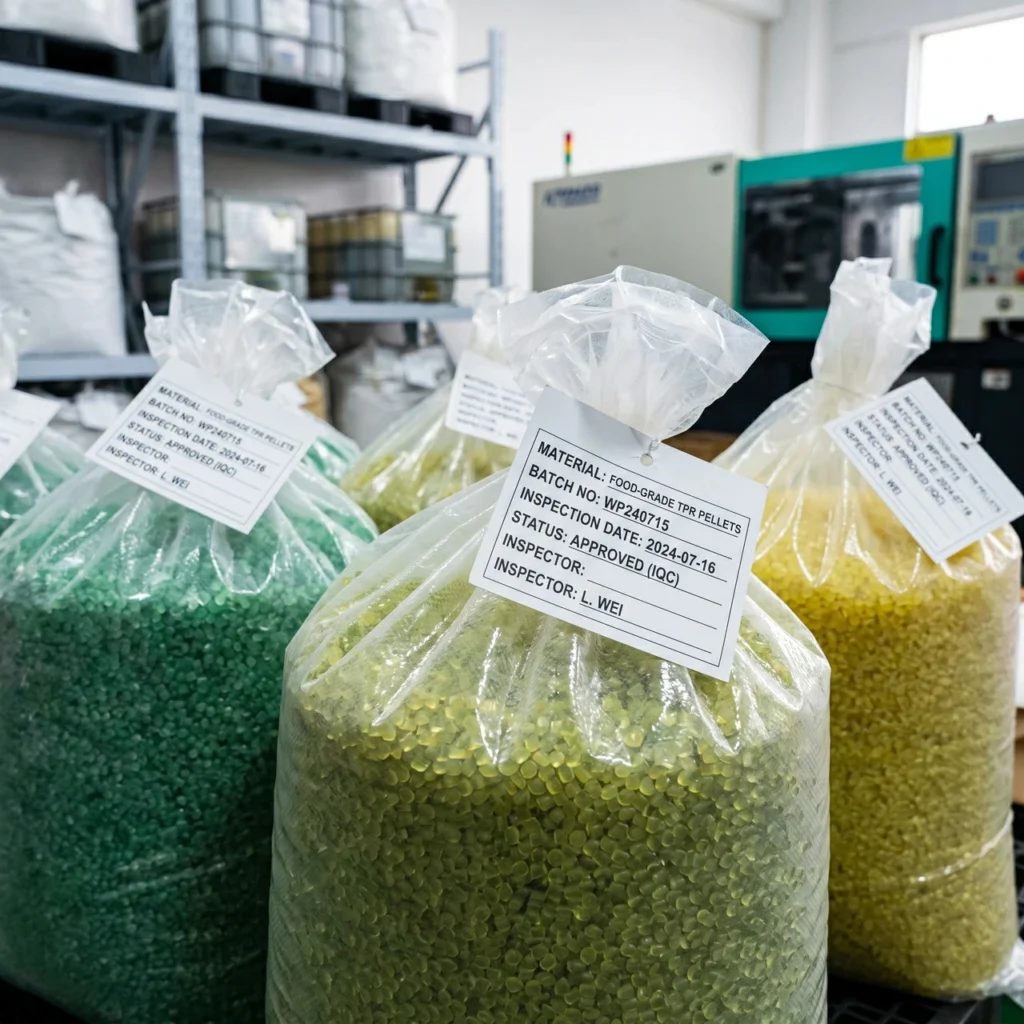
When submitting our pre-production samples to third-party labs like SGS, we mandate comprehensive screening for heavy metals, phthalates, and azo dyes. Our QC inspectors use handheld XRF analyzers on incoming raw material batches to verify elemental composition before the assembly line is even activated.
Our chemical compliance strategy is uncompromising and relies on upstream traceability. We require all tier-two raw material suppliers to provide valid safety data sheets prior to procurement. Furthermore, we actively screen for the following high-risk chemical agents during our inline QA processes:
- Heavy Metal Migration: Strict adherence to EN 71-3 limits for 19 specific elements, including lead, cadmium, barium, and mercury, ensuring they do not migrate from the material when exposed to synthetic saliva or gastric acid.
- Phthalate Restrictions: Complete elimination of restricted plasticizers (DEHP, DBP, BBP, DINP, DIDP, DNOP) in all PVC and TPR components to maintain concentrations below 0.1% by weight.
- Azo Dye Analysis: Comprehensive testing of all dyed textiles, ropes, and plush fabrics to ensure they do not cleave into carcinogenic aromatic amines under physiological conditions or prolonged dermal exposure.
- Polycyclic Aromatic Hydrocarbons (PAHs): Rigorous gas chromatography-mass spectrometry (GC-MS) screening for rubber and plastic parts that may come into direct, prolonged contact with mucous membranes.
Critical Chemical Compliance Limits
| Substance / Hazard | Regulatory Framework | Material Focus | Maximum Allowable Limit |
| Lead (Pb) | EN 71-3 / REACH | Plastics, Paints | Scraped-off: 23 mg/kg |
| Cadmium (Cd) | REACH Annex XVII | PVC, TPR | 100 mg/kg (0.01% by weight) |
| Restricted Phthalates | REACH Annex XVII | Soft Plastics | < 0.1% by mass of plasticized material |
| Carcinogenic Azo Dyes | REACH Annex XVII | Dyed Textiles | < 30 mg/kg of fabric |
| Soluble Mercury (Hg) | EN 71-3 | Coatings, Inks | Scraped-off: 94 mg/kg |
Flammability Protocols under EN 71-2
Flammability is an often-overlooked parameter in the pet sector, yet it remains a strict requirement under the EN 71 framework. The EN 71-2 standard evaluates the burn rate of materials used in plush, faux fur, and fabric-based products.
In our controlled lab environment, we conduct surface flash tests on all fuzzy or hairy fabrics prior to bulk cutting. The fundamental requirement is that the material must not burn at a rate exceeding 30 millimeters per second. If a material exceeds this burn rate, it must self-extinguish rapidly. We engineer our fabric selection to inherently resist rapid flame spread without relying on restricted chemical flame retardants, which would otherwise trigger a REACH violation.
Compiling the Technical Documentation File
Passing laboratory tests is only half the compliance equation. European customs and market surveillance authorities require a comprehensive Technical File. This dossier must be held by the manufacturer or the authorized European representative and be made available upon immediate request. Failure to produce this file within 48 hours often results in a permanent stop-shipment order.
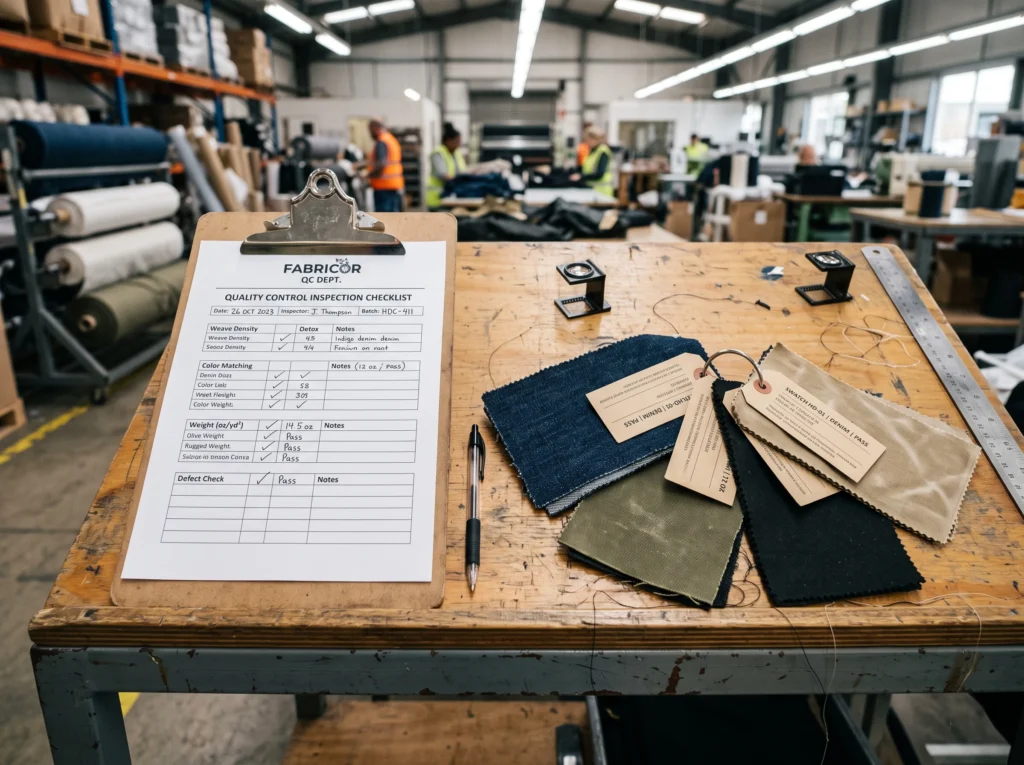
We structure our production documentation to seamlessly integrate into our clients’ Technical Files. A fragmented supply chain often struggles to produce this documentation retroactively. By maintaining meticulous records throughout the manufacturing cycle, we prevent administrative delays during the import and clearing process.
Mandatory Technical File Components
| Document Requirement | Description | Issuer / Responsible Party |
| General Product Description | Detailed specifications, intended use, and operational mechanics. | Brand Owner / Manufacturer |
| Bill of Materials (BOM) | Complete list of all raw materials, components, and chemical inputs. | Manufacturer (Wehao Pets) |
| Conceptual Designs | CAD files, schematic drawings, and sub-assembly diagrams. | Brand Owner / Manufacturer |
| Risk Assessment Report | Formal evaluation of potential mechanical and chemical hazards. | Quality Control Director |
| Laboratory Test Reports | Validated testing data from ISO 17025 accredited facilities. | Third-Party Labs (SGS, TUV) |
| Declaration of Conformity | A legally binding document stating compliance with all directives. | Brand Owner / EU Importer |
Factory Audits and Continuous QC Operations
Maintaining compliance is an active, ongoing operational requirement. A single passing test report on a pre-production sample is entirely insufficient if mass production deviates from the baseline standard. Material substitution during bulk manufacturing is the leading cause of CE mark invalidation.
We utilize the Acceptable Quality Limit (AQL) framework, specifically AQL 2.5 for major defects and 4.0 for minor defects, during our inline and final random inspections. Every unit containing plush or textile components passes through a calibrated 1.2mm needle detection machine to guarantee no broken sewing machinery fragments remain inside the product.
Our transparent approach to quality control allows procurement managers to reference our established pet product safety standards directly within their compliance dossiers. We facilitate third-party factory audits without hesitation, as our internal protocols are engineered from the ground up to exceed baseline regulatory requirements.
FAQ
Does a pet toy legally require a CE mark under the EU Toy Safety Directive?
Strictly speaking, products exclusively designed and marketed for animals do not fall under the EU Toy Safety Directive 2009/48/EC and therefore do not mandate a CE mark under that specific directive. However, the General Product Safety Directive (GPSD) mandates baseline safety for all consumer goods.
The complication arises with dual-use products. If customs authorities determine that the item has “child-appealing” characteristics, they will apply the Toy Safety Directive. To preempt costly border rejections, we strongly advise and implement EN 71 compliance protocols for all plush and interactive models entering the European market.
What is the required sample size for third-party EN 71 testing?
When we submit products to accredited third-party laboratories like SGS or Intertek, the required sample size varies based on the complexity of the item and the scope of testing. Generally, a minimum of 6 to 12 identical production-grade samples is required to complete the full EN 71-1, 2, and 3 suites.
It is critical that these samples represent the final mass-production run, utilizing the exact Bill of Materials (BOM) and assembly methods. Submitting prototype samples made with substitute materials will render the resulting test reports invalid for customs clearance.
How does REACH compliance intersect with CE marking for custom plush pet toys?
REACH (Registration, Evaluation, Authorisation and Restriction of Chemicals) operates independently of the CE marking directives, but they are critically intertwined for market entry. A product may pass mechanical CE testing but still be rejected if it contains restricted Substances of Very High Concern (SVHCs).
During our manufacturing process, we view REACH compliance as an absolute prerequisite for safety. We ensure that all synthetic fibers, plastics, and dyes meet REACH Annex XVII limits before we even conduct mechanical EN 71 evaluations. This dual-layered approach guarantees comprehensive market compliance.
Can we rely on raw material certificates instead of testing the finished CE mark pet toy?
Relying solely on raw material certificates from sub-suppliers is a highly risky procurement strategy. While these certificates are vital for initial material screening, manufacturing processes such as gluing, heat pressing, and dyeing can introduce new chemical compounds or alter mechanical properties.
European market surveillance authorities require test reports based on the finished, fully assembled product. We utilize raw material data sheets strictly for our internal risk assessment and preliminary QC, but we always mandate comprehensive testing of the final manufactured unit to ensure unassailable compliance documentation.
What happens if a production batch fails the 30-lb tensile strength test during QC?
If a sample fails our internal tensile strength protocols, our QA team initiates an immediate production halt. We conduct a root-cause analysis to determine if the failure stems from substandard thread tension, incorrect needle sizing, or flawed seam allowance design.
Once the mechanical vulnerability is isolated, we implement corrective engineering measures, such as upgrading to reinforced bonded nylon thread or adding double-stitched bar tacks. The entire batch is then subjected to a rigorous re-testing protocol until consistent compliance with the 90 Newton force requirement is achieved.
Are TPR and PVC materials treated differently under European compliance standards?
Yes, thermoplastic rubber (TPR) and polyvinyl chloride (PVC) face intense scrutiny, specifically regarding their chemical composition. PVC requires plasticizers to achieve flexibility, making it highly susceptible to failing REACH phthalate restrictions if standard industrial formulations are used.
When manufacturing heavy-duty or interactive models using these materials, our testing lab mandates strict batch testing for restricted phthalates and heavy metals. We proactively source medical-grade or food-grade TPR formulations that are inherently free from restricted plasticizers to bypass these chemical friction points entirely.
How often must technical files and declarations of conformity be updated?
Technical documentation is not a static requirement; it is a living dossier. The Declaration of Conformity and the supporting Technical File must be updated whenever there is a material change to the product, such as switching a fabric supplier, altering the internal squeaker mechanism, or changing the dye formulation.
Furthermore, regulatory standards themselves evolve. If the EU updates a specific section of the EN 71 standard or adds new chemicals to the REACH SVHC list, existing product lines must be re-evaluated and potentially re-tested to ensure continuous, uninterrupted compliance at the border.
Are you ready to secure a reliable, compliant manufacturing partner for your European distribution? Protect your supply chain from customs rejections by partnering with a factory that engineers safety into every production run. We invite B2B procurement managers to request our latest compliant product catalog or review our verified testing reports. Please reach out and contact our compliance and wholesale team today to discuss your next technical manufacturing project.