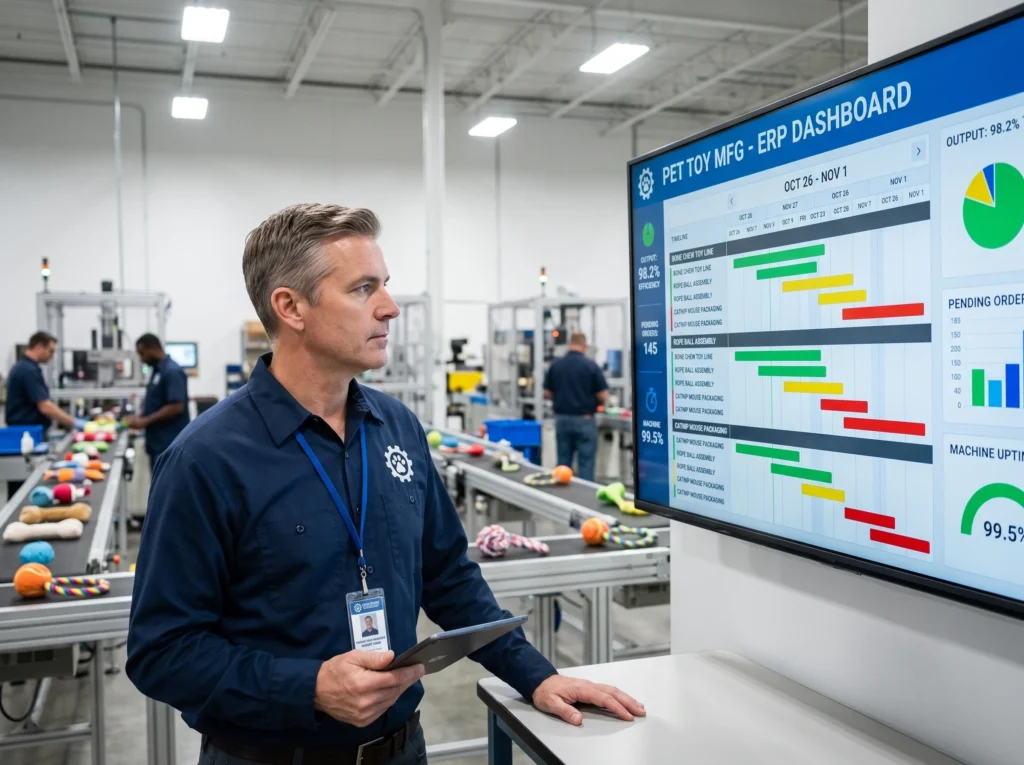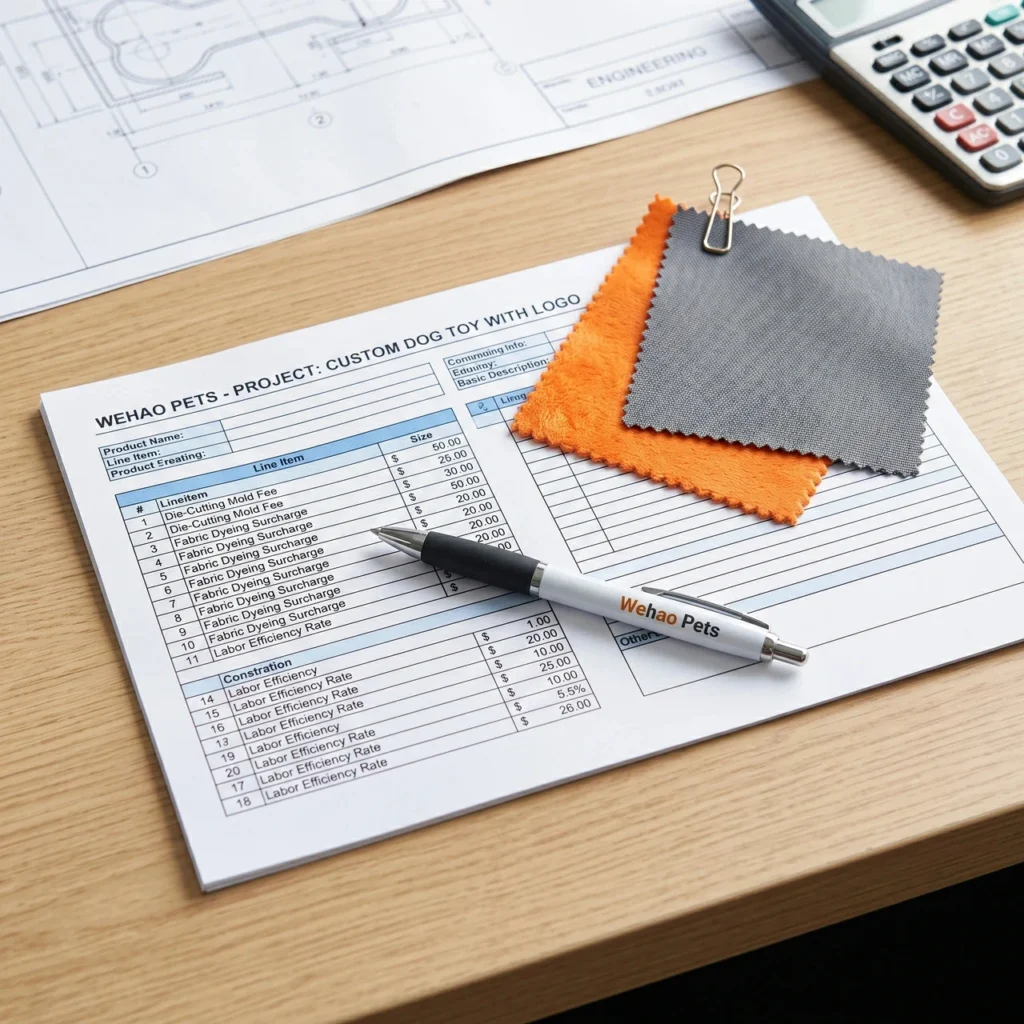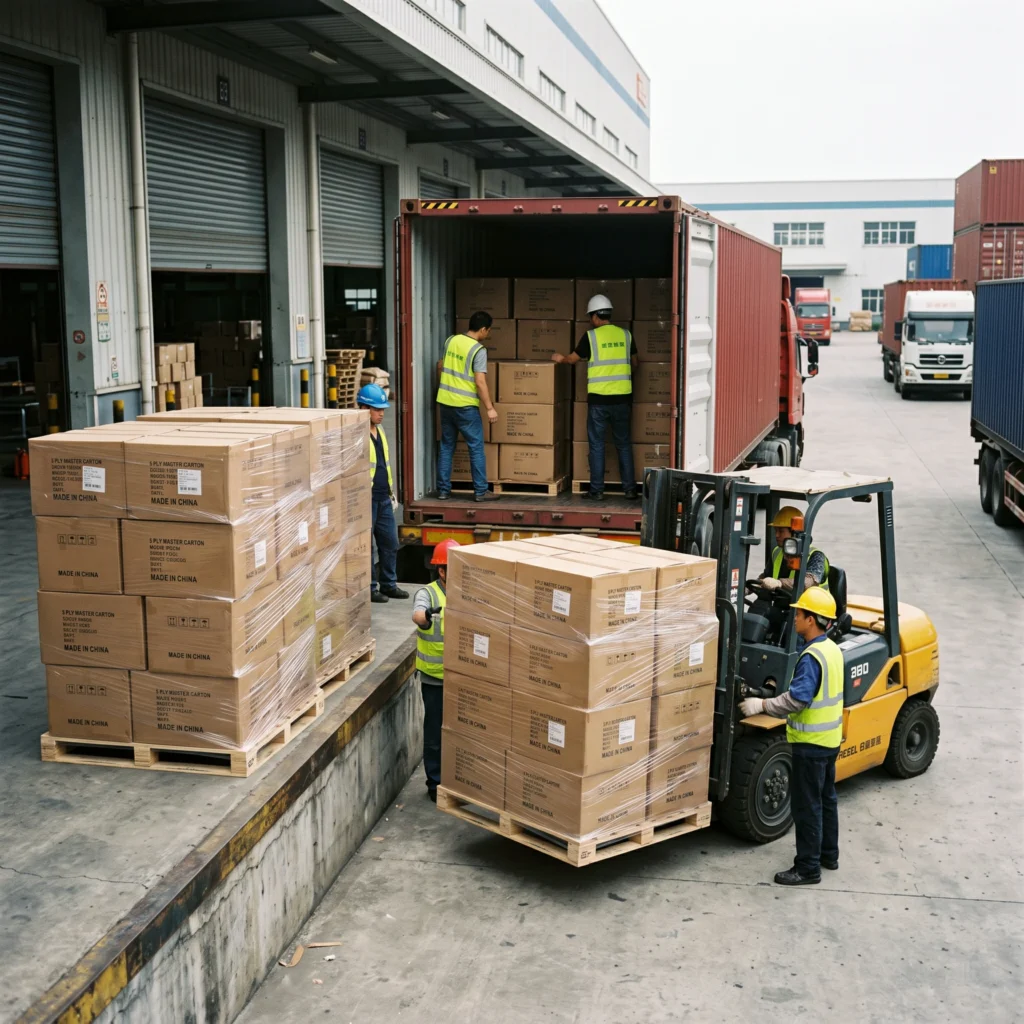
Overview: The most critical indicator of a true source factory is verifiable raw material traceability combined with strict ISO 9001 and BSCI social responsibility compliance. Without these transparent metrics, sourcing agents risk hidden sub-contracting, inconsistent product safety, and zero accountability that can instantly destroy a brand’s reputation.
For global sourcing agents and volume importers, the “Alibaba Illusion” is the most dangerous trap in modern B2B procurement. You begin searching for a reliable pet toy manufacturer online, and you are immediately bombarded with pristine profiles featuring massive facilities, smiling workers, and seemingly endless catalogs of products. The reality? A significant percentage of these profiles belong to agile trading companies operating out of small office spaces. They excel at marketing but completely fail when subjected to rigorous third-party audits. They upload digitally altered photos or borrow images from partner factories, presenting themselves as direct manufacturers to secure your bulk order.
When you place an order with these disguised middlemen, you lose all control over the production process. Because they do not own the machines or employ the workers, they cannot guarantee the quality, safety, or ethical compliance of the pet toys you are importing. On our factory floor, we witness the fallout of this deception constantly. Frustrated buyers come to us after their previous “supplier” shipped containers of defective, unsafe dog chew toys or toxic plush items. To protect your brand and your capital, you must aggressively audit any potential pet toy manufacturer before signing a contract. This guide, written from the perspective of our factory’s compliance and management team, will equip you with the exact technical frameworks needed to strip away the marketing fluff and evaluate the brutal realities of a supplier’s true capabilities.
Exposing the Middleman: Trading Company vs. True Source Manufacturer
The first step in any factory audit is verifying business identity. Trading companies survive by obscuring their lack of manufacturing infrastructure. They often source your order to the absolute lowest bidder to maximize their margin, creating a nightmare scenario for product consistency. As the importer, you bear 100% of the liability if a pet toy fails heavy metal testing or poses a choking hazard.
To systematically identify who you are really dealing with, we have developed a strict evaluation matrix. Use this framework during your initial vetting phase.
Identifying True Source Manufacturers
| Evaluation Category | Red Flag (Trading Company / Sub-par Factory) | Green Flag (True Source Manufacturer) |
| Product Focus | Catalog includes electronics, apparel, and pet toys simultaneously. | Extremely narrow focus (e.g., exclusively fabric-based or TPR pet toys). |
| Machine Ownership | Cannot provide video evidence of specific molds matching your product. | Can show live machinery, molds with factory tags, and maintenance logs. |
| QC Traceability | Quality checks are “guaranteed” but lack documented batch-coding systems. | Strict lot-number tracing from raw material warehouse to final packaging. |
| Social Compliance | Provides outdated or blurred certificates; resistant to third-party visits. | Holds verifiable BSCI social responsibility compliance; welcomes unannounced audits. |
| Export Licenses | The export company name does not match the factory registration name. | Factory registration and export license share the exact same corporate entity name. |
When you analyze a supplier against this matrix, the facade of a trading company quickly crumbles. A direct pet toy manufacturer is a specialized entity. If a supplier claims they can produce heavy-duty nylon chew toys, soft plush squeaker toys, and electronic laser pointers all under one roof, they are almost certainly sub-contracting the majority of your order.
Analyzing the Foundation of Quality: ISO 9001
When auditing a potential partner, their approach to ISO 9001 quality management systems will reveal their true operational maturity. ISO 9001 is not merely a certificate to be framed and hung in the lobby; it is a relentless, data-driven methodology that dictates every action on the factory floor.
A sub-par factory views quality control as a final inspection step—pulling a few defective toys out of a finished bin before shipping. A true pet toy manufacturer operating under strict ISO 9001 guidelines integrates quality control into every micro-step of the manufacturing process. For example, in plush toy manufacturing, the tensile strength of the stitching is a critical safety parameter to prevent dogs from tearing the toy open and ingesting the squeaker. Under a robust QMS, the tension settings on the sewing machines are calibrated and logged daily. The seam allowances are standardized, and every worker is trained on the exact specifications for each product line.
During your audit, demand to see their Standard Operating Procedures (SOPs) and Corrective and Preventive Action (CAPA) reports. If a factory claims they have a zero percent defect rate, they are lying. Mistakes happen in mass manufacturing. What you want to see is a documented trail of how a defect was identified on the line, how the contaminated batch was quarantined, and what specific mechanical or training adjustments were made to ensure that specific failure never happens again.
The Human Element: BSCI Social Responsibility Compliance
Ethical manufacturing is no longer a secondary concern; it is a fundamental requirement for operating in the global market. Retailers and consumers demand to know that the products they buy were not produced under abusive conditions. This is where BSCI social responsibility compliance becomes mandatory. The Business Social Compliance Initiative (BSCI) provides a framework that ensures fair compensation, safe working environments, and strict prohibitions against child or forced labor.
However, from a purely operational standpoint, social compliance directly impacts your product quality. Factories that operate as sweatshops suffer from a massive worker turnover rate impacting consistency. When workers are underpaid, overworked, and subjected to dangerous conditions, they leave at the first opportunity.
When a factory has to constantly hire and train new workers, the defect rate skyrockets. A novice sewing machine operator cannot maintain the precise stitch density required for a durable dog toy. A new injection molding technician may fail to properly trim the flash off a TPR chew toy, leaving sharp, dangerous edges. By verifying a supplier’s BSCI status, you are not just ensuring ethical sourcing; you are securing the stability of the workforce that will be crafting your bulk orders. On our factory floor, we treat our skilled operators as our most valuable asset, which allows us to maintain the strict consistency required for OEM and ODM projects.
Mandatory Audit List: 3 Exact Areas to Inspect During a Factory Tour
Whether you are conducting a physical visit in Dongguan or relying on a live video audit, you must direct the tour. Do not let the supplier herd you through a pre-planned, sanitized route. Sourcing agents must demand to see the gritty realities of production. Here are the exact 3 areas you must inspect to verify a pet toy manufacturer’s legitimacy:
- The Raw Material Warehouse and Chemical Segregation Systems
- What to look for: Inspect how raw materials are received, logged, and stored. For pet toys, the segregation of non-toxic TPR (Thermoplastic Rubber) from other industrial plastics is a matter of life and death for the end consumer. Look for clear lot-coding on raw material pallets.
- Why it matters: If the warehouse is chaotic, undocumented, and haphazardly stacked, the factory has no traceability. If a batch of toys fails heavy metal testing, they will have no way of identifying which raw material shipment caused the contamination, leading to a total loss of the entire production run.
- In-Line Needle Detection and Metal Contamination Quarantine Stations
- What to look for: For any plush or fabric-based pet toy, needle detection is non-negotiable. You must ask the factory manager to perform a live calibration test of the metal detector using a 1.0mm ferrous sphere test card. Furthermore, look for a locked “quarantine box” specifically for broken needles.
- Why it matters: In a fast-paced sewing environment, needles break. If a worker breaks a needle, they must find all the broken pieces and turn them in to the supervisor before receiving a replacement. If you do not see a highly structured, documented protocol for broken needle management, it is a guarantee that metal fragments are making their way into the finished toys.
- Tooling, Molds, and Preventive Maintenance Logs
- What to look for: Ask to see the tooling and mold storage area. A true manufacturer will have massive steel molds systematically racked and labeled. Ask to see the preventive maintenance (PM) logs attached to the primary injection molding or stuffing machines.
- Why it matters: Trading companies do not own molds; they rent time on other people’s machines. By verifying mold ownership and machinery maintenance, you confirm their capacity to produce your goods independently. Machines that are run to failure without PM schedules will break down during your peak season order, destroying your supply chain.
Uncovering Hidden Dangers: Sub-Contracting Risks
One of the most insidious threats to a bulk order is unauthorized sub-contracting. You may conduct a thorough audit of a brilliant, compliant facility and feel confident placing a massive order for 100,000 squeaky toys. However, if that factory lacks the true production capacity to meet your deadline, they will silently outsource your order to an unregulated, un-audited “ghost factory” down the street.
These sub-contracting risks negate every single audit and quality check you performed. The ghost factory has no ISO 9001 protocols, no needle detectors, and uses the cheapest, most toxic materials available to maximize the primary factory’s profit margin.
To mitigate this risk, you must audit their production capacity mathematically. Calculate their daily output per machine, multiply it by the number of active machines, and factor in their current obligations to other clients. If your order volume mathematically exceeds their available machine hours, they are planning to sub-contract. You must write strict anti-sub-contracting clauses into your purchase agreements and enforce them with unannounced in-line inspections by third-party agencies.
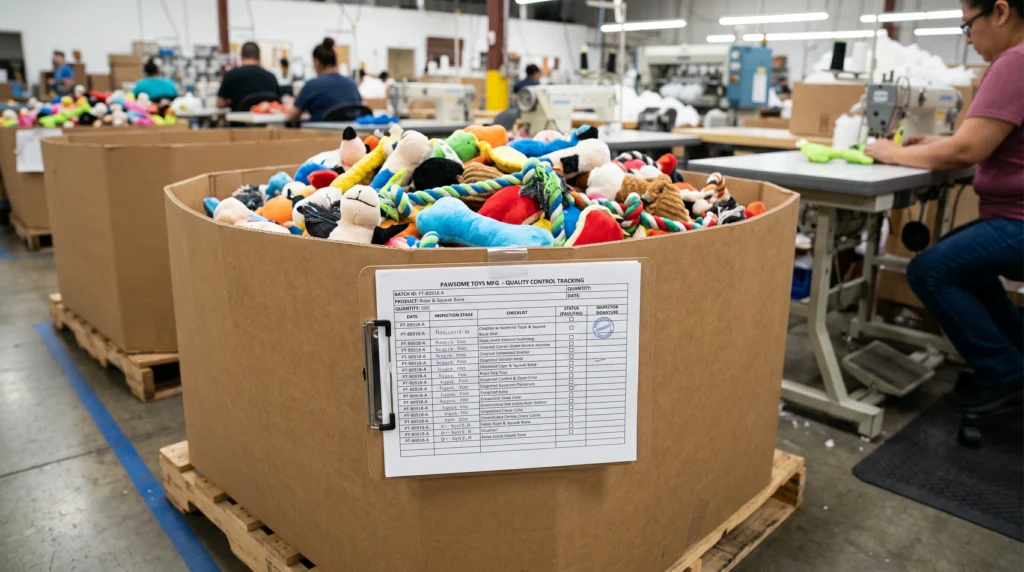
Evaluating Laboratory Infrastructure: In-House Testing Equipment vs Outsourced
A pet toy is subjected to extreme abuse. Dogs will chew, tear, pull, and puncture these products with immense bite force. To guarantee safety and durability, continuous physical and chemical testing is required. Evaluating a supplier’s in-house testing equipment vs outsourced capabilities provides immediate insight into their commitment to quality.
While third-party laboratories (like SGS or Intertek) are necessary for final compliance certification, relying on them for daily production testing is too slow and expensive. A legitimate pet toy manufacturer must have a baseline testing laboratory directly on the factory floor.
Table 2: The Importance of In-House Testing Infrastructure
| Testing Equipment / Protocol | The Risk of Outsourcing Everything | The Advantage of In-House Capabilities |
| Tensile Strength Testers | Seam failures are only discovered weeks later; entire batches must be scrapped. | Immediate verification of thread tension and fabric durability during the production run. |
| Salt Spray / Corrosion Chambers | Metal hardware (leash clips, D-rings) rusts in shipping containers undetected. | Ensures all metal hardware withstands high-humidity environments before attachment to the toy. |
| Colorfastness Rub Testers | Toxic dyes bleed onto pets’ mouths, causing severe health issues and brand recalls. | Verifies dye stability of fabrics and TPR under wet and dry friction conditions instantly. |
| Bite Force Simulators | Hard chew toys fracture into sharp, dangerous shards during consumer use. | Allows engineers to adjust polymer blends and cooling times to maximize impact resistance. |
If a factory points to an external lab for every single quality metric, they are flying blind during actual production. On our factory floor, we utilize in-house tensile testers and colorfastness rigs to pull random samples from the line every two hours. If a batch fails, the line is stopped immediately. This proactive approach is impossible if a factory has to wait a week for an outsourced lab report.
The Financial Impact of Workforce Stability
We must return to the concept of human resources. The pet toy industry, particularly for intricate plush designs, is highly reliant on skilled manual labor. Sewing the complex curves of a custom dog plush toy requires a deft touch that takes months to perfect.
When evaluating a facility, you must assess the worker turnover rate impacting consistency. A factory that treats its workers as disposable commodities will constantly suffer from quality fade.
Table 3: Assessing Workforce Stability Indicators
| Indicator | High-Turnover Environment (Warning) | Stable Workforce Environment (Ideal) |
| Worker Demographics | Entire floor consists of temporary, untrained, or extremely young transient labor. | A healthy mix of veteran supervisors, long-term operators, and apprentices. |
| Ergonomics and Safety | Poor lighting, lack of ventilation, missing safety guards on sewing needles. | Brightly lit stations, climate control, ergonomic seating, mandatory PPE usage. |
| Compensation Structures | Pure piece-rate payment pushing workers to prioritize speed over quality entirely. | Base salaries combined with quality-based performance bonuses. |
When workers are financially secure and physically protected, they take pride in their output. They are more likely to flag a defective raw material before it enters the machine, saving the factory—and the importer—thousands of dollars in wasted production.
Our Transparent Approach to Manufacturing
At Wehao Pets, we understand the anxieties that sourcing agents and global importers face. The risks of dealing with deceptive traders and sub-par factories are financially devastating. That is why we operate our facility with radical transparency. We do not hide behind glossy catalogs; we invite scrutiny.
Our commitment to stringent ISO 9001 quality management systems and verifiable BSCI social responsibility compliance is woven into the fabric of our daily operations. We understand that our success is entirely dependent on your success in the retail market. To understand exactly how we maintain these standards, we encourage you to review our comprehensive protocols on our Quality Control page. Furthermore, you can learn more about our company history, machine infrastructure, and production philosophies by visiting our Factory Tour/About Us page.
For an objective understanding of the global social compliance standards we adhere to, we strongly recommend reviewing the strict guidelines set forth by amfori BSCI.
Conclusion: Take Control of Your Supply Chain
Auditing a pet toy manufacturer is not a casual endeavor; it is a critical defensive strategy. Do not let the “Alibaba Illusion” dictate your procurement decisions. Demand transparency, inspect the raw material traceability, demand proof of in-house testing equipment, and calculate the true production capacity to eliminate sub-contracting risks. A true source factory will welcome your rigorous questions because it gives them the opportunity to showcase their hard-earned operational excellence.
Stop guessing about your supply chain. We invite you to experience the reality of a world-class manufacturing facility. Book a live, unedited video tour of our factory floor via Zoom or WhatsApp today. We will walk you through our raw material warehouse, demonstrate our in-line testing equipment, and prove our capacity in real-time.
Ready to secure your supply chain? Contact Us now to schedule your live factory audit and discuss your next bulk order.
Frequently Asked Questions (FAQ) About Auditing Pet Toy Manufacturers
1. How can a sourcing agent verify the authenticity of a pet toy manufacturer’s BSCI certificate?
To verify a BSCI certificate, a sourcing agent must request the factory’s unique amfori BSCI DBID (Database Identification) number. You can then cross-reference this ID directly within the amfori platform or via an accredited third-party auditing firm like SGS to ensure the certificate is currently valid and accurately reflects the factory’s physical address, rather than a trading company’s office.
2. What is the most critical red flag to look for during a live video tour of a pet toy factory?
The most critical red flag during a video tour is a factory manager’s refusal or inability to show specific, live production machinery matching your product, or avoiding the raw material warehouse. If they can only show you a polished showroom but cannot walk the camera down to the injection molding machines or sewing lines currently in operation, you are likely dealing with a trading company.
3. How do trading companies disguise themselves as direct pet toy manufacturers on B2B platforms?
Trading companies often manipulate their online presence by digitally altering factory signage, renting a small space inside an actual factory to film promotional videos, and paying for “Gold Supplier” badges. They obscure their true nature by offering an impossibly wide range of unrelated pet products (e.g., electronic feeders, nylon leashes, and plush toys) that no single specialized factory could efficiently produce under one roof.
4. Why is evaluating in-house testing equipment vs outsourced testing so important for pet product safety?
Evaluating in-house testing equipment vs outsourced testing is vital because in-house labs (equipped with tensile strength testers and colorfastness rigs) allow for immediate, real-time quality control during the production run. If a factory relies entirely on outsourced labs, defective batches can continue running for days before the failure is reported, leading to massive scrap rates or the shipment of dangerous toys.
5. What are the hidden sub-contracting risks when a factory accepts an order exceeding their capacity?
When a factory accepts an order beyond their machine capacity, the primary sub-contracting risk is that they will secretly outsource your production to un-audited, unregulated “ghost factories.” These secondary facilities do not adhere to your ISO 9001 standards, lack needle detection protocols, and often use inferior, toxic raw materials, exposing the importer to massive liability and brand damage.
6. In what ways does a high worker turnover rate impacting consistency pose a threat to bulk pet toy orders?
A high worker turnover rate impacting consistency means the factory floor is constantly staffed by untrained novices. In pet toy manufacturing, skills like precise sewing and machine calibration take time to master. High turnover leads directly to irregular seam allowances, missed quality checks, and structurally weak toys that can fail and pose a choking hazard to pets.
7. How do ISO 9001 quality management systems specifically apply to the manufacturing of custom dog plush toys?
In custom dog plush toy manufacturing, ISO 9001 quality management systems dictate rigorous, documented procedures for every step, including strict batch-coding of fabrics, mandatory calibration logs for needle detection machines, standardized tension settings on sewing equipment, and documented corrective action plans whenever a defect is found on the assembly line.