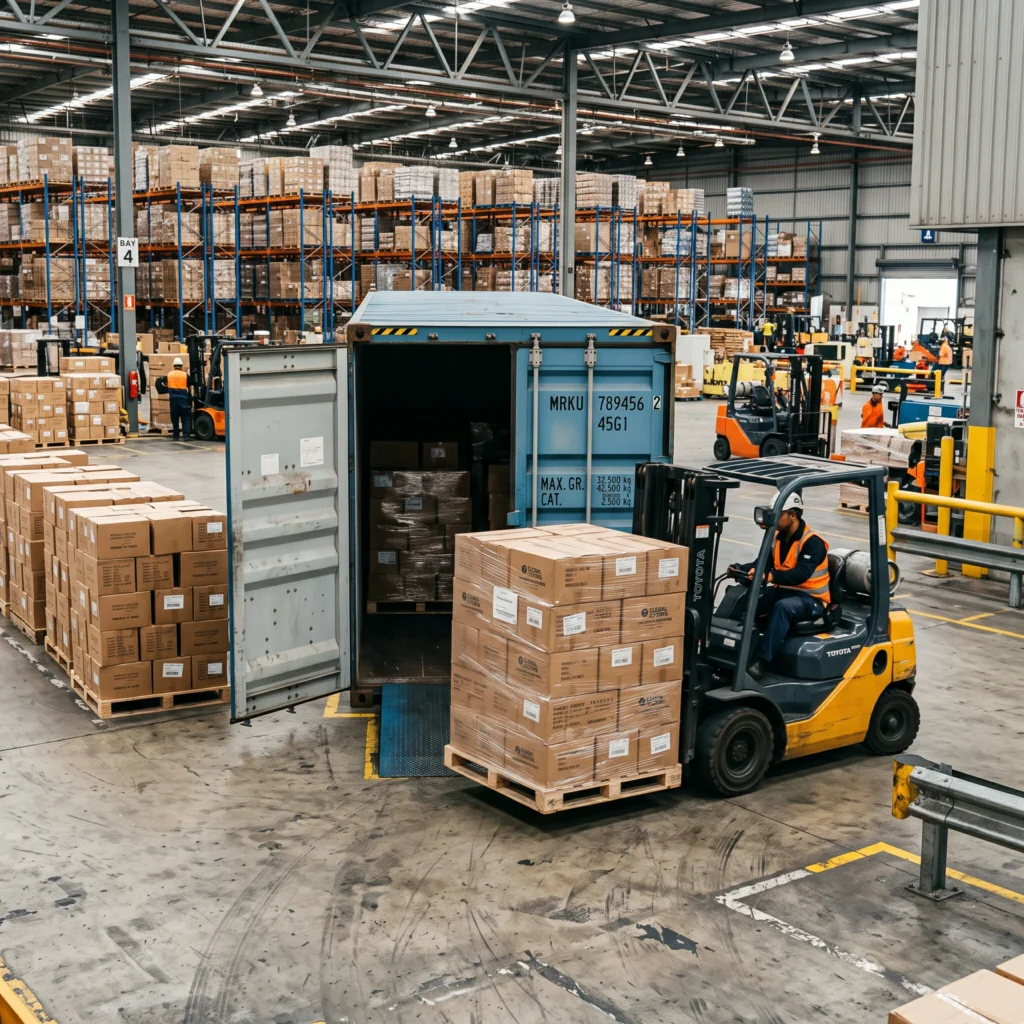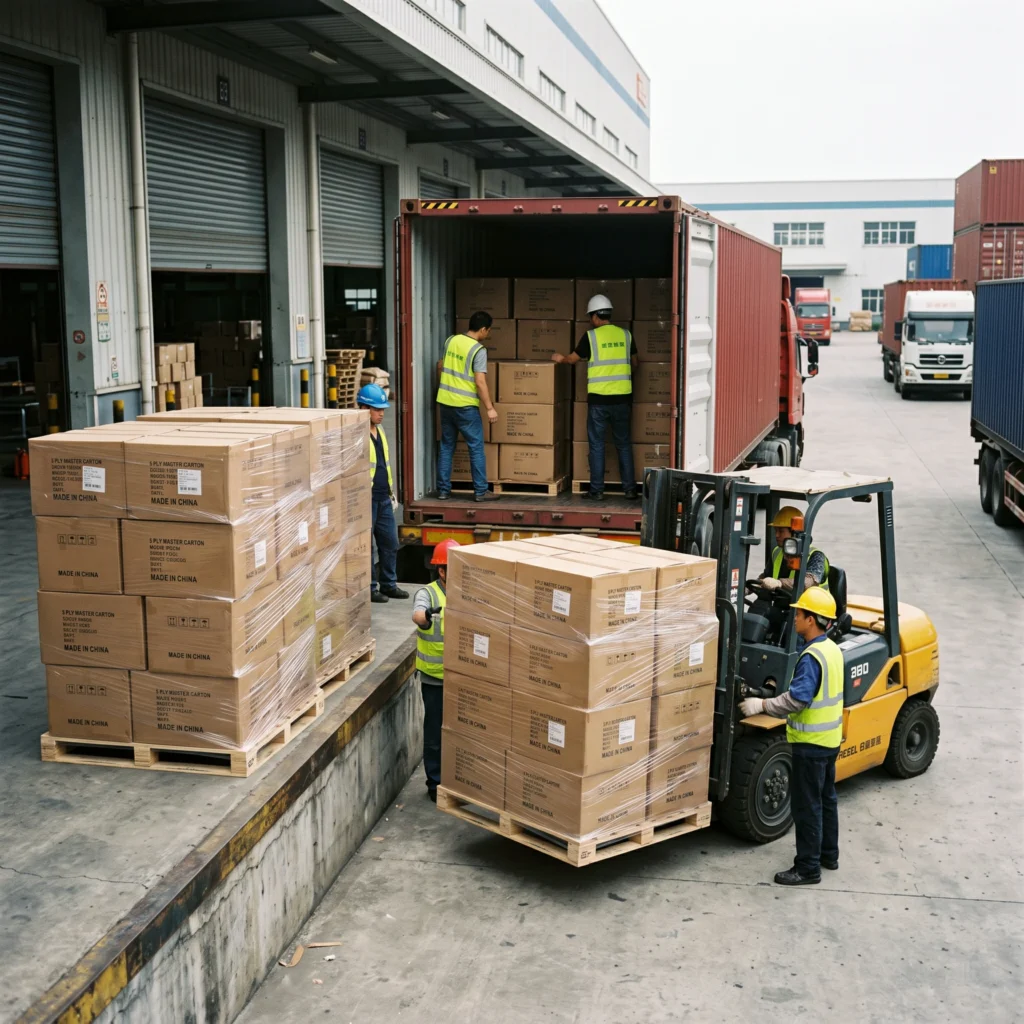
Overview: In low-volume custom runs (under 1,000 units), fixed setup fees and machine calibration account for up to 45% of the total unit cost, while raw materials represent merely 20%. Scaling production to 3,000 units dilutes these fixed costs, optimizing labor efficiency and slashing the amortized cost per unit.
The Elephant in the Room: “Why Can’t You Just Make 500 Pieces for Me?”
Every week, our costing engineers at Wehao Pets receive the exact same inquiry from procurement directors, brand managers, and independent buyers across the US, UK, Europe, and the Philippines: “Why can’t you just make 500 pieces for me to test the market?”
It is the most common buyer complaint in the B2B pet supply industry. The immediate assumption is often that factories are simply being difficult or greedy, holding out for massive, lucrative purchase orders while turning away perfectly good small businesses. The reality, however, is grounded purely in industrial mathematics, physical factory floor limitations, and the uncompromising nature of manufacturing economics.
When you request custom dog plush toys, especially those featuring proprietary logos, bespoke shapes, and custom pantone colors, you are not simply pulling an existing item off a warehouse shelf and slapping a sticker on it. You are initiating a complex, multi-stage industrial event. Activating a production line requires significant capital expenditure in fixed costs before a single yard of fabric is ever cut. If we produce only 500 pieces, the financial burden of these fixed setup procedures is distributed across too few units, resulting in a wholesale price that would completely obliterate your retail profit margins. Our goal as your manufacturing partner is to engineer a supply chain that ensures your brand’s profitability, which fundamentally requires adhering to mathematically viable Minimum Order Quantities (MOQs).
Fixed Costs vs. Variable Costs in Plush Toy Manufacturing
To truly understand the pricing matrix of custom dog toys with logo, procurement officers must separate the factory’s expenses into two distinct categories: Fixed Costs and Variable Costs.
Fixed costs are the expenses incurred regardless of whether we produce 500 units or 50,000 units. These include machine setup time, pattern digitizing, die-cutting mold fees, and the physical calibration of embroidery machines to map out your specific logo.
Variable costs scale directly with the size of your order. These include the actual yards of plush fabric consumed, the volume of PP cotton stuffing injected into the toys, the TPR squeakers utilized, and the hourly labor required to sew and assemble the final product.
When B2B buyers request a low MOQ, they are fighting a losing battle against fixed costs. A $300 laser-cut steel mold is a negligible $0.06 per toy when spread across 5,000 units. However, spread that same $300 mold across 500 units, and you are instantly adding $0.60 to the base cost of every single toy—before materials or labor are even factored in.
Table 1: The Impact of Fixed Setup Downtime on Production Pricing
To illustrate this, let our costing engineers show you the hidden cost of “downtime” when switching an assembly line to a new custom SKU.
| Production Line Activity | Time Required (Hours) | Factory Floor Overhead Cost ($) | Amortized Cost per 500 Units ($) | Amortized Cost per 3000 Units ($) |
| CNC Fabric Cutter Calibration | 2.5 | $120.00 | $0.24 | $0.04 |
| Logo Embroidery Digitization & Testing | 4.0 | $180.00 | $0.36 | $0.06 |
| Sewing Line Layout & Tooling Change | 3.5 | $150.00 | $0.30 | $0.05 |
| Total Setup Inefficiency | 10.0 Hours | $450.00 | $0.90 per toy | $0.15 per toy |
Note: This $0.75 variance in setup alone is often the difference between a successful retail margin and a net loss for the brand.
Analyzing the True Cost: 500 Units vs. 3,000 Units
Let us examine a highly technical financial breakdown. Suppose a European pet brand submits a tech pack for a custom squeaky dog toy shaped like their mascot, featuring an embroidered corporate logo, utilizing a custom-dyed Oxford fabric for durability.
The following table breaks down the raw economics of fulfilling this exact specification at a 500-unit trial volume versus a standard 3,000-unit B2B production run.
Table 2: Mandatory Cost Breakdown (500 Units vs. 3,000 Units)
| Cost Component | Cost at 500 Units (Per Unit) | Cost at 3,000 Units (Per Unit) | Financial Rationale |
| Fabric Sourcing & Dyeing | $1.45 | $0.65 | 500 units fail to meet the fabric roll minimum yardage, forcing us to buy premium small-batch fabric or pay custom dye surcharges. |
| Mold Setup Fee (Die-Cutting) | $0.70 | $0.11 | A $350 custom steel mold divided by the total unit volume. |
| Labor & Cutting Efficiency | $0.95 | $0.40 | Sewing workers have a learning curve. At 500 units, the run ends just as their labor efficiency rates peak. |
| Wastage & QA Buffer | $0.35 | $0.08 | The first 20-30 units on any line are calibration waste. This hits a 500-unit run much harder than a 3,000-unit run. |
| Custom Logo Embroidery | $0.60 | $0.25 | Machine threading and digitization setup time heavily penalize small runs. |
| Total FOB Unit Cost | $4.05 | $1.49 | A 171% cost penalty is applied to the low MOQ run. |
As the data proves, manufacturing 500 units is entirely possible, but paying $4.05 for a toy that should cost $1.49 completely destroys your ability to wholesale the product to distributors or compete on Amazon and Chewy. This is why we enforce MOQs—to protect the commercial viability of your project.
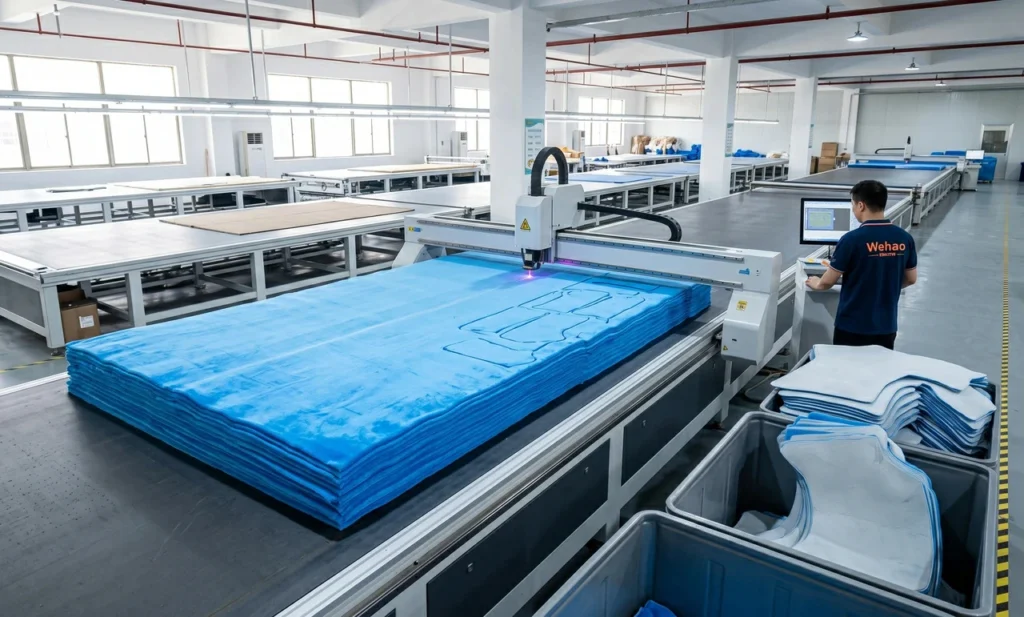
The Supply Chain Bottleneck: Fabric Roll Minimum Yardage
One of the most misunderstood aspects of OEM pet product manufacturing is the upstream supply chain. Wehao Pets does not weave raw textiles in-house; we procure massive rolls of corduroy, plush, PV fleece, and heavy-duty Oxford fabrics from specialized textile mills.
These mills operate on their own brutal economies of scale. When you specify a custom dog toy with logo in your brand’s exact Pantone color, we must order a custom dye vat. Textile mills measure MOQs in metric tons or thousands of yards. A single minimum fabric roll order typically yields enough material to manufacture 2,500 to 3,500 standard-sized dog toys.
If you demand an order of 500 units using a custom color, what happens to the remaining 2,500 units worth of fabric? The factory must absorb the cost of that unused raw material, holding it as dead stock in our warehouse. Consequently, the cost of that entire fabric roll is forcefully amortized into your 500 units, driving the price up exponentially.
Table 3: Raw Material Sourcing MOQ Thresholds
| Material Type | Supply Chain MOQ | Approximate Toy Yield | Cost Implication if MOQ Not Met |
| Stock Color Plush Fabric | 100 Yards (1 Roll) | ~800 Toys | Low impact, excess can be reused. |
| Custom Pantone Dyed Plush | 500 Yards | ~4,000 Toys | High impact, buyer must pay for all unused dyed fabric. |
| Custom TPR Squeakers | 10,000 Pieces | 10,000 Toys | Severe impact, custom molds required for internal noise makers. |
| Branded Woven Labels | 2,000 Pieces | 2,000 Toys | Moderate impact, labels are cheap but setup is fixed. |
Labor Efficiency Rates and the Human Element
Despite the heavy presence of automation in cutting and embroidery, assembling high-quality custom dog toys remains a highly manual, labor-intensive process. Industrial sewing requires skilled human hands to manipulate 3D shapes, insert squeakers, sew hidden seams, and apply double-stitching for heavy-duty bite resistance.
This brings us to the concept of labor efficiency rates. When a new SKU is introduced to the sewing floor, the workers must adapt to the new pattern. For the first few hundred units, production speed is relatively slow. By unit 400 or 500, muscle memory takes over, the assembly line achieves peak synchronization, and the output per hour skyrockets.
If your order size is exactly 500 units, you are forcing the factory to endure the slow, expensive learning curve phase, only to halt production exactly when the labor efficiency rate reaches its most profitable velocity. To read more about how labor and machine utilization impact supply chain costs, we recommend reviewing standard industrial models at ThomasNet Manufacturing Insights.
Cost Saving Engineering: How to Lower Your MOQ and Unit Cost
If your procurement budget is strictly capped but you absolutely need custom dog toys with logo for your European or US market launch, our costing engineers can collaborate with you to alter the product DNA. By removing bottlenecks, we can sometimes negotiate lower MOQs without destroying your unit economics.
Mandatory Cost Saving Strategies:
- Utilize Stock Fabric Colors: Instead of demanding a custom Pantone dye that requires a 500-yard raw material MOQ, allow us to select the closest matching stock color from our existing warehouse inventory. This instantly bypasses the textile mill’s minimums.
- Standardize Squeakers and Internal Components: Do not request a custom-shaped TPR squeaker. Use our factory-standard 35mm or 45mm round EVA squeakers, which we buy in quantities of 500,000, ensuring you get maximum volume discount regardless of your order size.
- Optimize the Logo Application: Direct fabric embroidery requires heavy stabilization and setup. Consider switching to a custom-printed woven label sewn securely into the seam. Woven labels can be produced in batches of 1,000 for a few dollars and stored for your next order, slashing the unit setup cost.
- Simplify the Die-Cutting Profile: The more complex the shape (e.g., a star with sharp points vs. a rounded oval), the more expensive the die-cutting mold and the slower the manual sewing process. Smoothing out the physical geometry of your custom toy increases labor efficiency rates significantly.
By leveraging our comprehensive OEM & ODM services, you gain access to a dedicated engineering team that views product design through the lens of manufacturing mathematics.
Conclusion: Partnering for Profitability
At Wehao Pets, our goal is not to turn away small businesses, but to protect our B2B partners from the crushing unit costs associated with low-volume custom manufacturing. When you understand the interplay between fixed setup costs, raw material yardage minimums, and labor efficiency, it becomes clear why specific MOQs exist—they are the threshold where your product becomes commercially viable.
Are you ready to bring your brand’s vision to life with numbers that actually make sense for your bottom line? Send us your target price, order volume, and design specifications. Our engineers will immediately begin optimizing your materials to ensure better retail margins.
Contact Us Today to get your detailed, mathematically precise costing sheet.
Frequently Asked Questions (FAQ)
1. Why is the MOQ higher for custom-shaped toys than for standard toys with a custom logo?
Custom-shaped toys require entirely new die-cutting molds, new digital patterns, and new labor training for the sewing line. Standard toys with a custom logo only require the fixed setup cost of embroidery or label application, allowing us to leverage our existing fabric cuttings and lower the MOQ.
2. Can I pay a surcharge to bypass the MOQ for a 500-unit trial run?
Yes, but the surcharge must cover the factory’s fixed setup costs, lost labor efficiency, and any unused raw materials from the fabric mill. As demonstrated in our financial breakdown, this can increase your unit cost by over 170%, making retail profitability very difficult.
3. Does using multiple fabric colors in one custom toy increase the MOQ?
Absolutely. If your design features three different colors, we must meet the supply chain minimum yardage for all three individual fabric rolls. To keep MOQs low, we highly recommend utilizing one primary stock color for the body of the toy.
4. Will the factory keep my custom die-cutting molds for future reorders?
Yes. Once you pay the initial tooling and mold setup fee for your custom dog toy, we safely store those physical assets in our facility. When you place a reorder, that specific fixed cost is entirely removed from your invoice.
5. How does packaging affect the MOQ of my custom dog toys?
If you require custom-printed retail boxes or bespoke hangtags, those packaging suppliers have their own MOQs (typically 1,000 to 2,000 units). Using standard polybags with a simple branded insert card is an excellent engineering trick to bypass packaging bottlenecks.
6. Do custom Pantone dyes really make that big of a difference in cost?
Yes. Dyeing fabric to an exact Pantone code requires a textile mill to clean the vats, mix precise chemicals, and run a minimum batch (usually 500+ yards). If you use our factory’s stock colors, we avoid the vat setup fee and the massive raw material commitment.
7. Can I order 1,000 units but split them into two different designs?
Generally, no. A 1,000-unit MOQ applies to a single SKU because splitting the order means we have to stop the assembly line, change the die-cutting molds, recalibrate the machines, and endure the labor learning curve twice. Each unique design is treated as a separate production run with its own fixed costs.