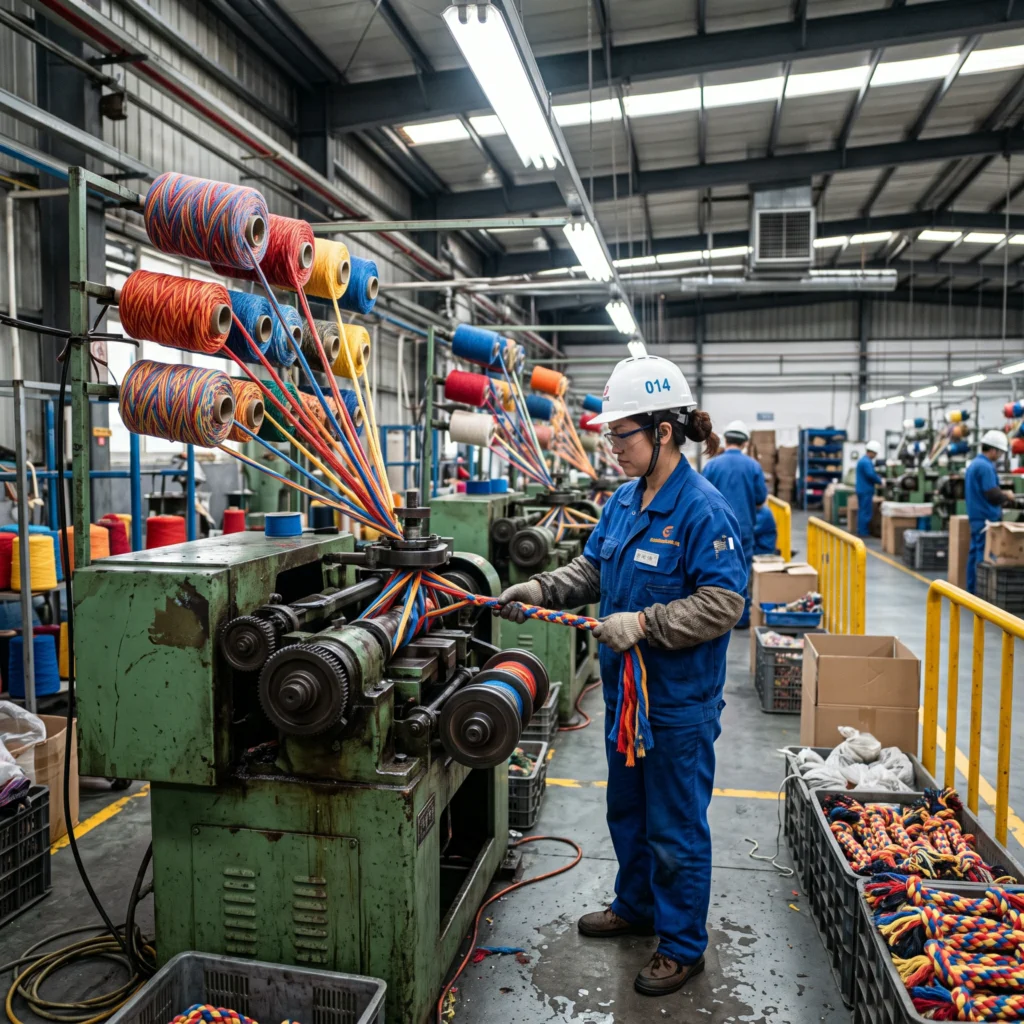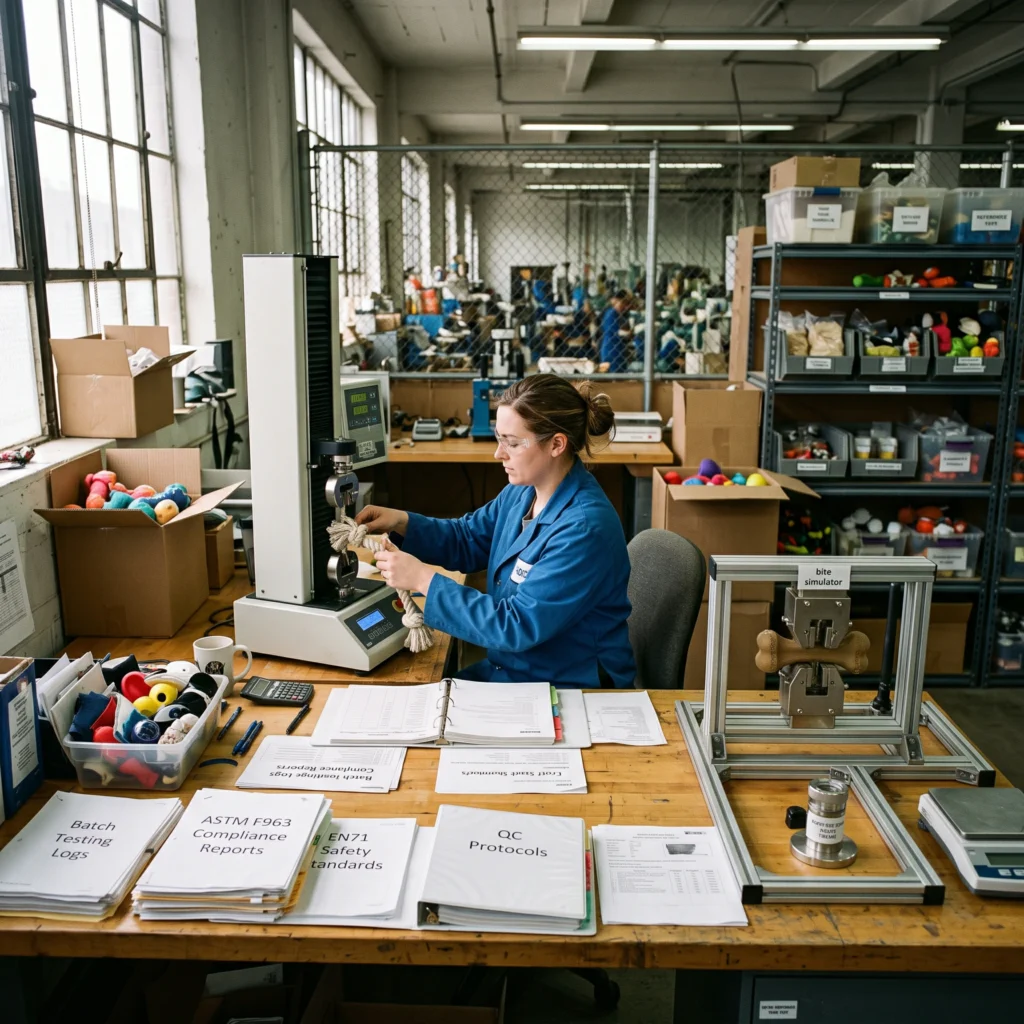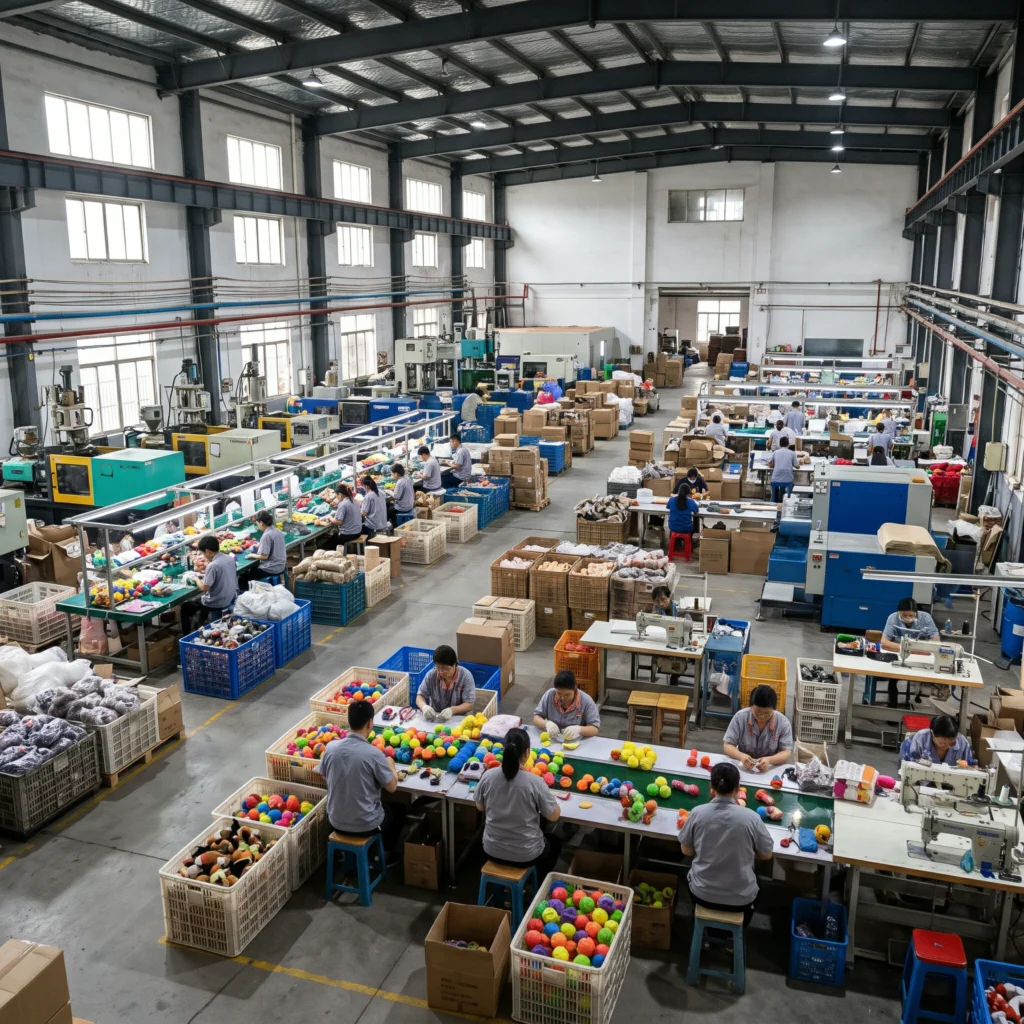
Overview: As an OEM/ODM B2B manufacturer for global pet brands, our factory directly mitigates the risks of mass-market retail recalls by engineering pet products from the ground up. To avoid customs holds, brand damage, and lethal choking hazards, volume importers must verify structural integrity, chemical compliance, and rigorous metal detection protocols when securing wholesale durable plush dog toys.
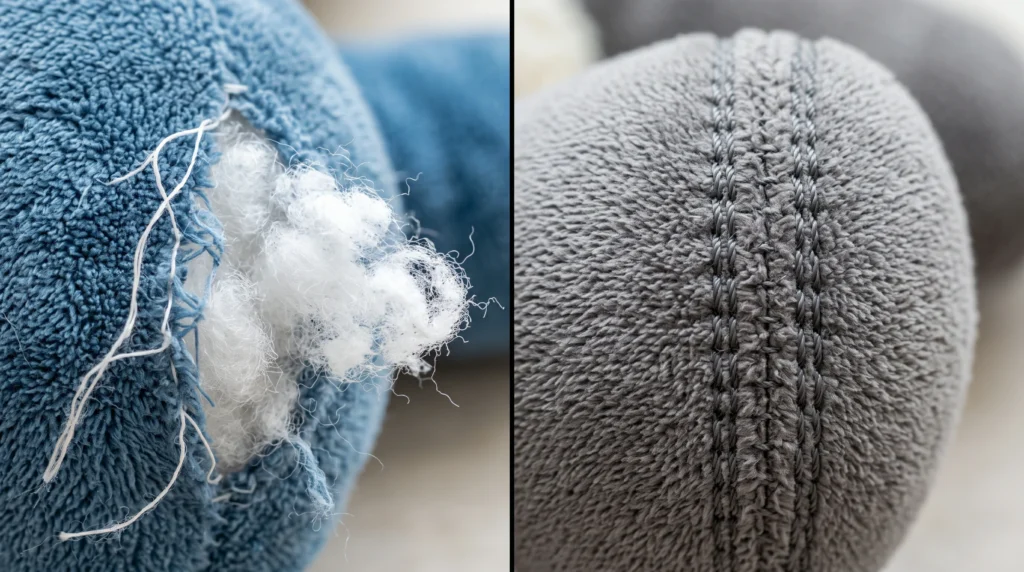
In Q3 of 2023, a major North American pet retailer faced an unprecedented nightmare: the mandatory recall of 45,000 units of a proprietary plush chew product. The root cause was not the primary fabric, but a subtle failure in the seam allowance and single-stitching architecture around the internal squeaker pouch. Within minutes of heavy mastication by the canine end-user, the seam ruptured, exposing the internal plastic acoustic mechanism. This resulted in severe choking hazards, subsequent surgical interventions, and an immediate halt to distribution. This single oversight resulted in over $2.1 million in reverse logistics, regulatory fines, and irreparable brand erosion. On our factory floor in Dongguan, we view this scenario not as an accident, but as an inexcusable systemic failure in Quality Assurance (QA).
Check 1: Raw Material Verification and Tensile Strength Analysis
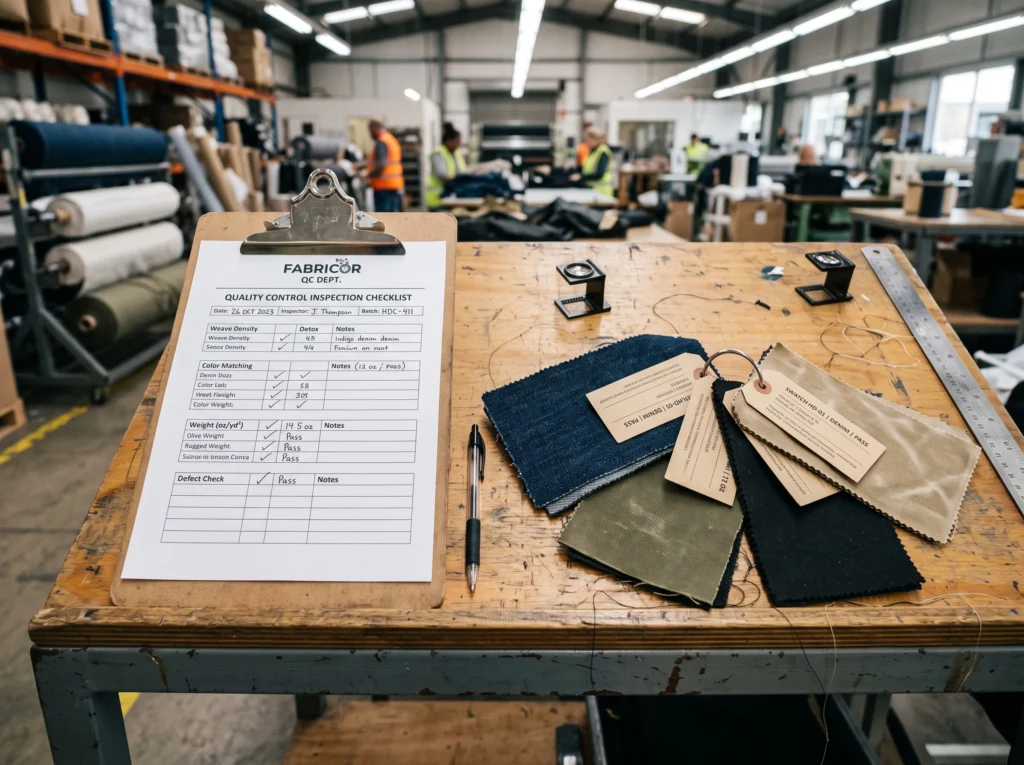
Before a single textile is cut on our factory floor, the raw material must pass rigorous inbound verification. Sourcing the most durable plush dog toys wholesale requires an uncompromising approach to fabric architecture.
A common critical failure in B2B pet product sourcing is relying on standard apparel-grade plush fabrics. These textiles lack the composite backing required to withstand puncture wounds and shearing forces. Our QA team strictly mandates the integration of a secondary mesh lamination layer bonded to the primary plush exterior. This creates a matrix that prevents microscopic tears from propagating across the fabric surface.
Quantitative Fabric Specifications
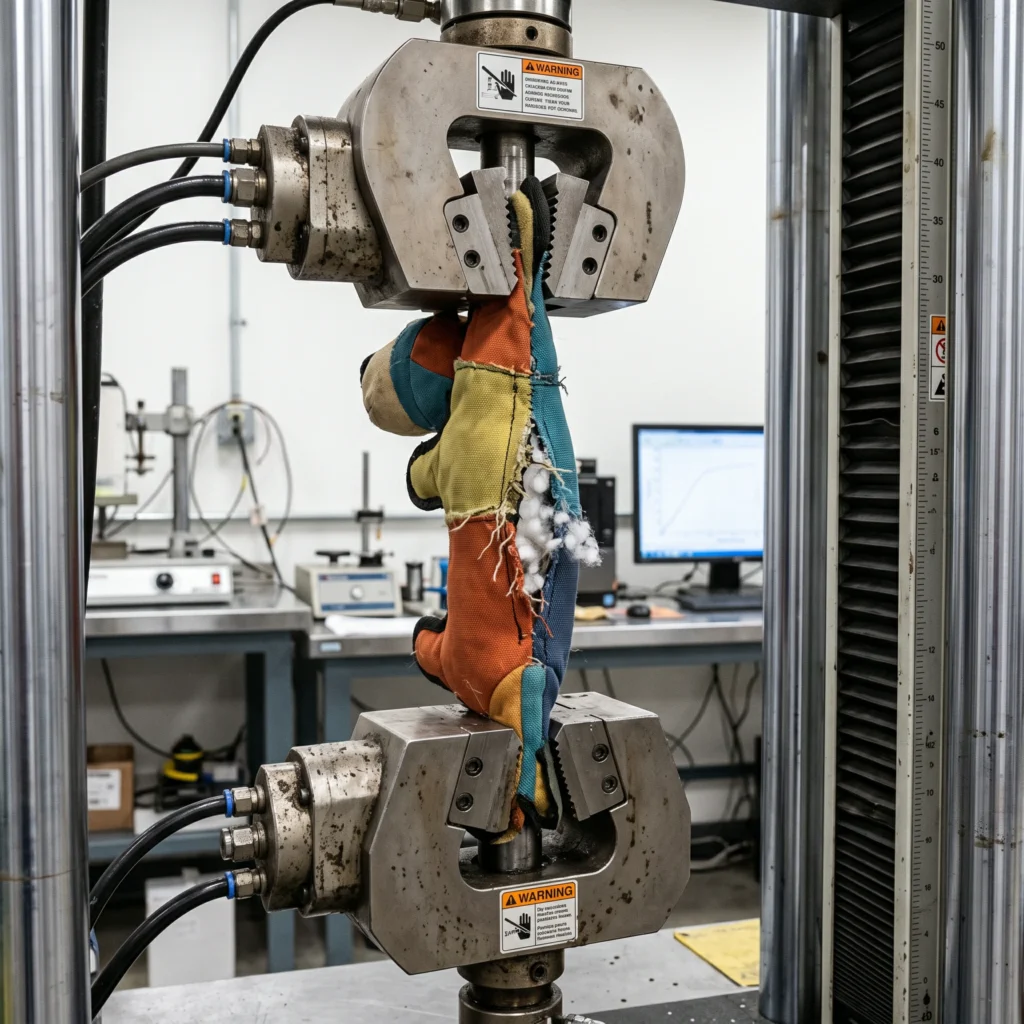
Relying on qualitative touch-tests is a fast track to product failure. We utilize standardized tension dynamometers to measure the exact Newton force required to compromise the fabric weave.
Minimum Fabric Specifications for Commercial Plush Products
| Material Component | Minimum GSM (Grams per Sq Meter) | Tensile Strength (Newtons) | Primary B2B Application | Failure Risk Profile |
| Standard Polyester Plush | 280 GSM | 150 N | Light interaction | High risk of puncture |
| Mesh-Backed Corduroy | 320 GSM | 280 N | Moderate chew resistance | Medium risk at seams |
| Heavy-Duty Canvas Composite | 450 GSM | 420 N | Aggressive mastication | Low, assuming reinforced stitching |
Check 2: Structural Stitching and Seam Reinforcement
The textile is only as strong as its weakest seam. In wholesale manufacturing, seam allowances and thread specifications are the primary battlegrounds against product recalls.
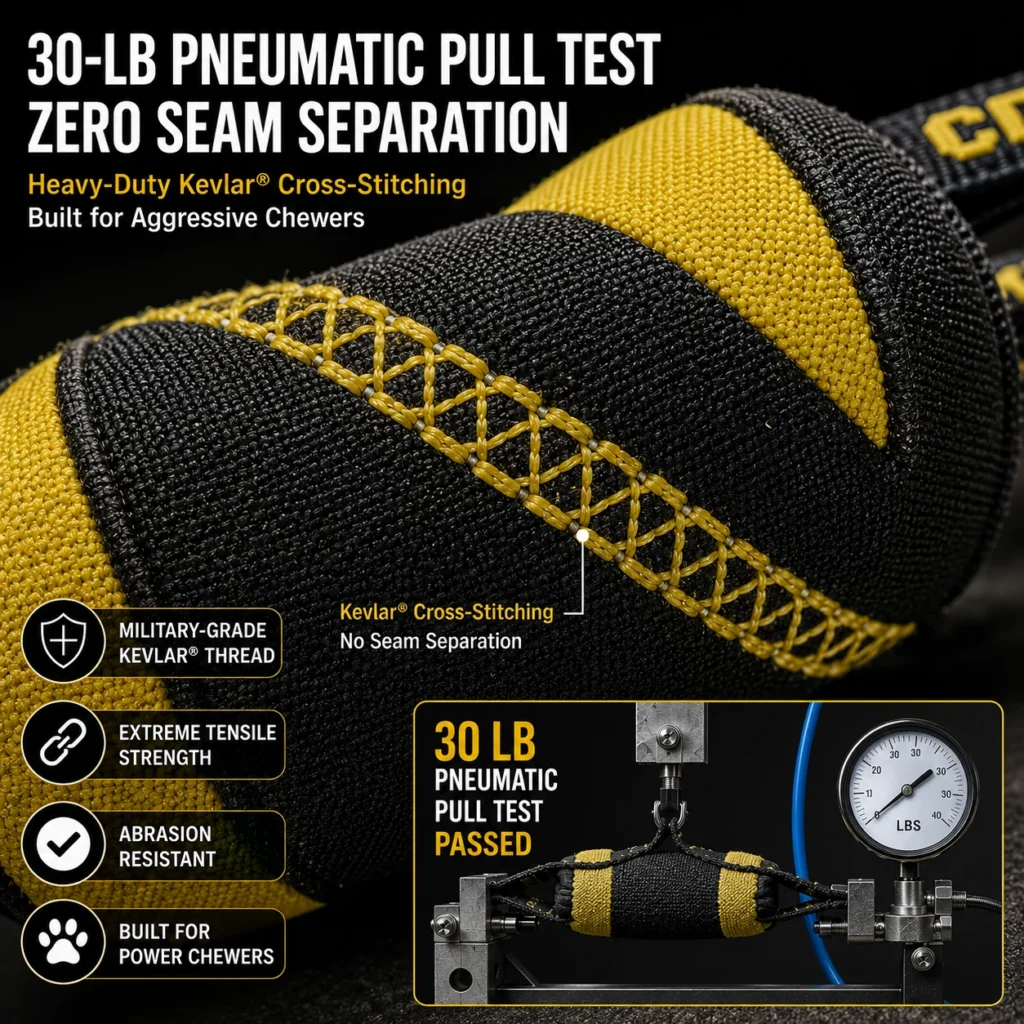
Our standard operating procedure demands that any seam exposed to direct mechanical stress must utilize a double-stitched or cross-stitched architecture. The use of standard cotton thread is strictly prohibited in our heavy-duty lines; we exclusively deploy industrial-grade bonded nylon or heavy-denier polyester threads that resist degradation from canine saliva enzymes.
SPI (Stitches Per Inch) Tolerances
Inadequate stitch density leads to localized stress accumulation. If the SPI is too low, individual threads bear too much load and snap. If the SPI is too high, the needle perforations fundamentally weaken the base fabric, acting like a perforated tear-line on a piece of paper.
Seam Failure Mitigation Protocols
- Protocol Alpha: Enforce a strict 8-10 Stitches Per Inch (SPI) metric for all primary external seams to balance thread load and fabric integrity.
- Protocol Beta: Mandate a minimum seam allowance of 8mm to 10mm to prevent fabric fraying under severe transverse tension.
- Protocol Gamma: Implement automated bartack stitching at all high-stress junction points, particularly where appendages (ears, tails) attach to the main body.
- Protocol Delta: Require concealed interior seams for all edges, ensuring no raw fabric boundaries are accessible for systematic unspooling by the end-user.
- Protocol Epsilon: Conduct weekly tension calibration on all industrial sewing machines to prevent inconsistent thread tension that causes micro-puckering.
Check 3: Squeaker Isolation and Internal Component Securement
When procurement managers source wholesale squeaky dog toys, the primary liability concern is the internal acoustic component. A loose squeaker is a severe choking and intestinal blockage hazard that will immediately trigger a regulatory recall.
During our pre-shipment inspections, we verify the implementation of redundant internal containment systems. Squeakers must never be left free-floating within the polyfill stuffing.
Internal Chamber Architecture
Our factory implements a proprietary isolation chamber methodology. The squeaker mechanism is sealed within a secondary, tightly woven ballistic nylon pouch before being embedded into the primary stuffing matrix. If the outer plush layer is compromised, the secondary pouch prevents immediate access to the plastic hazard.
Internal Component Risk Matrix
| Component Type | Unsecured Risk Level | Mitigation Strategy | Acceptable Fail Rate (per 10k units) |
| Standard EVA Squeaker | CRITICAL | Double-stitched secondary nylon containment pouch | 0.00% |
| TPR Spiked Core | HIGH | Molded internal anchor points tied to fabric matrix | 0.05% |
| Crinkle Paper (Cellophane) | MODERATE | Edge-binding to interior fabric lining | 0.10% |
Check 4: Contaminant Detection and Metal Eradication
The presence of a broken sewing needle within a finished plush product is a catastrophic event for a B2B importer. It guarantees immediate legal liability and border confiscation.
To mitigate this, our factory floor operates under a strict “broken needle log” protocol. If a machinist breaks a needle, they must present all fragments to a floor supervisor before a replacement is issued. If a fragment is missing, all products processed in that zone are quarantined.
Metal Needle Detection Protocols
Beyond operational strictness, technological verification is mandatory. Every single plush unit must pass through an industrial, high-sensitivity conveyor metal detector prior to entering the packing area.
Nine-Point Metal Detection Calibration Checklist
- Calibration Step 1: Utilize a 1.0mm ferrous calibration sphere to verify baseline sensor sensitivity at the start of each shift.
- Calibration Step 2: Utilize a 1.2mm non-ferrous sphere to ensure comprehensive spectrum detection capabilities.
- Calibration Step 3: Test the detection tunnel’s geometric center, as this is the weakest magnetic flux zone.
- Calibration Step 4: Route the calibration sphere through the left and right extremis of the conveyor belt.
- Calibration Step 5: Verify the automated belt-stop and reverse mechanisms trigger instantly upon contaminant detection.
- Calibration Step 6: Log all calibration timestamps and operator IDs into the daily QA master ledger.
Check 5: Mechanical Testing and AQL 2.5 Standards
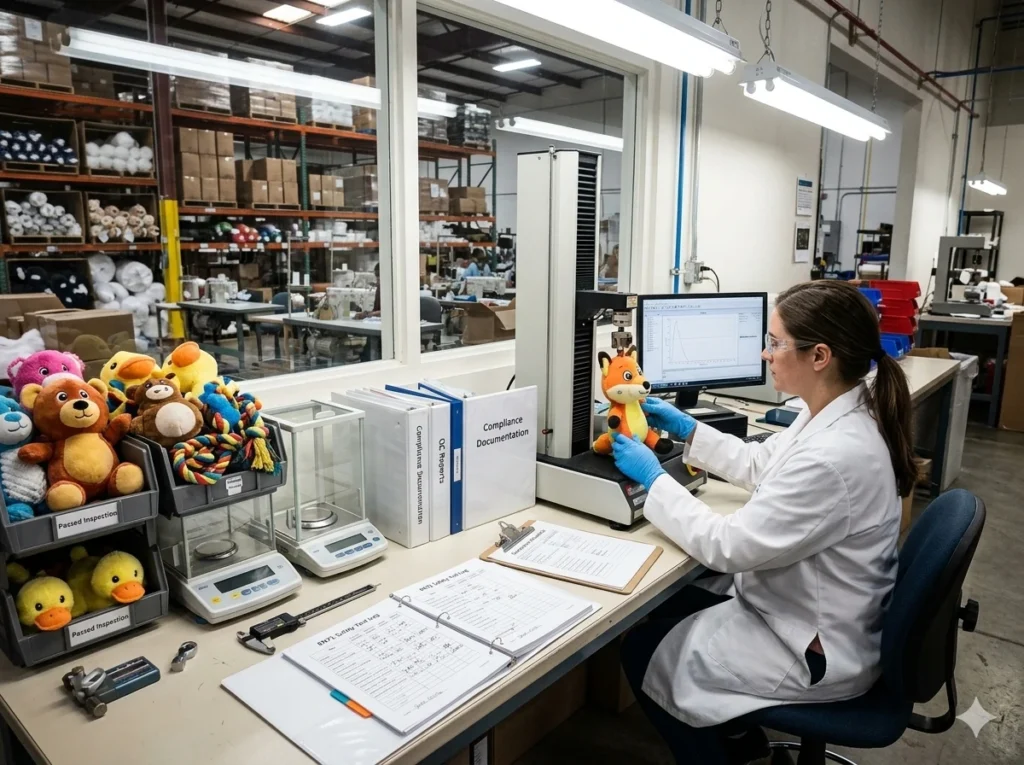
B2B buyers cannot rely on visual inspections alone. Validating the most durable plush dog toys wholesale requires destructive mechanical testing that simulates long-term abuse.
Our QA team operates under strict Acceptable Quality Limit (AQL) 2.5 parameters for major defects, and AQL 4.0 for minor visual deviations. We systematically select random samples from each production batch and subject them to extreme physical stress.
Destructive Testing Implementation
We execute a battery of physical tests to ensure compliance with international durability expectations. Products that fail these tests dictate an immediate halt to the production line and a root-cause analysis of the manufacturing batch.
Pre-Shipment Destructive Testing Parameters
| Testing Protocol | Methodology | Minimum Pass Threshold | Purpose |
| Seam Pull Test | Pneumatic clamps applying opposing force to seam | Withstand 90 Newtons for 10 seconds | Prevent seam rupture |
| Eye/Nose Tension Test | Grip-and-pull on attached plastic components | Withstand 70 Newtons for 10 seconds | Prevent choking hazards |
| Drop Test | Weighted drop of finished carton from 1.5 meters | Zero product deformation | Validate packaging integrity |
Check 6: Chemical Compliance and Toxicity Screening
In the modern regulatory environment, chemical compliance is just as critical as mechanical strength. Importers targeting the USA, Canada, Europe, and Singapore must navigate a labyrinth of chemical restrictions.
Azo dyes, heavy metals (lead, cadmium), and phthalates are frequently found in cheap, unverified raw materials. When an animal chews on a plush product, their saliva facilitates the transfer of these toxic compounds into their bloodstream. If border customs flag your shipment for a chemical spot-test and detect prohibited substances, the entire container will be seized and destroyed at your expense.
Mitigating Regulatory Friction
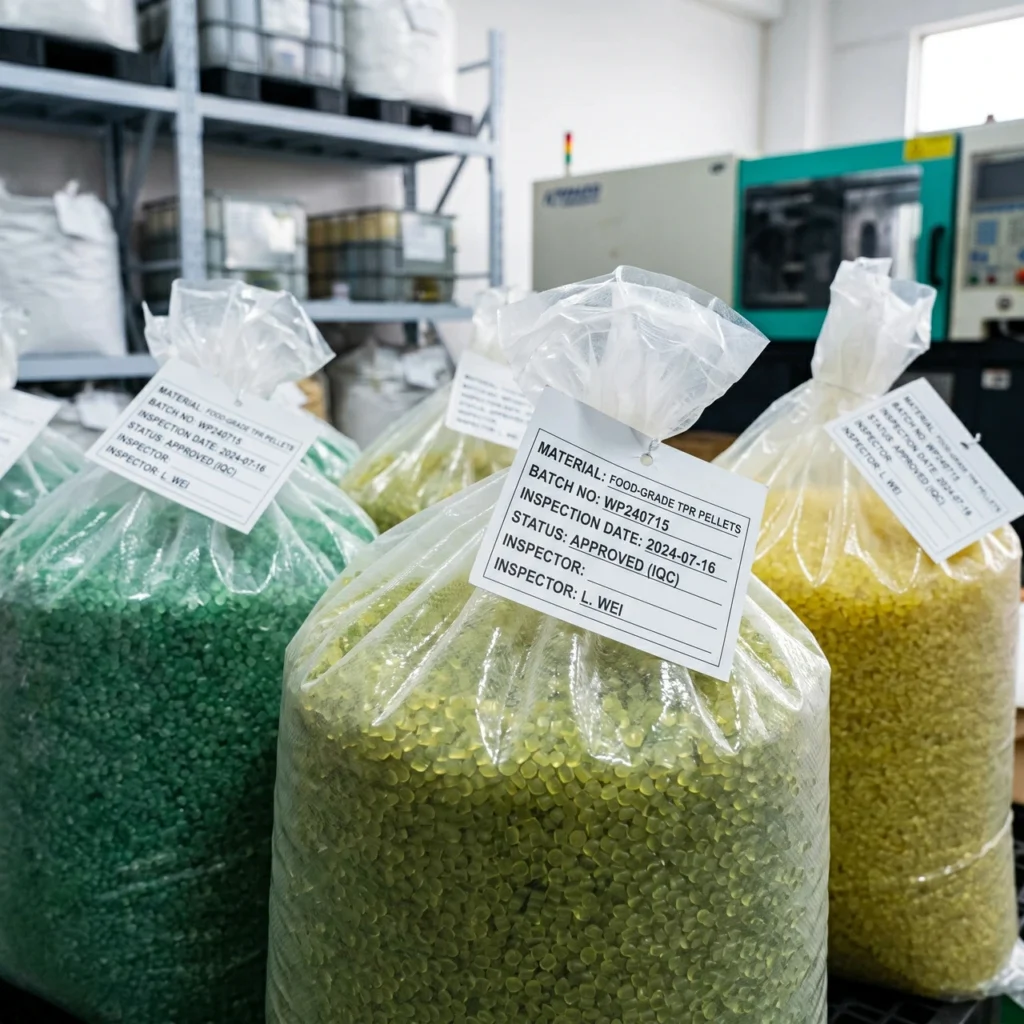
Our procurement strategy demands complete transparency from textile mills. We require updated SGS, Intertek, or TUV Rheinland testing reports for all fabric lots before they enter our facility. We ensure absolute adherence to the standards set by the U.S. Consumer Product Safety Commission (CPSC) and the EU’s REACH directives. We invite our partners to review our stringent internal pet product safety standards to understand our commitment to zero-toxicity manufacturing.
Check 7: Packaging and Moisture Control During Transit
The final vulnerability in the B2B supply chain occurs during trans-oceanic shipping. Even if a product leaves our factory in pristine condition, the fluctuating temperatures and high humidity inside a shipping container can trigger aggressive mold growth, ruining the entire consignment.
Our QA protocols extend to the precise calculation of desiccant requirements. We insert high-absorption silica gel packets into every individual polybag, and deploy industrial-grade calcium chloride hanging desiccants throughout the shipping container walls. Furthermore, we closely monitor the moisture content of the corrugated master cartons prior to loading, ensuring they fall below a strict 12% moisture threshold to prevent the cardboard from acting as a moisture reservoir during the voyage.
Call to Action: Securing a reliable supply chain means eliminating risk before the manufacturing process even begins. Do not leave your brand’s reputation vulnerable to substandard factory practices, customs rejections, or catastrophic product recalls. Protect your margins and your customers by partnering with a manufacturer that prioritizes clinical risk control. Book a comprehensive factory audit or request our detailed QA manual today. Reach out to our technical team via our Contact Us page to secure your compliance-driven production run.
Frequently Asked Questions (FAQs)
Q1: What exactly does an AQL 2.5 standard mean for my wholesale order?
AQL 2.5 means that in a standard sampling of your order, the maximum acceptable defect rate for major functional issues is 2.5%. If the random sample exceeds this threshold during our pre-shipment inspections, the entire batch is rejected, quarantined, and reworked at our expense before shipping.
Q2: How do you guarantee the plush toys are free from broken sewing needles?
Every individual unit is mandated to pass through a calibrated 9-point industrial metal needle detector. The machine is calibrated at the start of every shift using 1.0mm ferrous and 1.2mm non-ferrous test spheres. Any unit triggering the sensor is immediately isolated and destroyed.
Q3: Can we request specific tensile strength modifications for our OEM designs?
Yes. For clients requiring extreme durability, we can upgrade the primary material base to include a secondary heavy-duty mesh lamination, and transition all stitching to high-denier bonded nylon threads capable of withstanding over 420 Newtons of force.
Q4: How do you prevent internal squeakers from becoming a choking hazard?
We engineer a proprietary redundant containment system. Internal squeakers are encapsulated within a tightly woven, double-stitched secondary nylon pouch that is anchored into the main structural seam, ensuring they remain inaccessible even if the exterior plush is breached.
Q5: What documentation is provided to clear USA and EU customs without delays?
We supply comprehensive testing documentation including restricted substance lists (RSL) clearance, heavy metal analysis (EN71-3, Prop 65), Azo-dye-free certifications, and complete commercial invoices detailing accurate HS codes for frictionless border clearance.
Q6: What measures are taken to prevent mold growth during trans-oceanic shipping?
We strictly control the moisture content of our master cartons to below 12%. We also insert individual silica gel desiccants into every sealed polybag and install industrial calcium chloride moisture absorbers inside the shipping container walls to control humidity fluctuations.
Q7: How do you manage the seam allowances to prevent fraying and structural failure?
Our factory mandates a minimum interior seam allowance of 8mm to 10mm combined with an 8-10 Stitches Per Inch (SPI) standard. Furthermore, all critical junctions and appendage attachment points undergo automated bartack reinforcement stitching.