Overview: Operating an import or retail business model relies heavily on maximizing your profit margins while meeting target consumers’ demands for durability and safety. However, ordering cheap wholesale dog toys in low volumes severely disrupts unit economics. In an order of 500 units, fixed machine setup and tooling costs drive up the unit price by a staggering 42%, whereas raw material costs account for merely 15%. Achieving true cost efficiency requires scaling up to amortize these fixed factory overheads.
The 500-Piece Dilemma: The Reality of Minimum Order Quantities
“Why can’t you just make 500 pieces for me?”
This is undeniably the most frequent question our costing engineers and sourcing directors at Wehao Pets field during initial consultations with CFOs, procurement directors, and category managers from the US, UK, PH, and Europe. Many buyers assume that purchasing wholesale dog toys for resale operates on a linear pricing scale—if 5,000 toys cost $5,000, then 500 toys should cost $500. Unfortunately, in the realm of industrial B2B manufacturing, economies of scale dictate a fundamentally different mathematical reality.
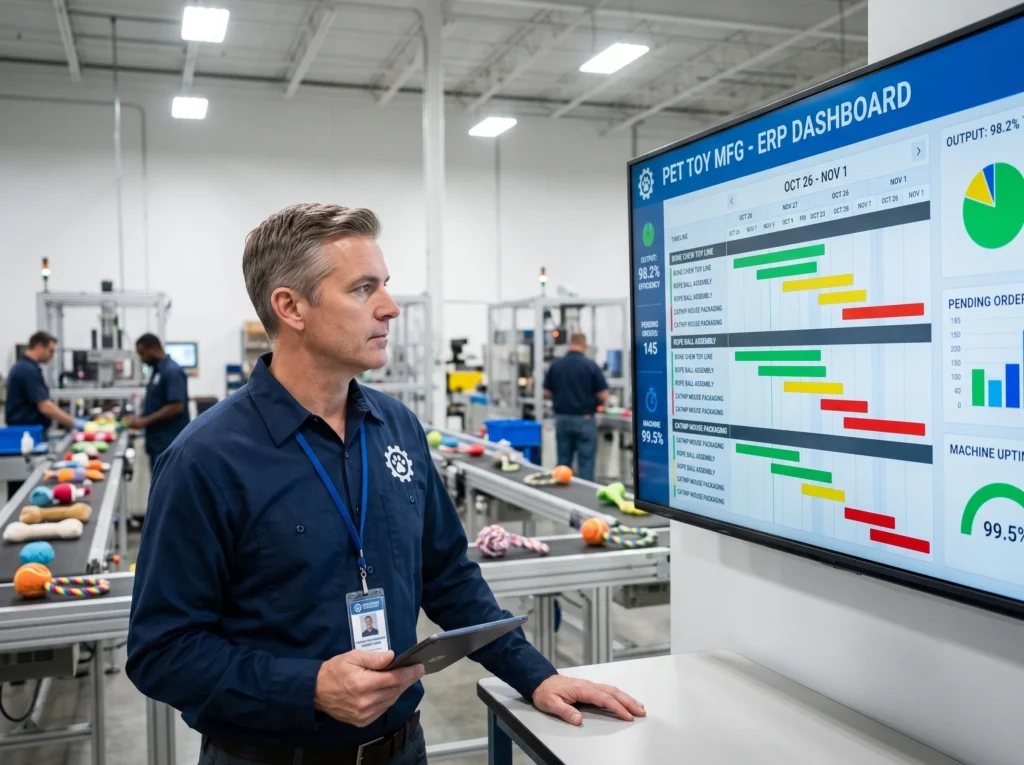
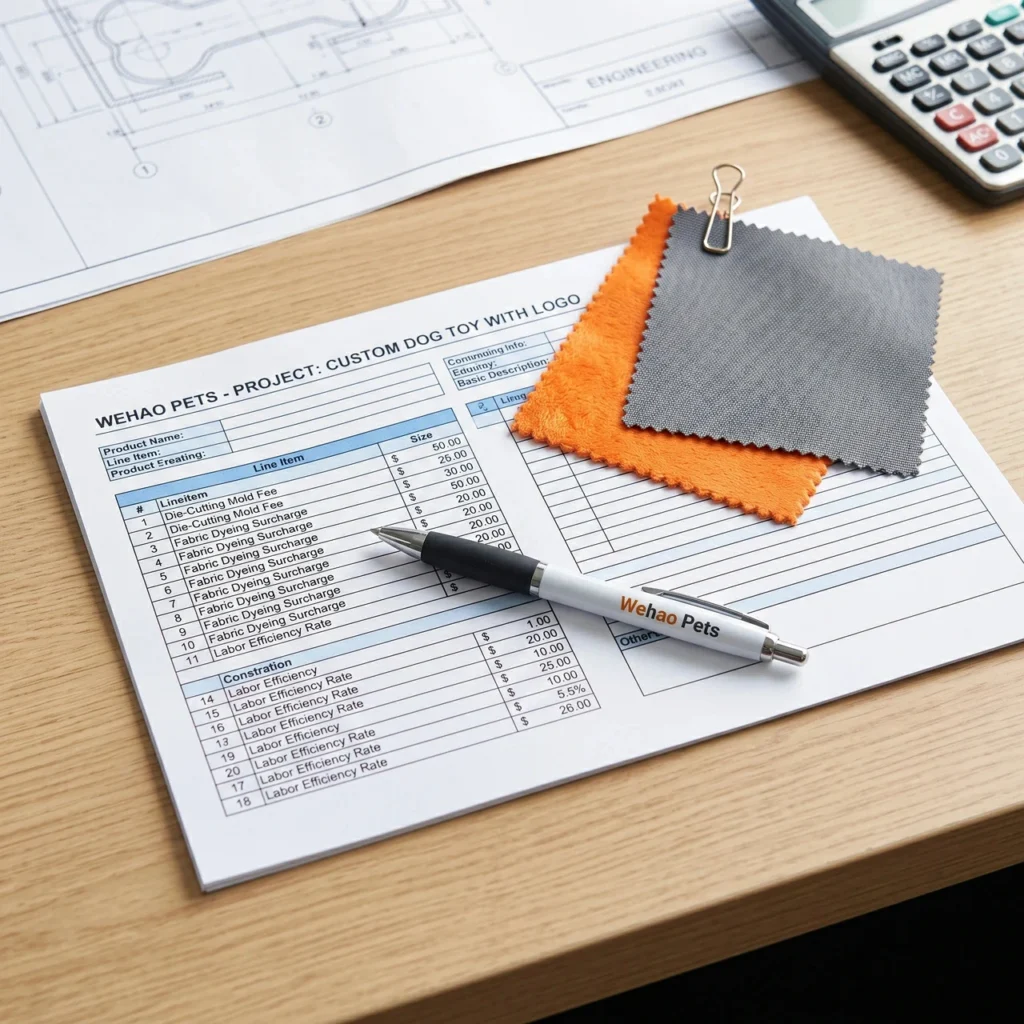
When you partner with a factory like Wehao Pets, you are not simply paying for plush fabric, squeakers, and polyester stuffing. You are purchasing time on multi-million-dollar production lines. You are securing machine setup time, financing the creation of custom die-cutting molds, and paying for the labor efficiency rates required to assemble pet products at a commercial scale.
To fully understand how to source cheap wholesale dog toys effectively, procurement teams must grasp the strict division between fixed costs and variable costs. Fixed costs remain unchanged whether we run the production line for 10 minutes or 10 days. When those fixed costs are divided among a mere 500 units, the financial burden per item becomes exponentially higher, destroying your retail margin.
The Mathematics of Manufacturing: A Deep Dive into Cost Allocation
To provide total transparency into our supply chain operations, our costing engineers have mapped out a hypothetical but highly accurate cost breakdown comparing a low-volume test order (500 units) against a standardized commercial volume order (3,000 units). This model assumes the production of a standard 8-inch plush squeaky dog toy utilizing custom Pantone-dyed fabric and an embroidered brand logo.
Mandatory Cost Breakdown Table: 500 Units vs. 3,000 Units
The following table explicitly outlines how economies of scale influence the ex-works (EXW) factory price of wholesale dog toys for resale:
| Cost Component | Cost at 500 Units (USD) | Cost at 3,000 Units (USD) | Financial & Production Analysis |
| Fabric Sourcing | $0.85 | $0.35 | Custom dyed fabric requires a fabric roll minimum yardage (typically 1,000 yards). A 500-unit order leaves massive raw material waste that the buyer must absorb. |
| Mold Setup Fee | $0.60 | $0.10 | Die-cutting mold fees and embroidery digitization carry a flat fixed rate of approximately $300. Spreading this over only 500 units causes a heavy unit price spike. |
| Labor/Cutting | $0.75 | $0.40 | Labor efficiency rates peak only after workers repeat the same sewing pattern for 1-2 days. A 500-unit run finishes before the sewing line reaches peak velocity. |
| Wastage | $0.20 | $0.08 | Machine setup time generates initial fabric scrap regardless of order size. Larger runs significantly dilute this initial waste percentage. |
| Total Unit Cost | $2.40 | $0.93 | Scaling to 3,000 units yields a 61% reduction in total unit cost. |
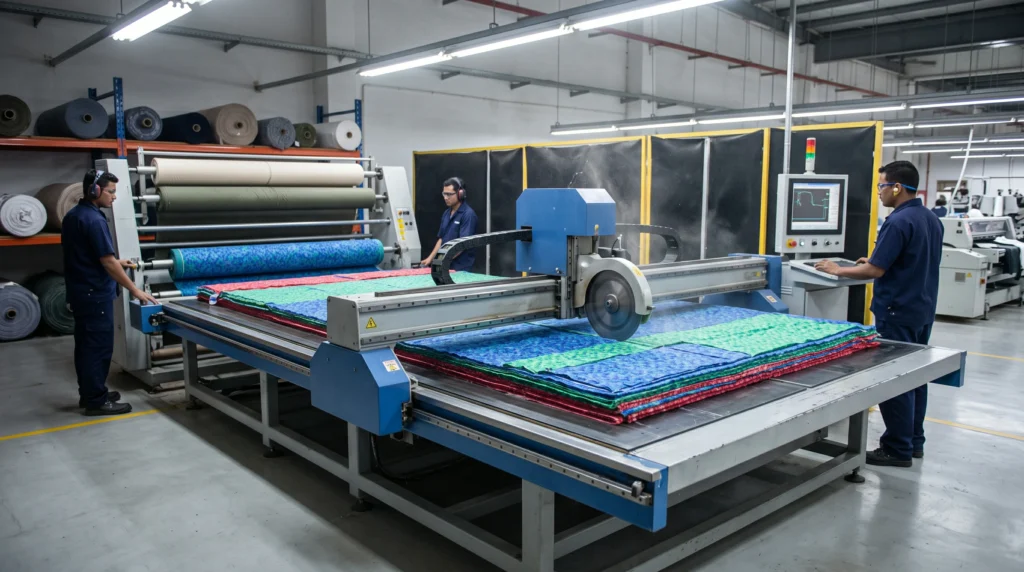
Fixed Costs vs. Variable Costs in Dog Toy Production
To engineer the most competitive price for your brand, procurement teams must understand exactly where their capital is being deployed. Let us dissect the core industrial terminology that dictates your final quotation.
1. Fabric Roll Minimum Yardage (Fixed & Sunk Cost)
Textile mills do not dye fabric in small batches. Industrial dyeing vats require a minimum volume of water, chemical dyes, and energy to operate efficiently. Consequently, if your target market demands a highly specific “brand color,” the mill will impose a strict fabric roll minimum yardage (often 1,000 to 2,000 yards or 500 kilograms). If your 500-unit order only consumes 100 yards, you are inherently paying for 900 yards of unused fabric that will sit in our warehouse.
2. Die-Cutting Mold Fees (Fixed Tooling Cost)
Before a single piece of fabric is sewn, we must forge physical steel blades (die-cutting molds) in the exact shape of your toy’s panels. This is a hard fixed tooling cost. Whether the stamping machine strikes the blade 500 times or 50,000 times, the initial cost to fabricate the steel mold remains identical.
3. Labor Efficiency Rates and Machine Setup Time (Variable heavily influenced by Volume)
Our sewing operators are highly skilled, but every new toy design presents a different geometry. For the first few hours of any production run, labor efficiency rates are low as operators adjust their sewing machine tensions and memorize the sequence of assembly. In an order of 3,000 units, the line achieves a “flow state” where output per hour doubles, drastically lowering the labor cost per unit.
Value Engineering: Proven Engineering Tricks to Lower MOQ and Unit Price
If your current cash flow or warehousing capacity strictly limits you to smaller order volumes, our costing engineers can deploy Value Engineering strategies. We collaborate with your design team to modify the physical characteristics of the toy, stripping away unnecessary fixed costs while maintaining the integrity of the product.
Mandatory “Cost Saving” List: Engineering Hacks for Better Margins
By implementing these specific engineering tricks, you can successfully source cheap wholesale dog toys without compromising on structural safety:
- Utilize Stock Fabric Colors: Instead of demanding custom Pantone dyeing, select from the hundreds of fabric rolls we already have in stock. Using stock fabric instantly bypasses the fabric roll minimum yardage constraint, allowing us to drop the MOQ significantly and remove the sunk cost of unused textiles.
- Standardizing Squeaker Sizes: Many brands design toys that require unusual, custom-sized internal squeakers. By standardizing squeaker sizes to our universally stocked 35mm or 45mm industrial EVA squeakers, we eliminate new mold injection fees and lower the component cost due to our existing massive bulk purchasing power.
- Simplify Embroidery Vectors: Embroidery machines charge by “stitch count” and machine setup time. A complex, multi-colored logo requiring 15,000 stitches will stall the production line. By simplifying the vector art to under 8,000 stitches, we reduce the time the toy spends on the machine, immediately lowering the unit price.
- Optimize Die-Cutting Dimensions for Fabric Width: Fabric rolls come in standard widths (e.g., 150cm). If your toy is sized such that cutting it leaves 25% of the width as unusable scrap, your wastage costs skyrocket. By adjusting the toy’s overall size by just 1-2 centimeters, we can achieve a 95% nesting efficiency on the die-cutting machine, drastically reducing raw material waste.
The Hidden Supply Chain Dangers of Ultra-Cheap Production
While the pursuit of cheap wholesale dog toys is understandable for cash-flow management, aggressive price-shopping below the established factory baseline introduces severe liabilities. Sourcing directors must recognize that if an overseas supplier offers a unit price that seems mathematically impossible, they are likely circumventing critical quality control and safety standards.
The Risks of Disproportionately Low-Cost Manufacturing
- High Defect Rates and Return Liabilities: Extreme cost-cutting usually means bypassing the Quality Control (QC) needle-detection phase and tensile strength testing. Toys that easily rip apart upon first use will generate catastrophic negative reviews on platforms like Amazon, ultimately destroying your brand equity and leading to costly customer refunds.
- Use of Uncertified, Toxic Materials: To artificially lower the price, illicit suppliers will substitute certified, eco-friendly dyes with cheaper alternatives that may contain lead or carcinogenic AZO compounds. If these uncertified materials fail random customs inspections in the US or Europe, your entire shipment will be seized and incinerated at your expense.
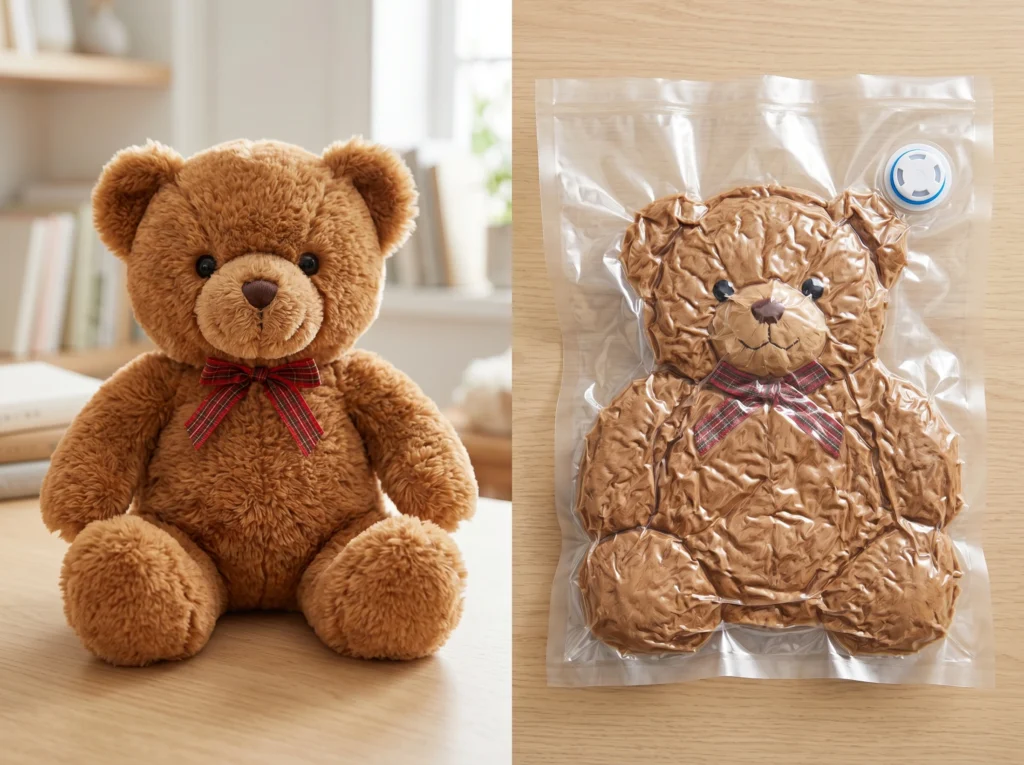
- Inconsistent Filling Weights: High-quality PP (polypropylene) cotton provides the density and “bounce” consumers expect. To save fractions of a cent on shipping and materials, subpar factories will under-stuff the toys. When the toys undergo vacuum compression for shipping, under-stuffed products permanently deform and arrive looking cheap and flat.
- Premature Seam Failures: Durable wholesale dog toys for resale require double-stitched nylon threads. Factories quoting hyper-deflated prices will switch to single-stitched, weak polyester threads to speed up labor efficiency rates, guaranteeing the toy will fail under the moderate bite force of a medium-sized dog.
Advanced Supply Chain Strategy: Materials, Complexity, and Profit Margins
Beyond basic volume, the fundamental architecture of the dog toy dictates the financial boundaries of your project. Our sourcing directors continuously evaluate global raw material indexes to provide accurate forecasting. To help CFOs visualize how product complexity impacts the baseline tooling and fixed costs, we have prepared an analytical matrix.
Material Complexity vs. Tooling Cost Matrix
| Toy Architecture & Material Choice | Estimated Fixed Tooling & Setup Impact | Recommended B2B Buyer Strategy |
| Standard Plush + Basic Squeaker | Very Low (Uses existing templates) | Ideal for rapid market testing and promotional wholesale dog toys. |
| Custom TPR (Thermoplastic Rubber) Spikes | Extremely High (Requires precise steel injection molds) | Best reserved for established brands with high-volume, heavy-chewer demographics. |
| Multi-Layered Kevlar/Ballistic Nylon | High (Requires specialized heavy-duty laser cutters) | Suited for premium tactical or “indestructible” toy product lines. |
| RPET (Recycled Polyester) Fabrics | Moderate (Requires certification chain-of-custody fees) | Strategic choice for European markets with strict ESG and sustainability mandates. |
Logistics, Volume, and Shipping Efficiency Mathematics
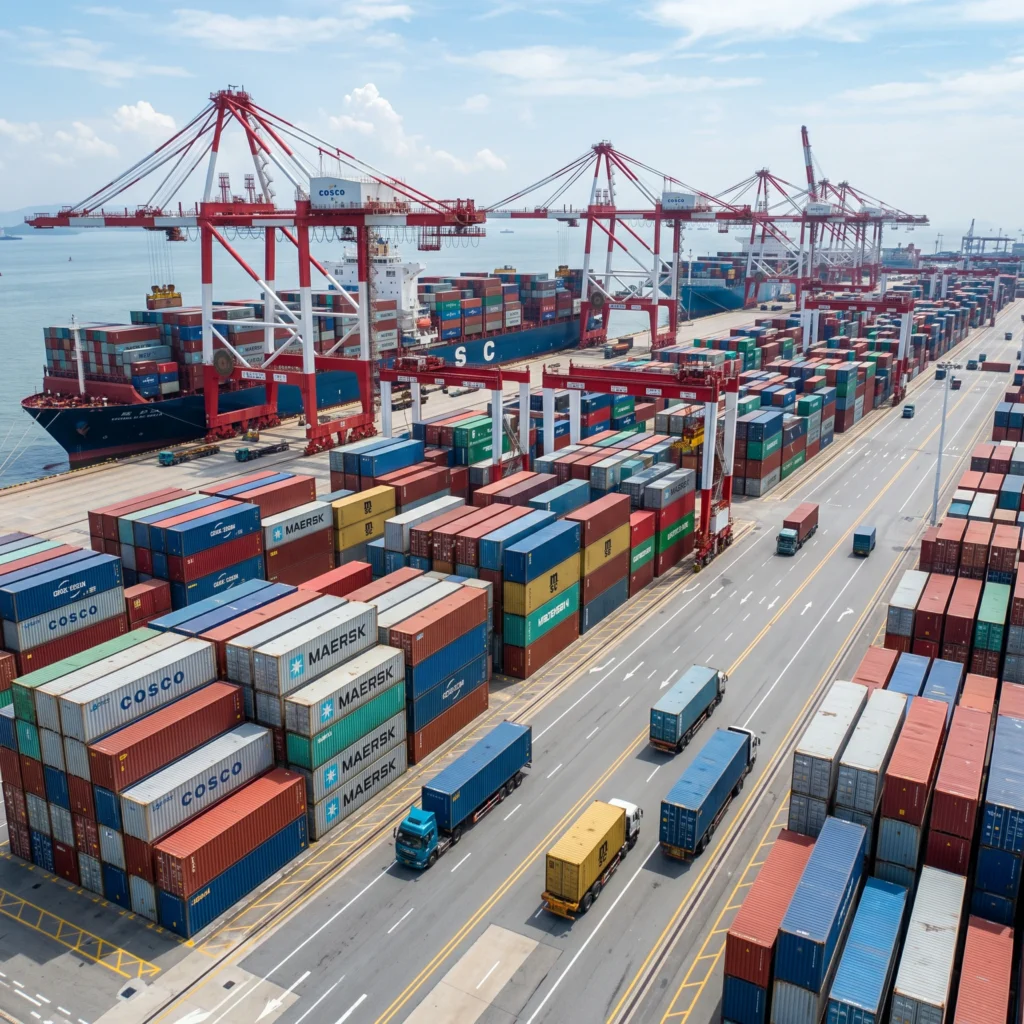
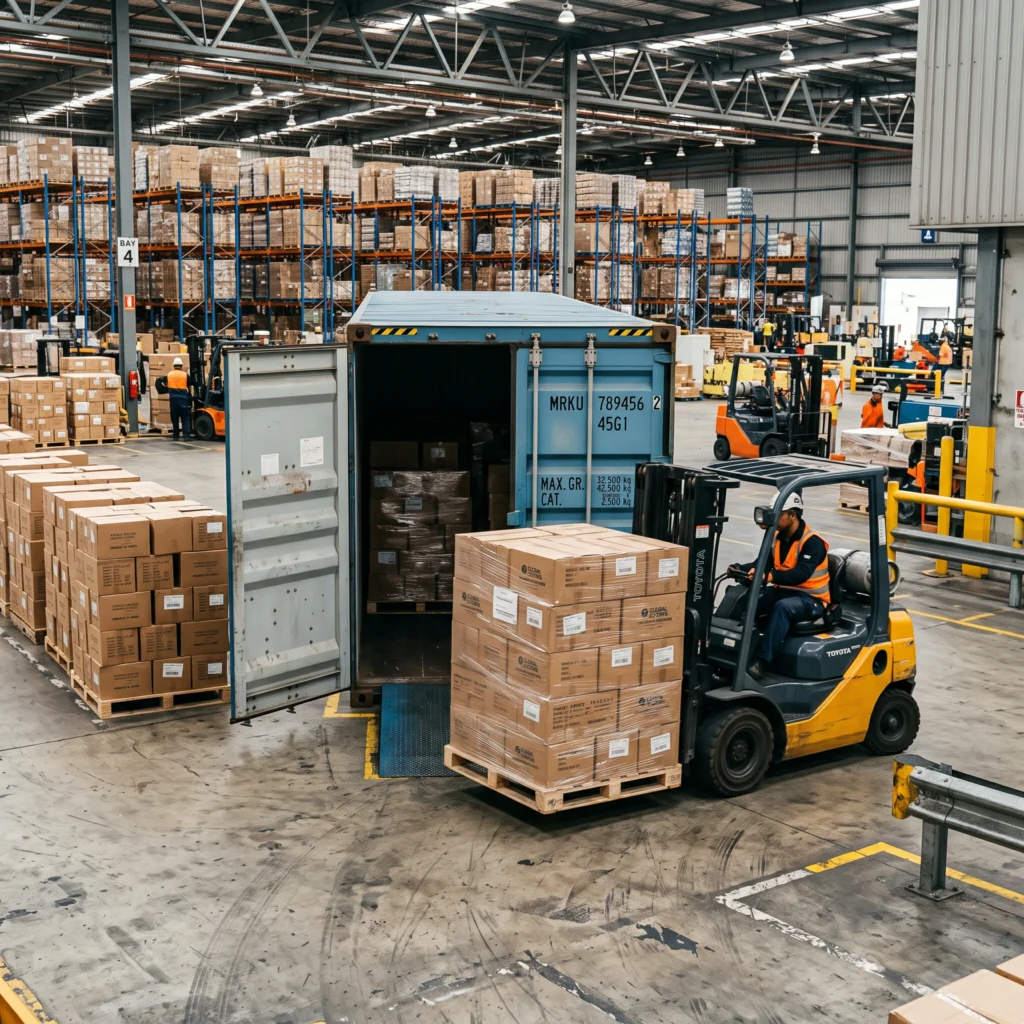
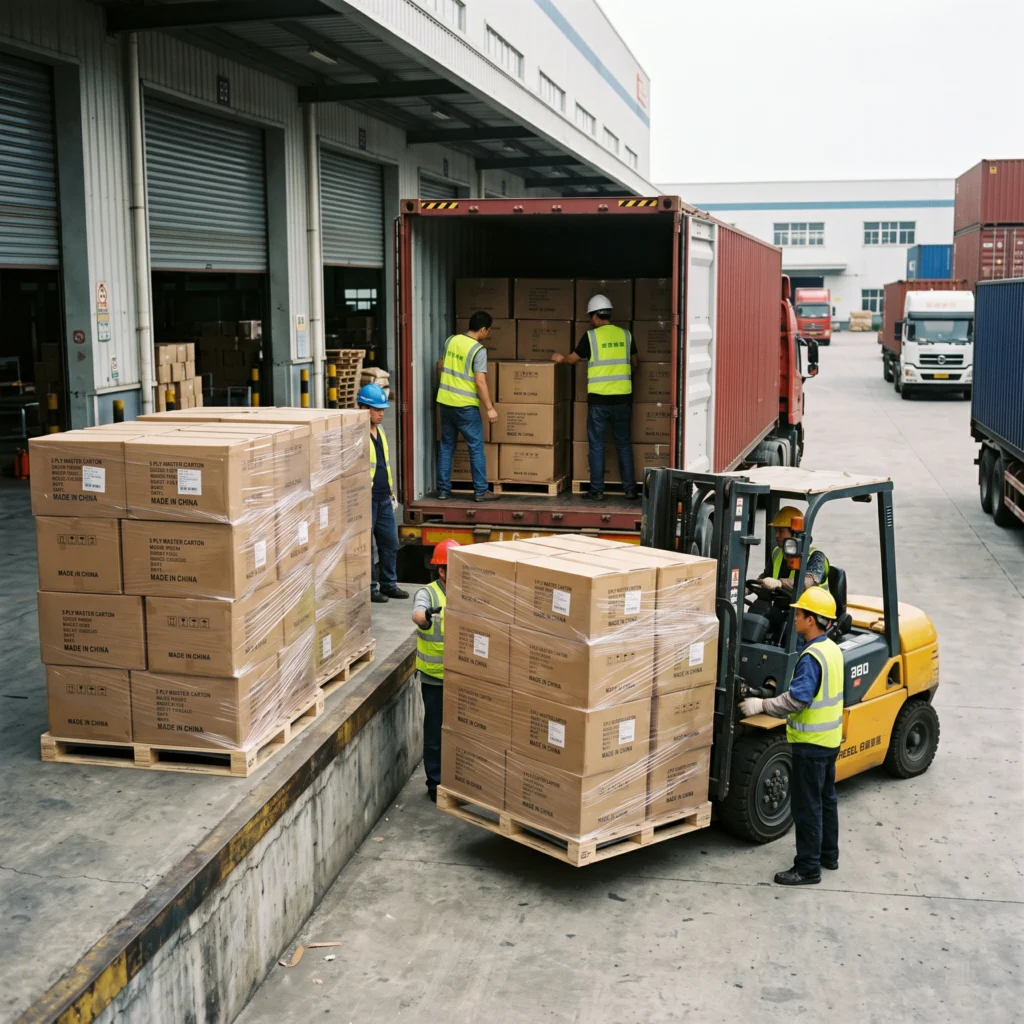
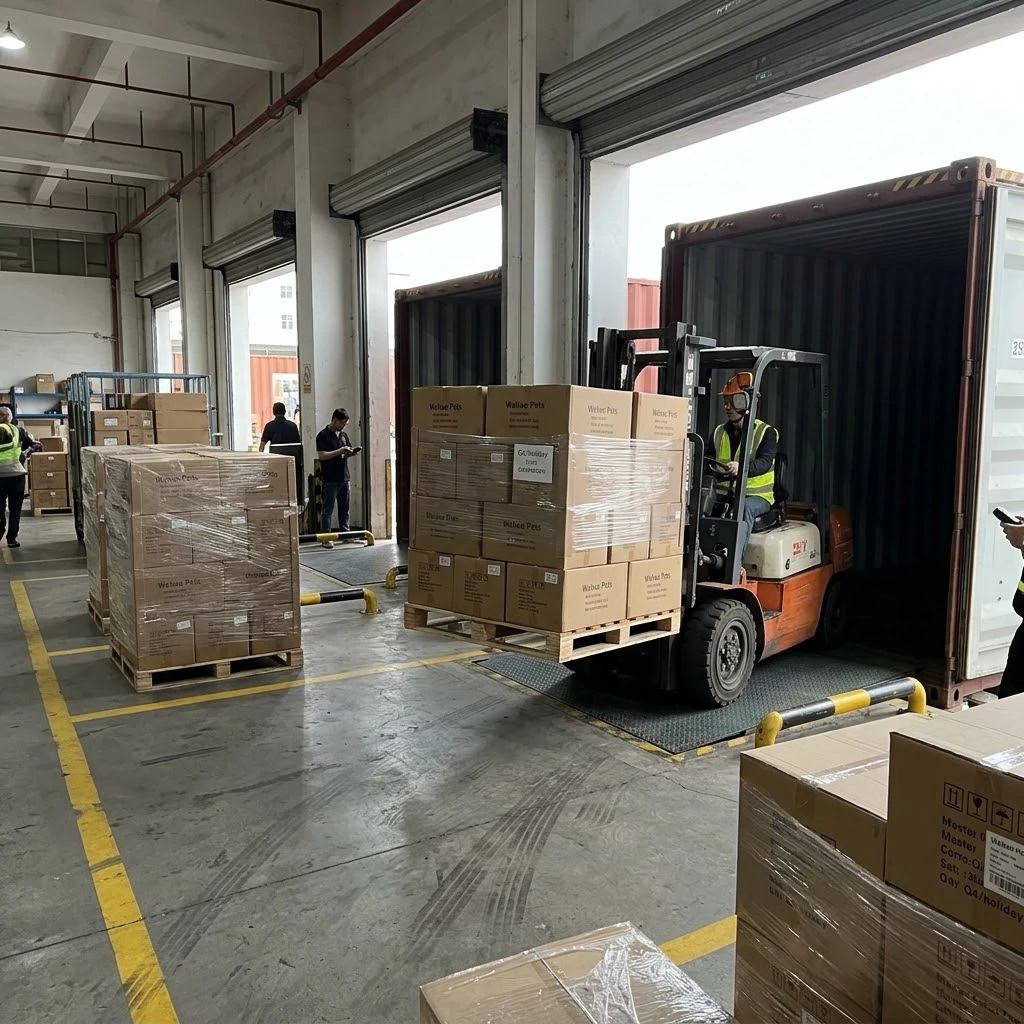
Manufacturing the toy is only the first half of the B2B supply chain equation. The second half is moving that product from our factory floor in Dongguan to your distribution center in California, London, or Berlin. Dog toys are notoriously “volumetric cargo”—they are lightweight but take up a massive amount of physical space (Cubic Meters or CBM).
Our costing engineers work closely with freight forwarders to ensure that the volume of your order maximizes the space within a shipping container. Shipping half-empty containers destroys your landed margin.
Sea Freight Volume Amortization Table
Note: Shipping rates fluctuate globally; this table serves as a mathematical model for demonstrating volume efficiency.
| Container Size & Shipping Method | Estimated Total Cargo Volume | Estimated Total Freight Cost (Ocean) | Landed Logistics Cost per Toy |
| LCL (Less than Container Load) | 5 CBM (approx. 1,500 standard toys) | $1,100 | $0.73 per toy |
| 20-Foot Container (20GP) | 28 CBM (approx. 8,500 standard toys) | $3,200 | $0.37 per toy |
| 40-Foot High Cube (40HQ) | 68 CBM (approx. 21,000 standard toys) | $4,800 | $0.22 per toy |
By scaling your order from an LCL shipment to a full 40HQ container, the logistics cost per unit drops by over 70%. Furthermore, Wehao Pets employs industrial vacuum-compression bagging technology to squeeze the ambient air out of plush toys before packing them into master cartons, allowing you to fit up to 40% more units into the exact same container space. For more insights on global freight strategies, we recommend reviewing industry standards on platforms like Supply Chain Management Review.
Frequently Asked Questions (FAQ): MOQ, Tooling, and Supply Chain Finance
To further assist procurement directors in navigating the complexities of overseas manufacturing, we have compiled the most hyper-specific questions regarding tooling costs and MOQ negotiation.
Q1: What exactly does the “tooling cost” cover when manufacturing custom dog toys?
Tooling costs cover the physical creation of the manufacturing assets. This includes machining the steel die-cutting mold fees used to stamp the fabric, digitizing the vector files for the embroidery machines, and creating silk-screen printing plates. These are non-refundable fixed costs necessary to prepare the factory for mass production.
Q2: Can we negotiate the MOQ if we sign a contract promising larger annual order volumes?
While we deeply value long-term B2B partnerships, our minimum order quantities are often dictated by upstream raw material suppliers. We cannot force a textile mill to dye 50 yards of fabric. However, we can aggressively lower your MOQ if you agree to Value Engineering principles, such as utilizing our existing stock fabric colors and standardizing squeaker sizes.
Q3: How much can vacuum-compression packing actually reduce my overall shipping costs?
Depending on the density of the PP cotton used, vacuum compression can reduce the total Cubic Meter (CBM) volume of plush dog toys by 30% to 50%. This structural reduction directly impacts your ocean freight and 3PL warehousing fees, dramatically improving the landed margin for wholesale dog toys for resale.
Q4: Is it more cost-effective to manufacture one large, complex dog toy or two smaller, simpler toys?
Financially, manufacturing one larger toy is almost always cheaper than manufacturing two smaller ones. Two smaller toys require double the labor efficiency rates for cutting, double the sewing time, and double the internal squeakers, which heavily inflates the variable assembly costs compared to a single larger unit.
Q5: Why is the initial prototyping and sample fee so high compared to the final mass-production unit price?
The sample fee (typically $50 to $150) is not a reflection of mass production. It covers a master pattern maker’s full day of intensive manual labor to translate a 2D drawing into a 3D physical object, alongside the time spent sourcing scrap fabrics. Once your bulk order proceeds and absorbs the fixed costs, this sample fee is standardly refunded.
Q6: What is the true production lead time for an order of 10,000 custom plush dog toys?
For an order of 10,000 units, standard B2B lead time is approximately 35 to 40 days after the final pre-production sample is approved. This timeline accounts for 15 days to dye and deliver the raw textiles, and 20 to 25 days for die-cutting, high-speed sewing line assembly, stuffing, and comprehensive quality control.
Q7: Can our company hire a third-party Quality Control agency to inspect the goods before final balance payment?
Absolutely. Total transparency is a cornerstone of our operations. We heavily encourage procurement directors to deploy third-party inspection agencies (such as SGS, TUV, or Intertek) to our factory floor in Dongguan. They are welcome to verify tensile strength, seam integrity, and material safety before the container is sealed.
Conclusion: Partner with Engineering Experts to Maximize Your Margins
Procuring cheap wholesale dog toys is not about finding a factory willing to cut corners; it is about finding a manufacturing partner capable of executing profound Value Engineering. By understanding the intricate balance of machine setup time, die-cutting mold fees, and labor efficiency rates, your procurement team can transform a standard sourcing operation into a highly profitable supply chain.
Whether you require standard off-the-shelf designs or highly complex OEM engineering, our factory infrastructure is designed to scale with your brand. We invite you to review our comprehensive OEM & ODM Services to understand our full industrial capabilities, or browse our existing line of Wholesale Squeaky Dog Toys to see how standardized manufacturing can immediately benefit your retail margins.
Action Required for CFOs and Sourcing Directors: Do not let unoptimized fixed costs erode your profitability. Send our costing engineers your target price, technical pack, and design files today. We will immediately audit your product architecture and provide actionable engineering tricks to optimize your materials for significantly better margins.
👉 Contact Us Today for a Comprehensive Costing Analysis