Every single week, our engineering team and production managers at Wehao Pets review dozens of RFQs (Requests for Quotation) from overseas buyers that are fundamentally flawed. Buyers frequently demand “indestructible” chew toys that are simultaneously “dental-friendly,” “eco-friendly,” and priced under 50 cents a unit. This is a contradictory trifecta that ignores basic material science and manufacturing realities. You cannot bend the laws of physics or factory economics just because a marketing department wants a catchy label. We are writing this to correct amateur sourcing mistakes and save serious buyers—significant time, money, and liability.
Overview (TL;DR): Successful B2B importing requires understanding real factory floor dynamics, not just browsing touched-up Alibaba pictures. To determine which type of chew toy is safe for a dog’s teeth, buyers must balance durometer ratings, tooling costs, and structural integrity. A safe chew toy is engineered, not just a cheap mold.
Myth #1: “Rock-hard toys are the best and safest for aggressive chewers.”
- Fact: Toys that lack surface yielding will fracture a dog’s teeth before the toy itself breaks.
- The Factory Reality: From a manufacturing standpoint, hard plastics like high-density Nylon or cheap PU (Polyurethane) are incredibly inexpensive and fast to mold. The cycle times on the injection machines are short, meaning factories can pump out thousands of units per day. But when you ask an unverified supplier for “maximum durability” without specifying a Shore A Durometer rating, inexperienced factories will default to the hardest, cheapest plastic available to avoid your return claims.
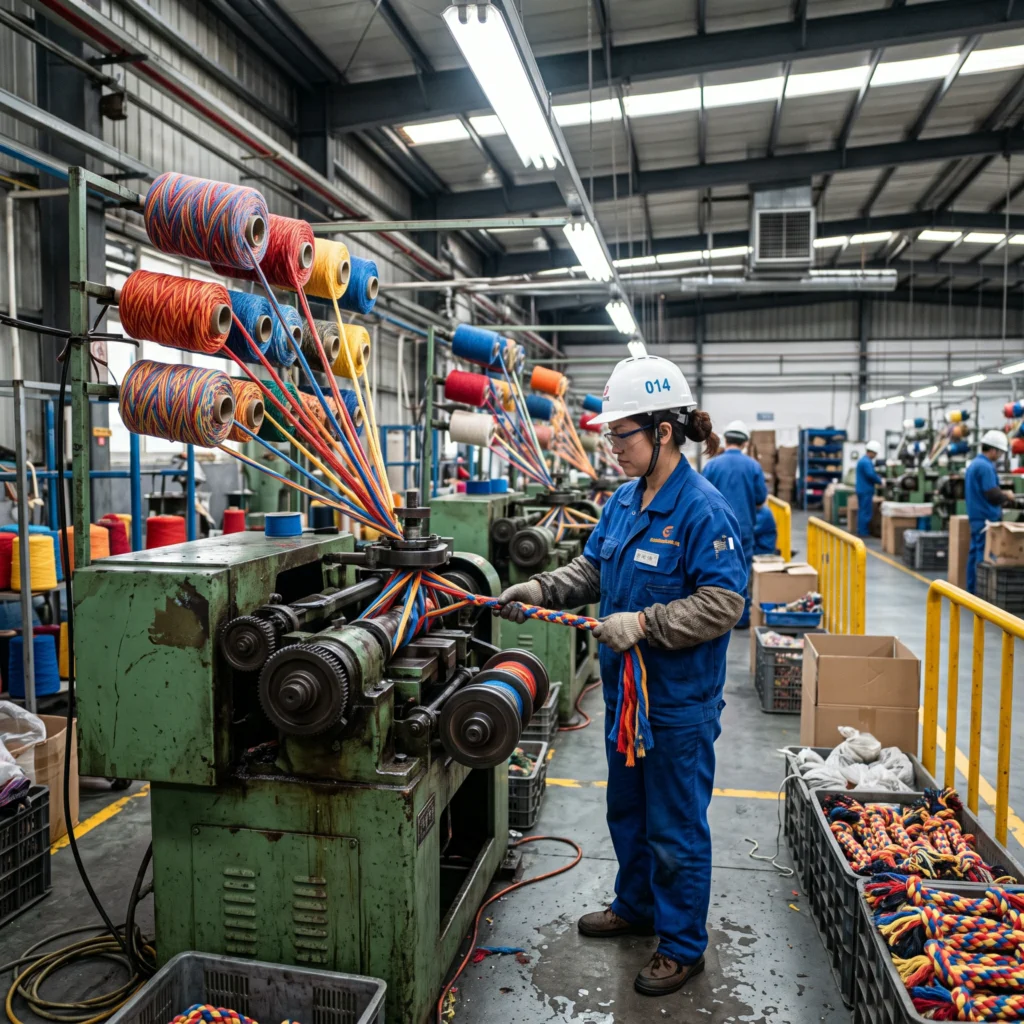
On our production lines, we focus heavily on multi-layer TPR (Thermoplastic Rubber) co-extrusion. Achieving a chew-safe 40-70 Shore A rating—which provides the necessary “give” to protect canine enamel—requires precise temperature control in the barrel and longer curing times in the mold. This slows down production, increasing the cost per unit. If a supplier quotes you a dirt-cheap price for “durable chew toys,” they are almost certainly skipping the stabilization phase or using harsh resins, resulting in a brittle product that is a major dental hazard for the end consumer.
Myth #2: “100% natural rubber is always safer than synthetic materials for dental toys.”
- Fact: Poorly vulcanized “natural” rubber is highly toxic, unstable, and breaks down rapidly under jaw pressure.
- The Factory Reality: E-commerce buyers love the marketing angle of “all-natural,” but they rarely understand the MOQ (Minimum Order Quantity) constraints of actual factory dyeing vats. Natural rubber requires vulcanization (usually a sulfur-curing process) to become stable enough for a dog to chew on safely. If a buyer demands a low MOQ of 500 units but wants five different pantone colors, small-scale factories are put in a bind.
To meet the impossible price and MOQ, cheap factories will shortcut the curing process or use harsh chemical accelerators to clean the mixing vats faster between color changes. This leaves residual chemicals on the toy and causes inconsistent material density, which can splinter and damage a dog’s gums. We tell our clients: if you want safe, dental-friendly natural rubber, you must commit to the vat yields. If you cannot meet those MOQs, high-grade synthetic TPR is a much safer, highly controllable alternative that is easier to color-match safely.
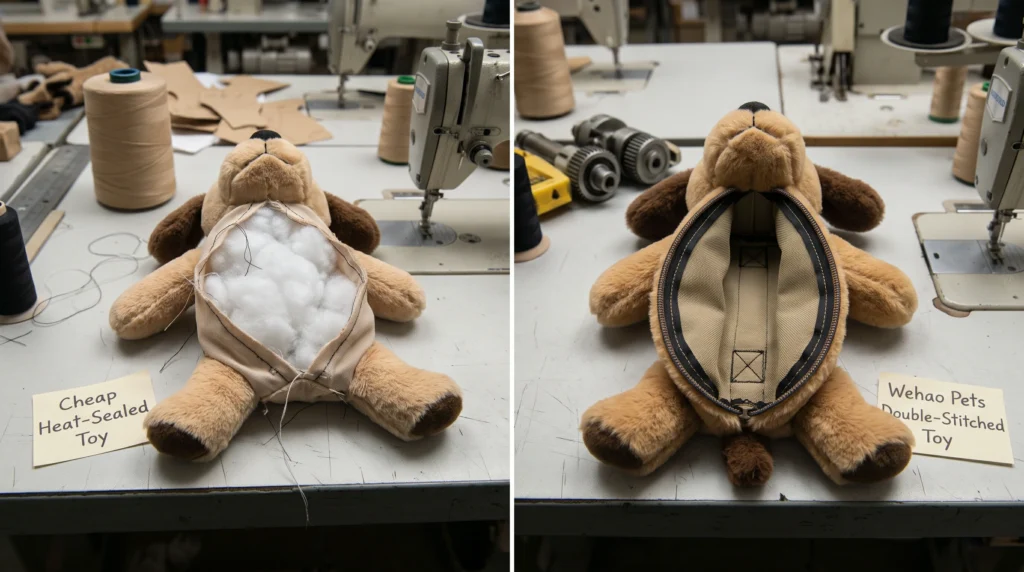
Myth #3: “Textured nubs automatically make any chew toy a ‘dental cleaning’ toy.”
- Fact: Nubs only clean teeth if the base material has the precise elasticity to allow the tooth to penetrate the surface without scraping the enamel.
- The Factory Reality: We constantly see client CAD designs featuring sharp, rigid spikes intended to “brush” a dog’s teeth. From a molding perspective, deep, rigid spikes are notoriously difficult to eject from a steel mold. To speed up the cycle time and reduce tooling costs, cut-rate factories will alter the material formulation to a stiffer, cheaper plastic that ejects easily from the mold.
The result? The toy ejects fast, the factory saves money, but the nubs act like sandpaper on a dog’s gums, causing bleeding and enamel wear. When you utilize professional OEM/ODM services, engineering teams design tapered, flexible nubs with specific draft angles. This allows for safe tool ejection while maintaining a soft Shore hardness that actually massages gums safely.
Material Comparison for Dental Safety and Manufacturing Viability
| Material Type | Ideal Shore Hardness | Tooling Cost / Complexity | Dental Safety Profile | Factory MOQ Impact |
| TPR (Thermoplastic Rubber) | 40A – 70A | Medium | Excellent (Yields to teeth, prevents fractures) | Low to Medium |
| Natural Rubber | 50A – 60A | High (Requires Vulcanization) | High (If properly cured and washed) | Very High (Due to vat dyeing) |
| Nylon / Hard Plastic | 80D+ | Low | Poor (High risk of tooth fractures) | Low |
| EVA Foam | 20A – 30A | Low | Moderate (Safe for gums, but easily swallowed if torn) | Low |
Myth #4: “Soft plush toys are completely harmless to teeth and gums.”
- Fact: The exterior fabric might be soft, but hidden synthetic threads, cheap bindings, and broken sewing needles cause severe oral lacerations.
- The Factory Reality: This is a classic sourcing trap. A buyer wants a highly durable plush chew toy, so they demand heavy-duty reinforcement. The factory responds by using thick nylon thread. However, instead of utilizing expensive double-stitching with folded, hidden seams, the factory uses cheap, exposed heat-sealing to save labor time.
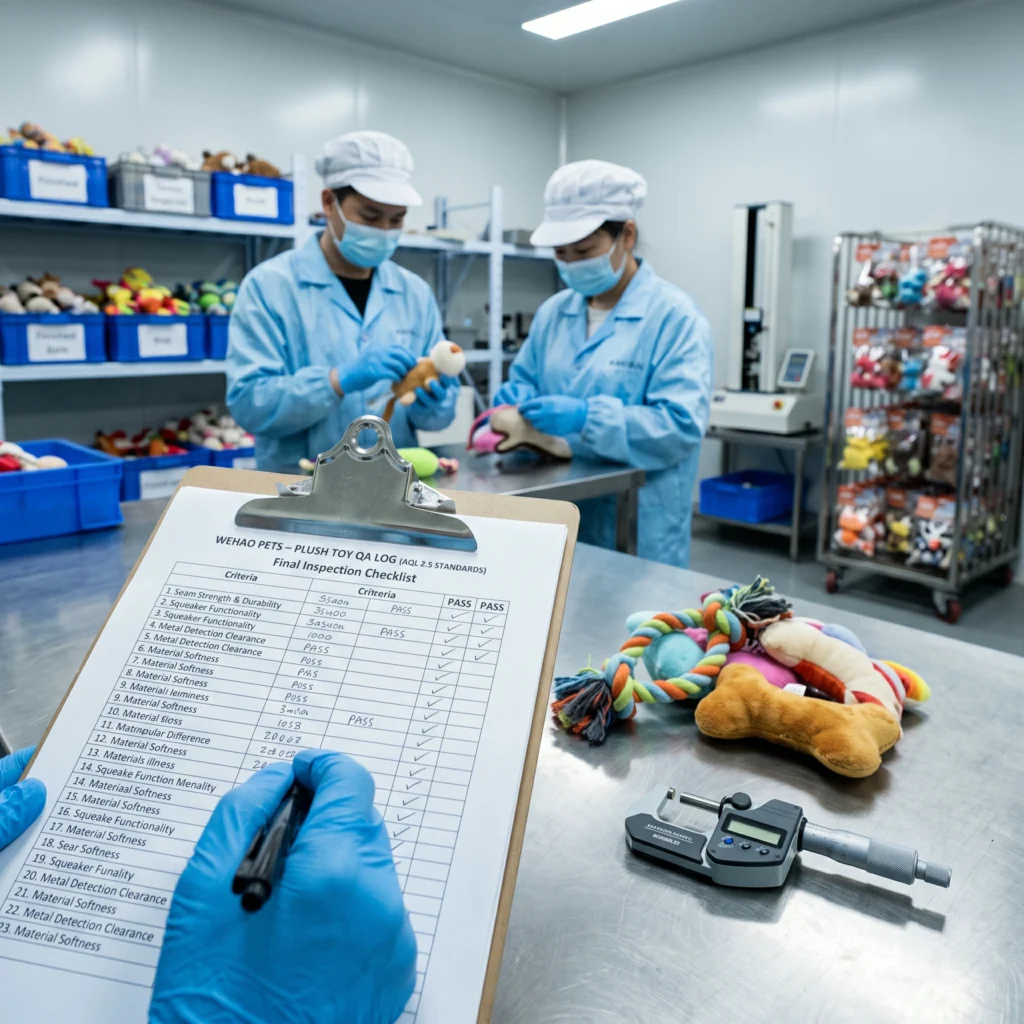
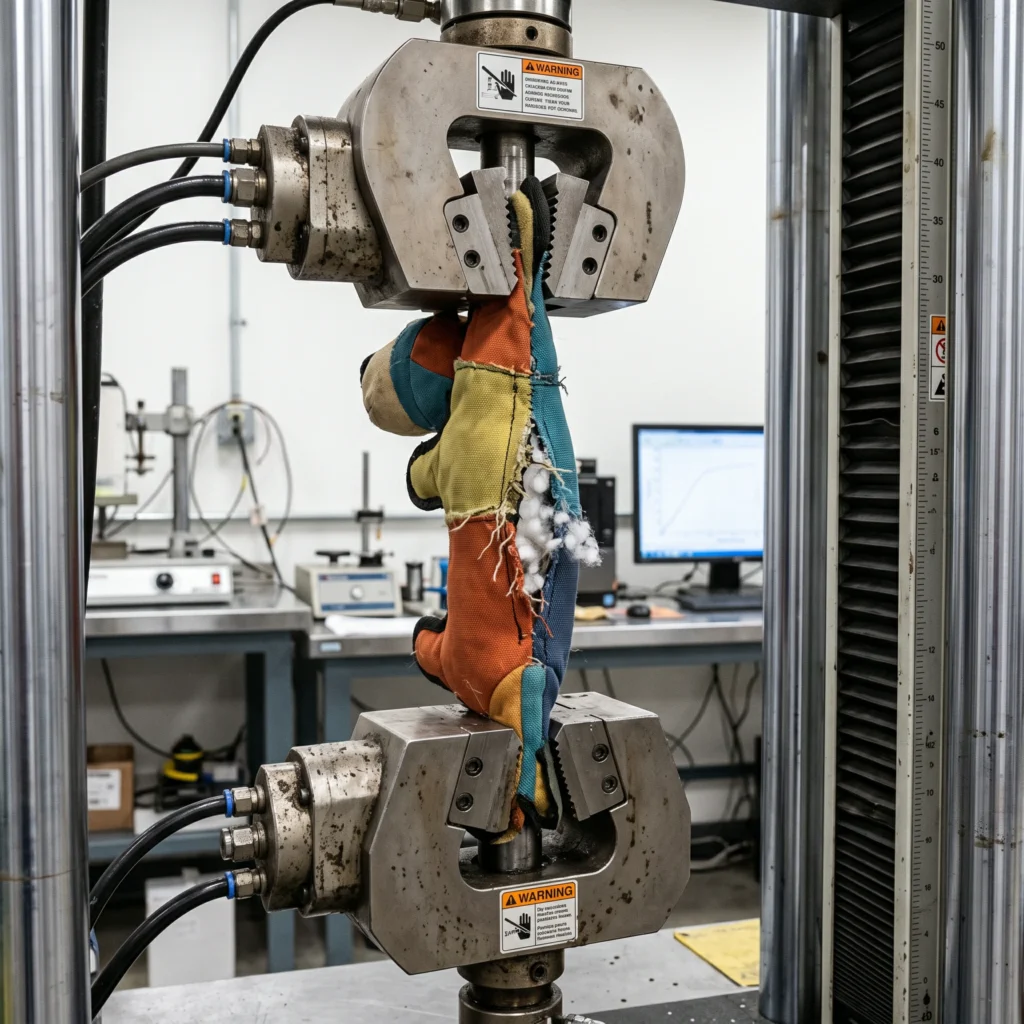
When an aggressive chewer breaks through the outer plush layer, the hardened, melted synthetic edges of the heat seal act like tiny blades, cutting their gums. Furthermore, without a strict needle detection protocol (which slows down packing lines and increases overhead), broken industrial sewing needles can easily end up inside the plush matrix. Safe plush toys require heavily reinforced, hidden seams and strict, documented safety protocols to prevent catastrophic dental and intestinal injuries.
5 Critical Components of a Proper Chew Toy Tech Pack
If you want a safe product, your tech pack must dictate the manufacturing reality.
- Target Shore A Durometer Rating: Never ask for “hard” or “soft.” Define the exact hardness score.
- Specific Pantone Color Codes & Variance: State your colors clearly, understanding that vat changes impact costs.
- Internal Seam Construction Method: Specify double-stitching, folded seams, and explicitly forbid exposed heat-seals on chew zones.
- Squeaker Placement & Padding Dimensions: Outline the exact mm thickness of the padding required around internal hard plastic components.
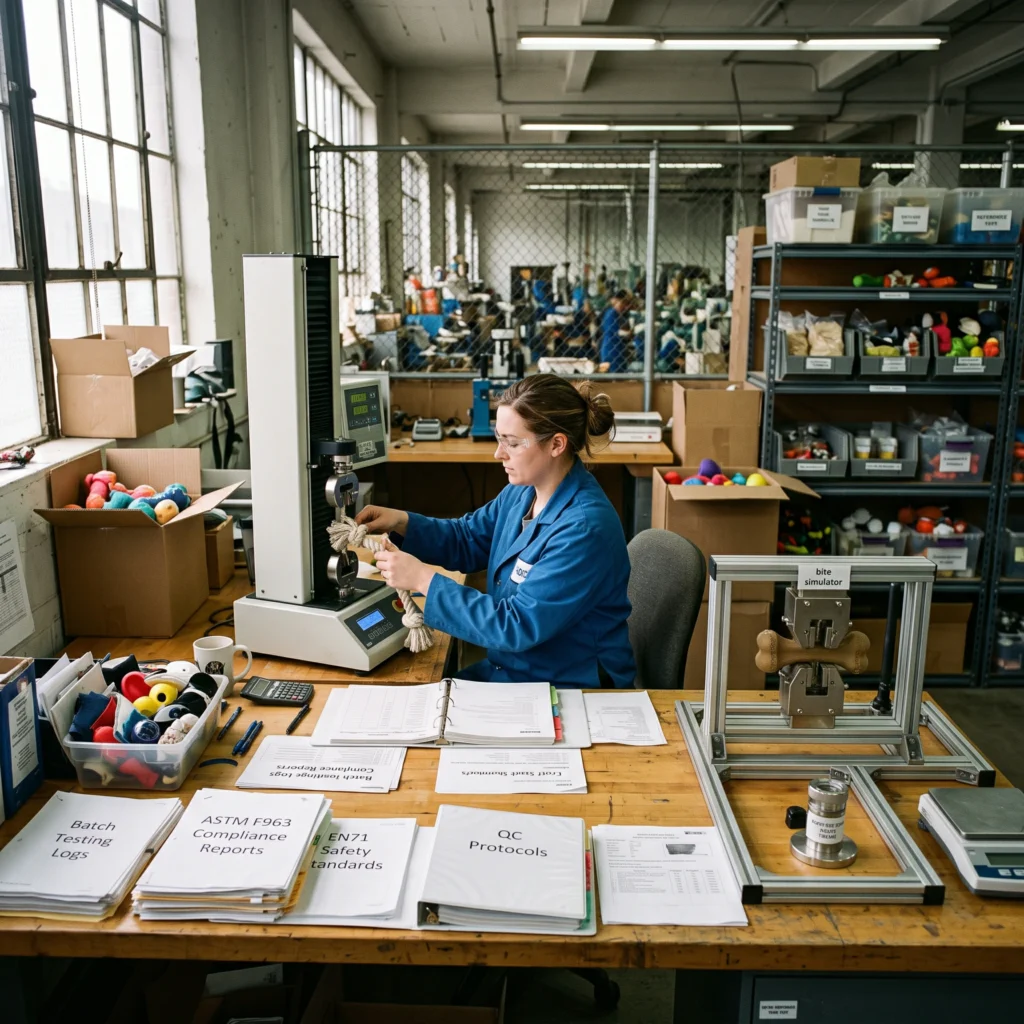
- Needle Detection & Quality Control Hold Times: Require mandatory metal detection for all fabric-based chew toys before poly-bagging.
Myth #5: “Squeakers don’t affect the dental safety profile of the toy.”
- Fact: A poorly housed squeaker creates a rigid internal pressure point that can easily fracture teeth.
- The Factory Reality: When a dog chomps down on a toy, the bite force must distribute evenly across the material. If a hard plastic squeaker is shoved into a tight internal cavity without adequate surrounding padding, the dog’s tooth penetrates the soft exterior and hits a sudden, unyielding wall.
On our production lines, we have to meticulously engineer the internal cavities of our molds to include air-cushioning zones around the squeakers. This requires precise 3D CAD modeling, multi-part mold cores, and higher upfront tooling costs. Bargain suppliers avoid this entirely; they just mold a hollow shell and stuff a squeaker inside, resulting in highly dangerous localized hard spots.
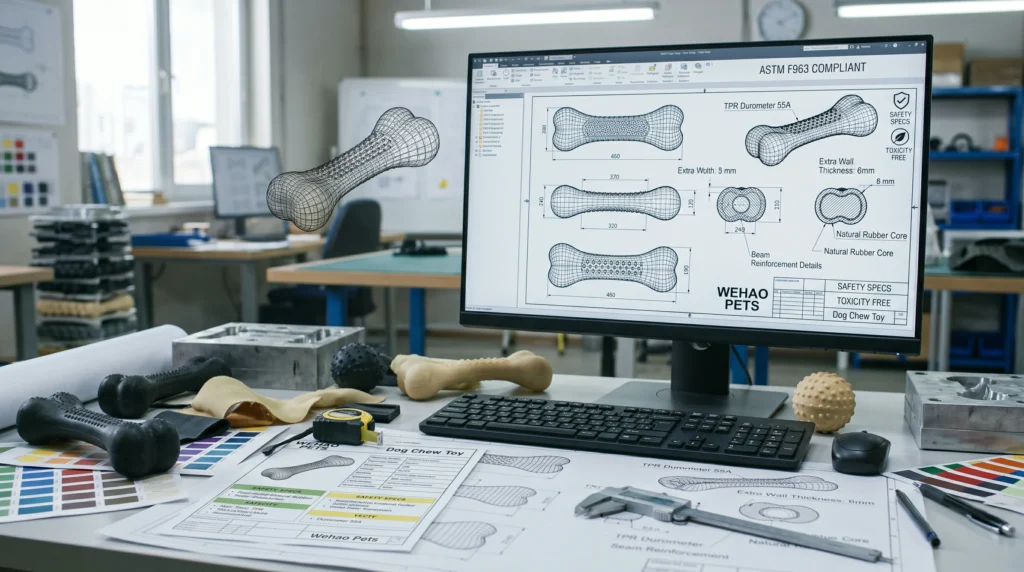
Construction Methods: Cost vs. Dental Safety
| Assembly Method | Factory Cost Impact | Durability Profile | Dental Risk Factor |
| Double-Stitched Hidden Seams | High (Labor intensive) | Very High | Low (No exposed sharp edges) |
| Exposed Heat-Sealing | Low (Fast automation) | Moderate | High (Melted plastics cut gums) |
| Ultrasonic Welding (Plastics) | Medium | High | Moderate (Requires precise mold tolerances) |
| Chemical Bonding/Glue | Low | Low to Moderate | Extreme (Toxicity and rigid glue lines) |
4 Red Flags When Sourcing Dog Chew Toys
Protect your brand by watching out for these supplier behaviors:
- The supplier agrees to all specifications instantly. If they don’t suggest engineering changes or push back on contradictory demands, they are lying to get your deposit.
- They quote unusually low tooling costs for complex rubber molds. Proper multi-cavity molds with air-cushioning zones are expensive steel assets; cheap quotes mean cheap, simplistic molds.
- They offer low MOQs on multi-color natural rubber. This guarantees they are bypassing proper vat cleaning or rushing the sulfur curing process.
- They lack an internal needle detection protocol. If a factory making plush chew toys cannot provide video evidence of their metal detection line, run away immediately.
When you transition from importing generic catalog items to engineering safe, compliant toys, you must also master international logistics. Rubber and high-density TPR are heavy materials, radically impacting container volume and weight limits. We advise consulting industry logistics authorities like Freightos to calculate how material density directly impacts your landed costs.
Stop guessing about dental safety and stop trusting generic, photoshopped catalog images. If you want to know exactly which type of chew toy is safe for a dog’s teeth and viable for mass production, you need real factory engineers. Send your tech pack to our engineering team to review our pet toy safety standards and get a realistic manufacturing assessment.
Contact Us today to start engineering real safety into your next product line.
Frequently Asked Questions
1. What is a safe durometer for dog chew toys?
A safe durometer for most dog chew toys falls between 40A and 70A on the Shore A scale, providing enough yield to prevent tooth fractures while maintaining durability.
2. Why are nylon chew toys sometimes dangerous for a dog’s teeth?
Nylon is highly rigid and lacks elasticity. If a dog bites down with full force, the nylon does not compress, transferring the kinetic energy directly into the tooth enamel, causing fractures.
3. How does factory MOQ affect the safety of natural rubber toys?
Low MOQs combined with multiple colors force factories to rush the vulcanization process or use chemical accelerators to clean vats quickly, leaving toxic residue and creating structurally weak toys.
4. Are internal squeakers safe for a dog’s teeth?
Squeakers are only safe if the toy is engineered with adequate internal air-cushioning and padding. Poorly placed squeakers create rigid pressure points that can break teeth.
5. What is the difference between TPR and Natural Rubber for chew toys?
Natural rubber requires a complex, sulfur-curing vulcanization process and high MOQs to be safe, whereas TPR (Thermoplastic Rubber) is a highly controllable, synthetic alternative that allows for easier molding, coloring, and consistent durometer ratings.
6. Why is double-stitching better than heat-sealing for plush chew toys?
Heat-sealing melts synthetic fabrics together, leaving hard, sharp edges that can lacerate a dog’s gums. Double-stitching with hidden seams buries the thread, protecting the mouth from abrasions.
7. How can I ensure my factory is producing dental-safe chew toys?
You must submit a comprehensive tech pack specifying durometer ratings, seam construction, and mandatory quality control checks like needle detection, rather than just asking for a “durable” toy.