Overview: Our raw material sourcing team enforces a zero-tolerance policy against toxic contaminants in pet toys. This guide exposes the hidden dangers of phthalates, heavy metals, and nitrosamines commonly found in wholesale manufacturing. We breakdown specific chemical limits and reveal how our stringent materials engineering guarantees global regulatory compliance for your brand.
The Hidden Crisis in Wholesale Sourcing: Brand Liability and Cheap Materials
In the highly competitive landscape of B2B pet product manufacturing, the influx of cheap, non-compliant materials into the wholesale market has created a catastrophic risk for international brands. Every day, millions of dog toys are exported to the USA, Canada, Europe, and Singapore, and a alarming percentage of them contain industrial-grade regrind plastics mixed with highly toxic plasticizers and untested chemical additives.
As the Lead Material Scientist and Supply Chain Sourcing Manager here at Wehao Pets, our team witnesses the devastating consequences of these corner-cutting practices firsthand. When an importer opts for the lowest-cost supplier without verifying the chemical composition of the polymers, they are inadvertently absorbing massive liability. In California, for example, violations of the Safe Drinking Water and Toxic Enforcement Act can trigger debilitating Prop 65 lawsuits, leading to mandatory product recalls, six-figure fines, and irreparable destruction of brand trust.
A dog’s jaw exerts tremendous mechanical pressure, and saliva acts as a potent solvent. When a dog chews on a compromised rubber toy, the mechanical breakdown accelerates the leaching of chemical toxins directly into their bloodstream. If you are a procurement manager asking, “what type of rubber is safe rubber for dog toys,” the answer lies not just in the name of the polymer, but in the rigorous, uncompromising chemical validation of the entire supply chain.
First-Hand Experience: Our Uncompromising IQC and Material Validation
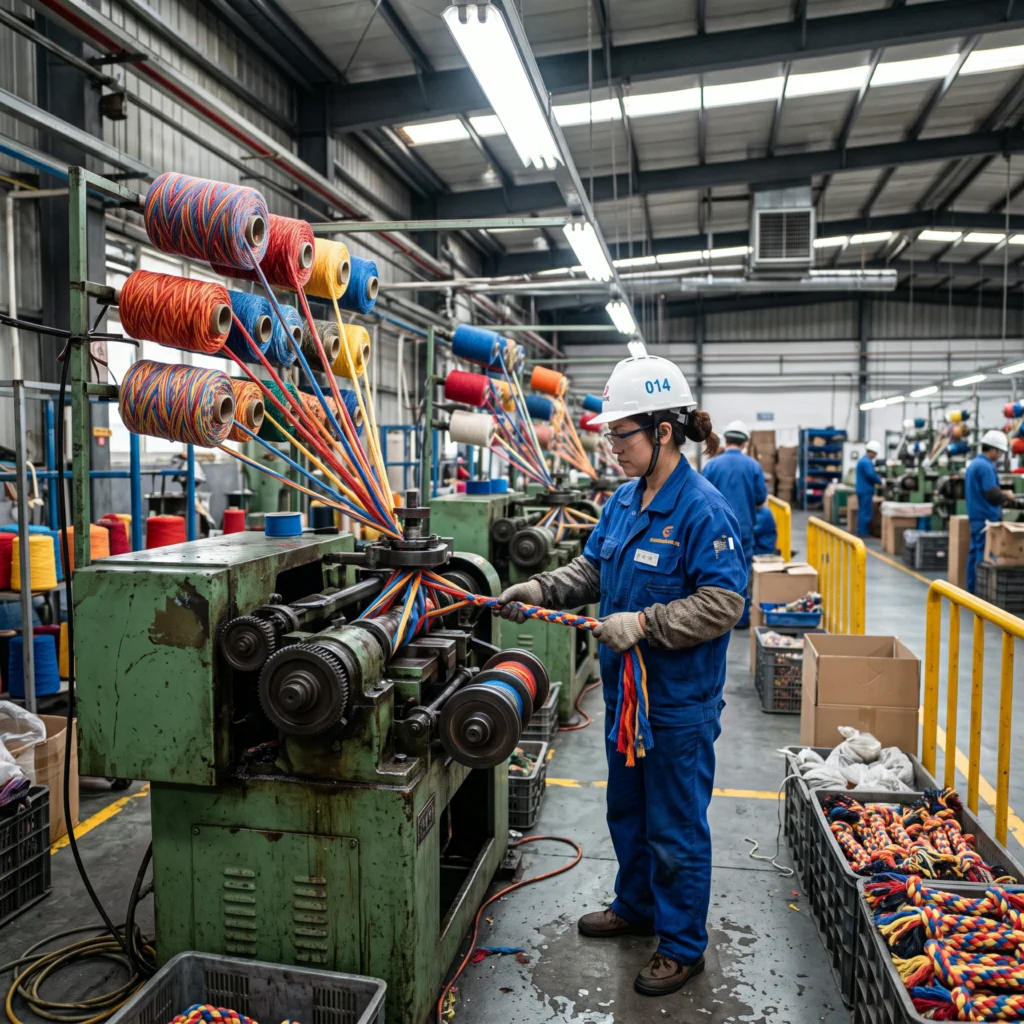
We refuse to accept supplier claims at face value. In the chemical manufacturing sector, a “certificate of analysis” provided by a tier-3 resin broker is often fabricated or outdated. Therefore, our raw material sourcing team has engineered a completely closed-loop material sourcing protocol that isolates our production lines from contaminated market variables. To learn more about our foundational frameworks, review our comprehensive pet product safety standards.
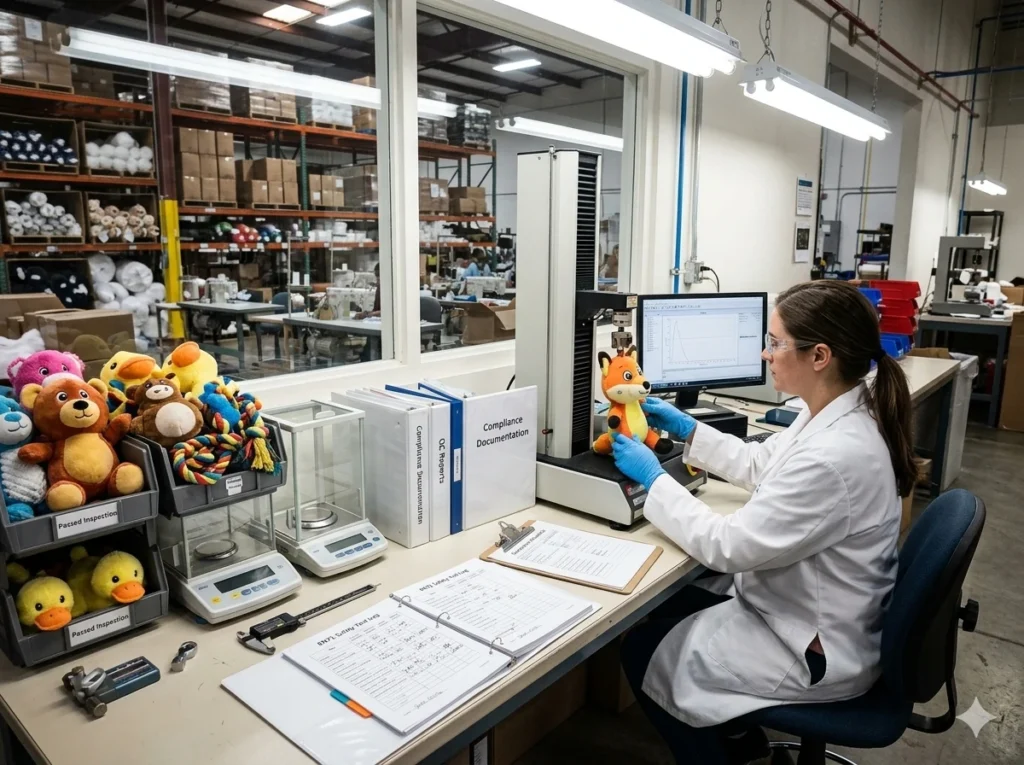
Our Incoming Quality Control (IQC) protocol is a multi-stage gauntlet designed to detect microscopic chemical anomalies before a single pellet enters our injection molding machines. This process includes:
- Mandatory XRF Screening: Every batch of raw elastomer and color masterbatch undergoes immediate X-ray Fluorescence (XRF) spectroscopy. This allows our technicians to instantly detect trace heavy metals down to single-digit parts per million (ppm), identifying illicit lead or cadmium pigments before they enter the facility.
- Third-Party Chemical Migration Validation: We operate under a strict policy of requesting SGS chemical migration reports directly from our primary resin suppliers. We mandate updated testing every quarter to ensure batch-to-batch consistency.
- Supplier Auditing and Traceability: Through closed-loop material sourcing, we audit the upstream chemical synthesizers, ensuring that the base monomers and catalysts used to create our rubbers meet pharmaceutical or food-contact standards.

Chemical Breakdown: Exposing Hidden Toxins in Wholesale Rubber
To truly understand what type of rubber is safe rubber for dog toys, we must conduct a forensic chemical breakdown of the toxins most frequently hiding in substandard wholesale products. Below is an investigative analysis of three critical chemical groups, their regulatory thresholds, and our uncompromising solutions.
Phthalate Plasticizers (DEHP, DBP, BBP)
Where It’s Typically Hidden
Phthalates are a group of synthetic ester compounds primarily used as plasticizers to make rigid, brittle polymers like Polyvinyl Chloride (PVC) flexible and rubber-like. In the wholesale pet toy market, they are notoriously hidden in cheap vinyl squeaky toys, flexible outer shells, and low-grade rubber fetching sticks. Because phthalates are not chemically bound to the polymer matrix—they merely sit between the molecular chains—they freely migrate out of the toy when subjected to a dog’s chewing and saliva.
The Regulatory Limits (ppm)
Global consumer protection agencies categorize specific phthalates as severe endocrine disruptors. In the USA and Europe (REACH), the concentration of regulated phthalates (such as DEHP, DBP, BBP, DINP, DIDP, and DNOP) must not exceed 0.1% (1,000 ppm) in consumer products designed for chewing or children.
The Safe Alternative Wehaopets Uses
We absolutely prohibit the use of phthalate-softened PVC in our chew toys. Instead, we utilize premium, food-grade Thermoplastic Elastomers (TPE) and Thermoplastic Rubber (TPR). TPR requires zero external plasticizers to achieve its flexible, durable state. This innate structural flexibility guarantees that no synthetic esters can migrate into a pet’s system.
| Chemical Category | Common Hiding Places | Global Regulatory Limit | The Wehao Pets Alternative |
| Phthalates (DEHP, DBP) | Cheap vinyl toys, flexible PVC coatings | < 1,000 ppm (0.1%) | 100% Phthalate-Free TPR |
| BBP, DINP, DNOP | Squeaker mechanisms, soft plastic bones | < 1,000 ppm (0.1%) | Food-Grade Silicone |
| DIDP | Faux-rubber surface textures | < 1,000 ppm (0.1%) | Pure Thermoplastic Polyurethane (TPU) |
Heavy Metals (Lead, Cadmium, Barium)
Where It’s Typically Hidden
Heavy metals are most frequently introduced during the coloring phase of manufacturing. Unverified factories often utilize cheap, heavy-metal-based masterbatch pigments—such as lead chromate for vibrant yellows and reds, or cadmium stabilizers to prevent the rubber from degrading under high molding temperatures. These hidden neurological toxins are routinely found in the surface paint, screen-printed logos, and the mass-pigmented rubber substrate of discount pet products.
The Regulatory Limits (ppm)
The regulatory landscape for heavy metals is uncompromising. Under the US Consumer Product Safety Improvement Act (CPSIA) and California Prop 65, lead content is strictly limited to < 90 ppm in surface coatings and < 100 ppm in total substrate materials. Soluble cadmium and barium limits are also strictly monitored globally to prevent acute heavy metal poisoning.
The Safe Alternative Wehaopets Uses
Our team combats this by strictly isolating our coloring processes. We utilize only natural, food-safe colorants and organic, heavy-metal-free pigments. Our XRF screening guarantees that every batch of masterbatch pigment registers non-detectable levels of lead, cadmium, mercury, and hexavalent chromium. For buyers sourcing durable options, you can explore our heavily vetted and rigorously tested heavy duty dog toys wholesale category.
| Chemical Category | Common Hiding Places | Global Regulatory Limit | The Wehao Pets Alternative |
| Lead (Pb) | Vibrant red/yellow pigments, surface paints | < 90 ppm (Surface) / < 100 ppm (Substrate) | Organic Food-Safe Pigments |
| Cadmium (Cd) | Thermal stabilizers in cheap plastics | < 75 ppm (Migration limit) | Heavy-Metal-Free Masterbatch |
| Barium (Ba) | Fillers and brighteners | < 1,000 ppm (Migration limit) | Natural Mineral Fillers |
Bisphenol A (BPA) and Nitrosamines
Where It’s Typically Hidden
When discussing what type of rubber is safe rubber for dog toys, we must address the vulcanization of natural rubber and the engineering of hard plastic components. Cheap natural rubber processing relies on chemical accelerators (like dithiocarbamates) that degrade into nitrosamines—highly potent carcinogens. Additionally, Bisphenol A (BPA) is commonly hidden in the hard polycarbonate (PC) plastic used to manufacture the internal squeakers or rigid structural cores of complex rubber toys.
The Regulatory Limits (ppm)
Nitrosamine generation is heavily scrutinized by European authorities, with specific strict migration limits set close to zero (e.g., < 0.05 mg/kg) for toys intended to be placed in the mouth. Similarly, BPA faces stringent restrictions and outright bans in many jurisdictions due to its severe estrogen-mimicking properties.
The Safe Alternative Wehaopets Uses
We employ advanced vulcanization techniques for our natural rubber lines that completely eliminate the generation of nitrosamines. For rigid components and squeakers, we have entirely phased out polycarbonate. We rely exclusively on BPA-free, high-density polyethylene (HDPE) or durable, shatter-resistant TPU.
| Chemical Category | Common Hiding Places | Global Regulatory Limit | The Wehao Pets Alternative |
| Bisphenol A (BPA) | Hard internal squeakers, rigid plastic cores | < 0.04 mg/l (Migration limit) / Often banned | BPA-Free HDPE & TPU |
| Nitrosamines | Cheap vulcanized natural rubber | < 0.05 mg/kg | Nitrosamine-Free Vulcanization |
| Nitrosatable Substances | Rubber accelerators | < 1 mg/kg | Advanced Platinum Curing |
Conclusion: Partner with a Factory That Protects Your Brand Liability
The global pet market is no longer forgiving of chemical negligence. Regulatory bodies in the USA, Canada, Europe, and Singapore possess the analytical tools to dissect the molecular makeup of your products at the border. Relying on unverified wholesale suppliers utilizing cheap fillers, toxic plasticizers, and heavy-metal pigments is a direct threat to your enterprise’s survival.
Our raw material sourcing team understands that true safety is engineered at the chemical level. We invite procurement managers and brand owners to demand transparency. Do not guess what type of rubber is safe rubber for dog toys—verify it through uncompromising data.
Call to Action: Protect your brand from costly recalls and regulatory lawsuits. We urge all procurement managers to request our comprehensive Material Safety Data Sheets (MSDS) or order safe material swatches directly from our laboratory. Contact Us
today to discuss your next compliant, bulk manufacturing project[cite: 1, 2].
Frequently Asked Questions (FAQ)
1. What type of rubber is safe rubber for dog toys?
The safest rubbers for dog toys are highly purified, food-grade Thermoplastic Rubber (TPR), Thermoplastic Elastomer (TPE), and 100% natural vulcanized rubber processed without nitrosamine-generating accelerators. These materials require no toxic plasticizers (like phthalates) to achieve flexibility, making them structurally stable and chemically safe for aggressive chewers.
2. How can I verify that a bulk pet toy manufacturer is not using toxic chemicals?
You must demand more than just a verbal guarantee. Request recent, third-party chemical migration reports (such as those from SGS, Intertek, or TÜV Rheinland) specifically testing for heavy metals, phthalates, and BPA. Additionally, ask the factory about their Incoming Quality Control (IQC) protocols, specifically if they utilize XRF screening on raw material batches.
3. Does California Proposition 65 apply to wholesale dog toys?
Yes, absolutely. California’s Proposition 65 applies to any consumer product sold within the state, including pet toys. If a dog toy contains hidden chemicals like lead, cadmium, or specific phthalates above the safe harbor levels, the brand importing and selling the product is legally liable and subject to severe financial penalties and mandatory recalls.
4. Are the bright dyes used in colored rubber dog toys safe?
They are only safe if the manufacturer utilizes natural, food-safe colorants or heavy-metal-free organic pigments. Cheap, unverified manufacturing often utilizes masterbatch pigments containing lead chromate or cadmium to achieve bright reds and yellows. Always ensure your factory conducts XRF screening on all incoming color pigments.
5. Why should I avoid PVC in dog chew toys?
Polyvinyl Chloride (PVC) is a naturally rigid, brittle plastic. To make it soft and rubbery for dog toys, manufacturers must add large amounts of liquid plasticizers, typically phthalates. Because phthalates do not chemically bond to the PVC structure, they easily leach out into a dog’s mouth when chewed, posing severe endocrine disruption risks.