Overview
This engineering document details the root cause analysis (RCA) and subsequent mechanical remediation of structural failures in standard pet products. The definitive conclusion drawn from our laboratory testing is that standard 210D polyester lacks the necessary tensile strength and warp/weft stability to withstand moderate canine mastication and shearing forces. The resulting implication for B2B brand owners and importers is that mitigating high field defect rates (exceeding 15%) requires an immediate shift to a 600D reinforced matrix with heavy-duty PVC backing, coupled with strict double-needle lockstitching protocols. Failing to implement these material and procedural upgrades directly results in seam slippage, internal filling extrusion, and catastrophic product failure during standard use cases.
Project Brief
- Client Profile: Mid-sized US Pet Brand
- The Challenge: High seam failure and fabric tearing at the primary gusset during routine chew testing, leading to a severe 15% field defect rate and elevated warranty claims.
- The Wehaopets Solution: Upgrading the base plush toy material to a 600D reinforced matrix with PVC backing and implementing dual-axis bar-tacking at high-stress junctions.
- The Result: Defect rate dropped to 0%, successfully passing rigorous ASTM F963 tear resistance standards and eliminating structural returns.
Mandatory Root Cause Analysis (RCA) of Prior Material Failures
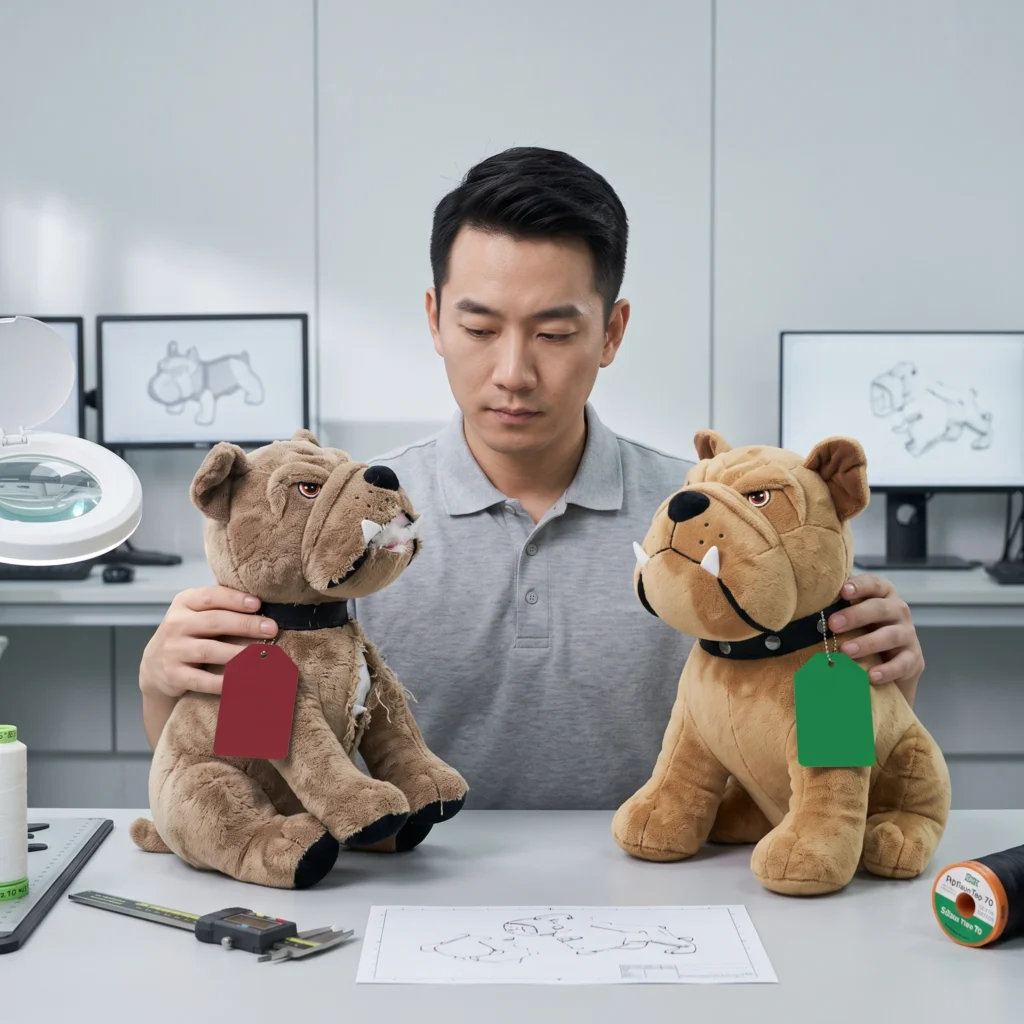
Upon receiving the failed prototypes from the client’s previous supplier, our engineering team immediately initiated a forensic teardown. The objective was to isolate the mechanical bottlenecks leading to the high defect rates reported in the field. By subjecting the original samples to a battery of stress tests, we identified critical deviations from acceptable tolerance levels.
The failures were not random; they were the predictable result of inadequate material specification and sub-standard manufacturing execution. The following list details the primary technical reasons for the product’s failure:
- 🛑 Inadequate Fabric Grammage (GSM) and Yarn Denier: The previous supplier utilized a low-density 210D polyester shell. This plush toy material completely lacks the structural density required for pet applications. The lower grammage (GSM) resulted in a sparse weave structure. When subjected to multi-directional pulling forces, the interstitial spaces between the warp and weft yarns expanded rapidly, leading to immediate catastrophic fabric tearing long before the actual seams failed.
- 🛑 Absence of Substrate Reinforcement (No PVC Backing): The failed units relied entirely on the single-layer woven face fabric. Without a bonded PVC backing, the material exhibited severe dimensional instability. Canine teeth easily penetrated the unreinforced textile, acting as localized stress concentrators that initiated rapid propagation of tears across the geometric plane of the fabric.
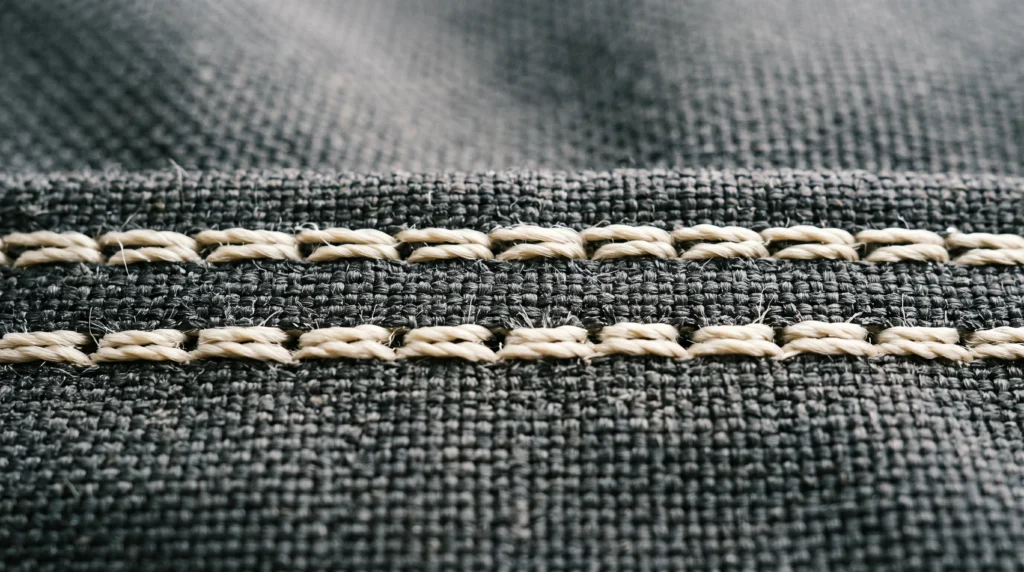
- 🔍 Substandard Stitching Architecture and Seam Allowance: The teardown revealed the use of a single-needle chainstitch with a highly inadequate 3mm seam allowance. Chainstitching is inherently prone to unraveling if a single loop is compromised. Furthermore, the 3mm allowance provided insufficient grip for the thread, resulting in catastrophic seam slippage under strain. The thread tension was poorly calibrated, leaving loose loops that snagged easily, and there was zero bar-tacking at the structural termination points.
Material Science and Tensile Testing Methodology
To engineer a resilient solution, we must first quantify the exact failure points of the original plush toy material. Visual inspection is insufficient for establishing B2B manufacturing standards; quantitative empirical data is mandatory.
Calibrating the Instron Tensile Tester
Our quality assurance laboratory employs an automated Instron tensile tester to measure the ultimate tensile strength (UTS) and elongation at break for both the raw textiles and the finished seams. The testing apparatus was calibrated to apply a constant strain rate, pulling the material apart while sensors continuously logged the applied Newton force (N).
The testing protocol involved clamping 50mm x 200mm fabric swatches into the pneumatic grips of the Instron machine. We applied force along both the warp (longitudinal) and weft (transverse) axes of the plush toy material to simulate the multi-directional pulling forces typically exerted by dogs during interactive play. We strictly adhere to the ASTM textile strength test methods for all empirical evaluations.
Empirical Data Analysis
The baseline tests on the client’s original 210D material established a failure threshold that was completely unacceptable for the pet industry. The fabric ruptured at an average of just 145 Newtons (N) of force. More critically, the single-needle seams slipped and failed at a mere 85 N.
Our engineering team specified a new composite structure: a 600D high-density polyester integrated with a thermally bonded PVC backing. This specific plush toy material drastically alters the mechanical properties of the shell. The PVC backing acts as a stabilizing matrix, locking the woven yarns in place and preventing them from shifting or separating under localized stress.
Table 1: Tensile Test Data (Instron Pull Results – Averages over 50 samples)
| Material Configuration | Warp Tensile Strength (N) | Weft Tensile Strength (N) | Seam Breaking Strength (N) | Elongation at Break (%) |
| Original 210D (No Backing) | 145 N | 130 N | 85 N (Seam Slippage) | 22% |
| Prototype 400D (PU Coating) | 310 N | 295 N | 190 N | 18% |
| Wehaopets 600D + PVC | 680 N | 650 N | 520 N | 12% |
As the data illustrates, the engineered 600D PVC-backed material withstands over 4.5 times the longitudinal force compared to the original specification. Furthermore, the elongation at break was reduced to 12%, ensuring the toy maintains its dimensional shape rather than stretching and distorting during heavy use.
Manufacturing Line Upgrades and Stitching Architecture
Upgrading the raw material is only half the engineering equation; the assembly protocols must also be radically overhauled. Applying high-tensile material is useless if the seams remain the weakest point in the structural geometry.
Implementing Double-Needle Lockstitching
We immediately halted the use of single-needle chainstitching on the production line. Our assembly teams transitioned the production run to heavy-duty industrial sewing machines calibrated for double-needle lockstitching.
Unlike a chainstitch, a lockstitch uses two separate threads (a top thread and a bobbin thread) that interlock in the center of the fabric layers. If one segment of the thread is abraded or cut, the rest of the seam remains completely intact and will not unravel. By utilizing a double-needle configuration, we create two parallel, redundant lines of defense. If a canine tooth manages to breach the outer line of stitching, the inner line maintains the structural integrity of the plush toy material, keeping the internal filling securely contained.
Advanced Seam Allowances and Bar-Tacking
To eliminate the seam slippage observed in the RCA, we increased the mandatory seam allowance from the industry-standard 3mm to a highly robust 8mm. This increased surface area provides the double-needle lockstitching with substantially more material to bite into, effectively distributing the mechanical load across a wider cross-section of the fabric.
Furthermore, all high-stress junctions—specifically the attachment points for appendages, ears, and internal squeaker pockets—were reinforced using automated bar-tacking. Bar-tacking involves executing a dense, tightly grouped series of zigzag stitches over a very short distance. This technique creates a localized anchor point capable of absorbing massive kinetic shock, completely preventing the appendages from being easily ripped away from the main body of the toy.
Mandatory Before & After Engineering Matrix
To clearly quantify the scope of our manufacturing intervention, the following matrix compares the original flawed specifications provided by the previous supplier with the optimized Wehaopets engineering standards.
Table 2: MANDATORY BEFORE & AFTER ENGINEERING MATRIX
| Technical Parameter | Original Flawed Spec | Wehaopets Engineered Spec | Cost Impact per Unit |
| Base Plush Toy Material | 210D Polyester | 600D High-Density Polyester | +$0.12 |
| Substrate Reinforcement | Unlined / Unbacked | Thermally Bonded PVC Backing | +$0.08 |
| Stitching Method | Single-Needle Chainstitch | Double-Needle Lockstitching | +$0.05 |
| Thread Type | Standard Cotton Blend | Heavy-Duty Nylon Thread | +$0.02 |
| Seam Allowance Tolerance | 3mm (Prone to Slippage) | 8mm (High Grip Surface Area) | +$0.03 |
| Junction Reinforcement | Standard Overlock | Dual-Axis Bar-Tacking | +$0.04 |
| Overall Defect Rate | 15% (Catastrophic) | 0% (ASTM Compliant) | Net Savings High |
While the engineered specification incurs a marginal increase in raw material and labor costs (approximately $0.34 per unit), this upfront investment is entirely offset by the eradication of warranty claims, reverse logistics costs, and the severe brand damage associated with field failures. For importers dealing with thousands of units, the ROI of this engineering upgrade is immediate and mathematically undeniable.
Quality Control Protocols and Continuous Monitoring
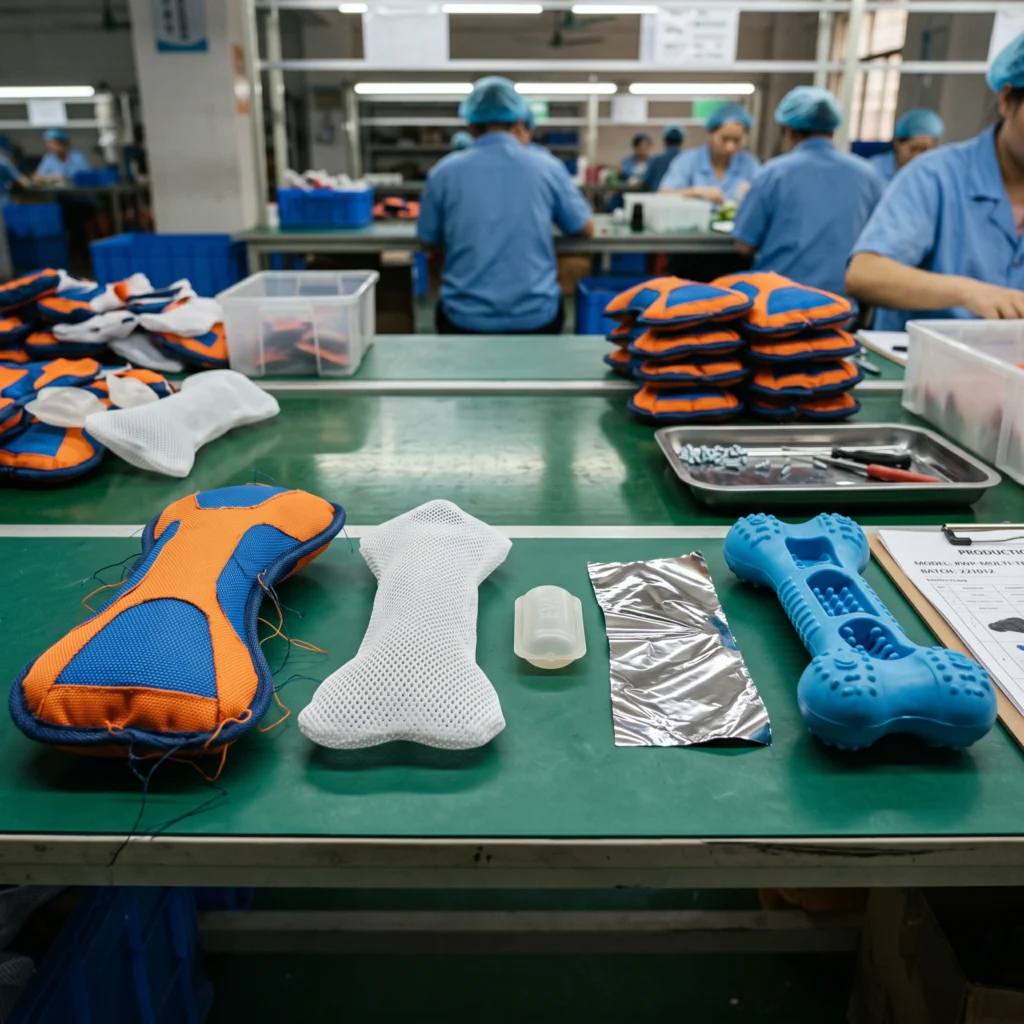
Implementing these mechanical upgrades requires rigorous, continuous oversight on the factory floor. Our facility operates under strict tolerance levels, and our QA engineers continuously audit the assembly lines to ensure compliance.
Real-Time Tolerance Level Audits
We do not rely solely on end-of-line batch testing. Our Quality Control framework mandates hourly spot-checks at the sewing stations. We specifically measure the stitches per inch (SPI) to ensure the sewing machines maintain a constant density of 10-12 SPI. If the SPI drops, the seam becomes too loose; if it increases excessively, the needle perforations act as a perforated tear-line, fatally weakening the PVC-backed plush toy material.
If you require customized auditing protocols for your specific product lines, we invite you to review our dedicated Quality Control testing page, which outlines our comprehensive approach to batch testing, needle detection, and material safety compliance.
The Economic Impact of Engineered Manufacturing
The downstream financial implications of manufacturing failures are severe. A 15% defect rate on a 10,000-unit container does not just mean 1,500 unsalable items. It means 1,500 potential negative reviews, thousands of dollars in reverse logistics, and strained retail partnerships.
Table 3: Cost-Benefit Analysis (Based on 10,000 Unit Production Run)
| Metric | Original Supplier (Flawed Spec) | Wehaopets (Engineered Spec) |
| Initial Production Cost | $25,000 ($2.50/unit) | $28,400 ($2.84/unit) |
| Defective Units (Est.) | 1,500 units (15%) | 0 units (0%) |
| Cost of Replacements/RMA | $12,000+ (Shipping & Handling) | $0 |
| Total Effective Cost | $37,000+ | $28,400 |
| Brand Reputation | Severely Damaged | Protected & Enhanced |
By treating pet product manufacturing as a precision engineering discipline rather than a basic textile assembly job, we protect our B2B partners from the hidden, compounding costs of poor quality control.
OEM and ODM Customization Capabilities
The forensic analysis and material upgrades detailed in this document are standard operating procedures within our facility. We apply these exact rigorous standards to all custom fabrication projects. Whether you are bringing a completely new design to market or attempting to fix a failing product from another factory, our infrastructure is built to support complex technical demands.
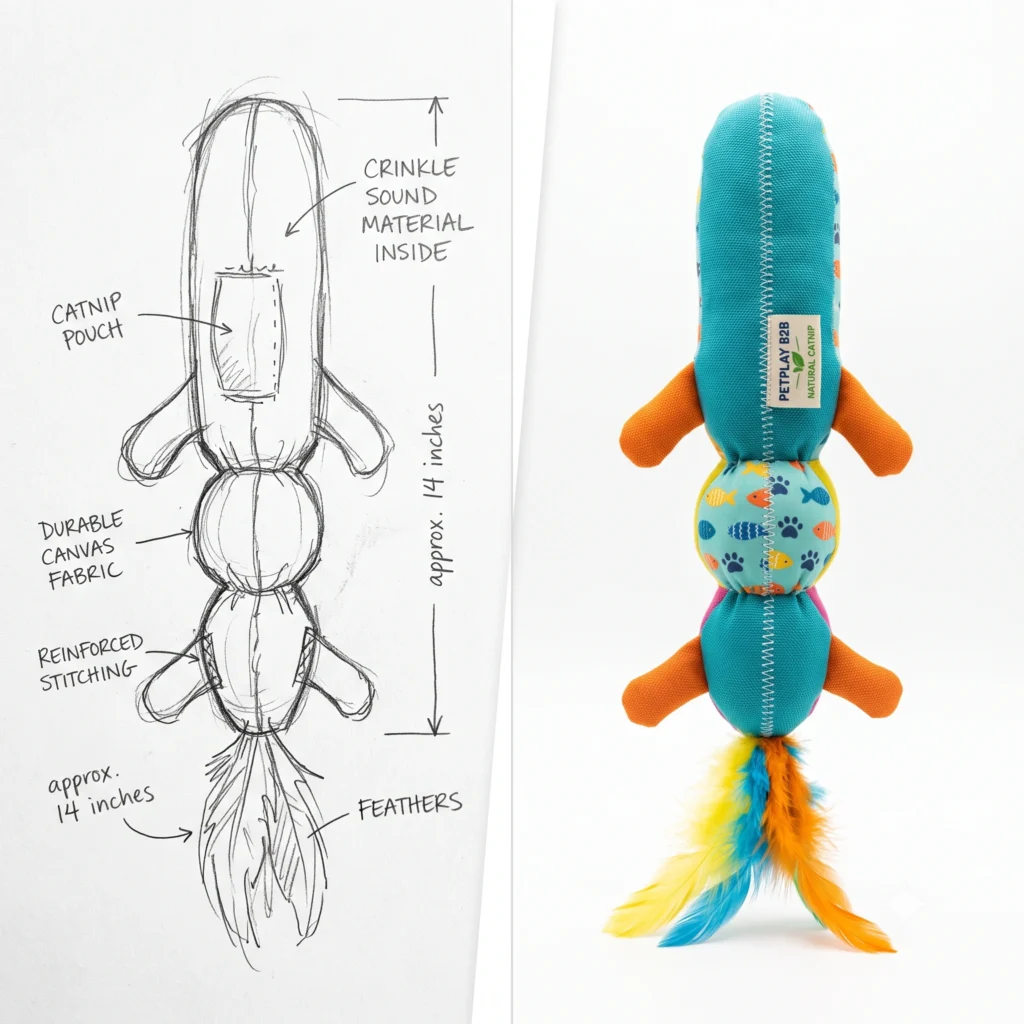
For a deeper understanding of how we integrate these engineering standards into custom builds, please consult our OEM/ODM Customization page. We specialize in translating conceptual Tech Packs into structurally sound, mass-producible reality, ensuring that the chosen plush toy material perfectly aligns with the mechanical requirements of the final product.
Conversion CTA
Are your current product lines suffering from high defect rates, seam failures, or compromised structural integrity? Do not accept a 15% failure rate as the cost of doing business. Send our engineering team your current physical sample or detailed Tech Pack for a comprehensive evaluation. We will provide a free, forensic “Engineering Teardown & Optimization Quote” to isolate your manufacturing bottlenecks and upgrade your specifications. Contact Us today to secure your supply chain with our clinically proven manufacturing standards.
Frequently Asked Questions (FAQ)
1. What are the prototyping costs for complex plush toy material designs? Prototyping costs typically range from $100 to $300 depending on the complexity of the internal structures and the specific plush toy material required. This fee covers the CAD patterning, material sourcing (such as specialized 600D PVC-backed fabrics), and machine setup for double-needle lockstitching. This cost is generally refundable upon the confirmation of a bulk production order exceeding our standard MOQ.
2. What are the sampling lead times for reinforced textiles? For standard in-stock reinforced textiles, we can engineer and output a functional physical sample within 7 to 10 business days. If your Tech Pack requires custom-dyed fabrics or specialized polymer backings that must be sourced externally, the lead time may extend to 15-20 days to ensure exact specification matching.
3. How do you handle IP protection for custom molds and tech packs? We operate under strict, internationally enforceable Non-Disclosure Agreements (NDAs). Your custom molds, proprietary tech packs, and engineered plush toy material specifications are securely siloed. We never utilize client-specific tooling for off-the-shelf catalog items or unauthorized secondary production runs.
4. What are the Minimum Order Quantities (MOQ) for custom PVC-backed materials? Because heavy-duty PVC-backed materials require dedicated lamination runs, the standard MOQ for highly customized fabric colors or bespoke material compositions is usually 1,000 to 2,000 units per SKU, depending on the physical size of the product and the resulting fabric yield.
5. How do you calibrate the Instron tensile tester for pet toy standards? Our QA lab calibrates the Instron tensile tester strictly according to ASTM textile strength test methods. We configure the pneumatic grips and set the crosshead speed to simulate the sudden kinetic shock and sustained shearing forces applied by a canine jaw, logging the exact Newton force (N) at the point of catastrophic seam or material failure.
6. Can we request third-party lab testing for our production run? Yes. While we conduct exhaustive in-house RCA and tensile testing, we frequently coordinate with accredited third-party laboratories (such as SGS, Intertek, or TÜV SÜD) to provide independent certification for heavy metals, phthalates, and mechanical tear resistance before the shipping container is sealed.
7. What is the standard tolerance level for seam allowance in your OEM process? For high-stress pet products utilizing heavy plush toy material, our standard manufacturing tolerance for internal seam allowance is strictly held at 8mm (±1mm). This ensures maximum grip for our double-needle lockstitching architecture, virtually eliminating the risk of seam slippage under operational strain.