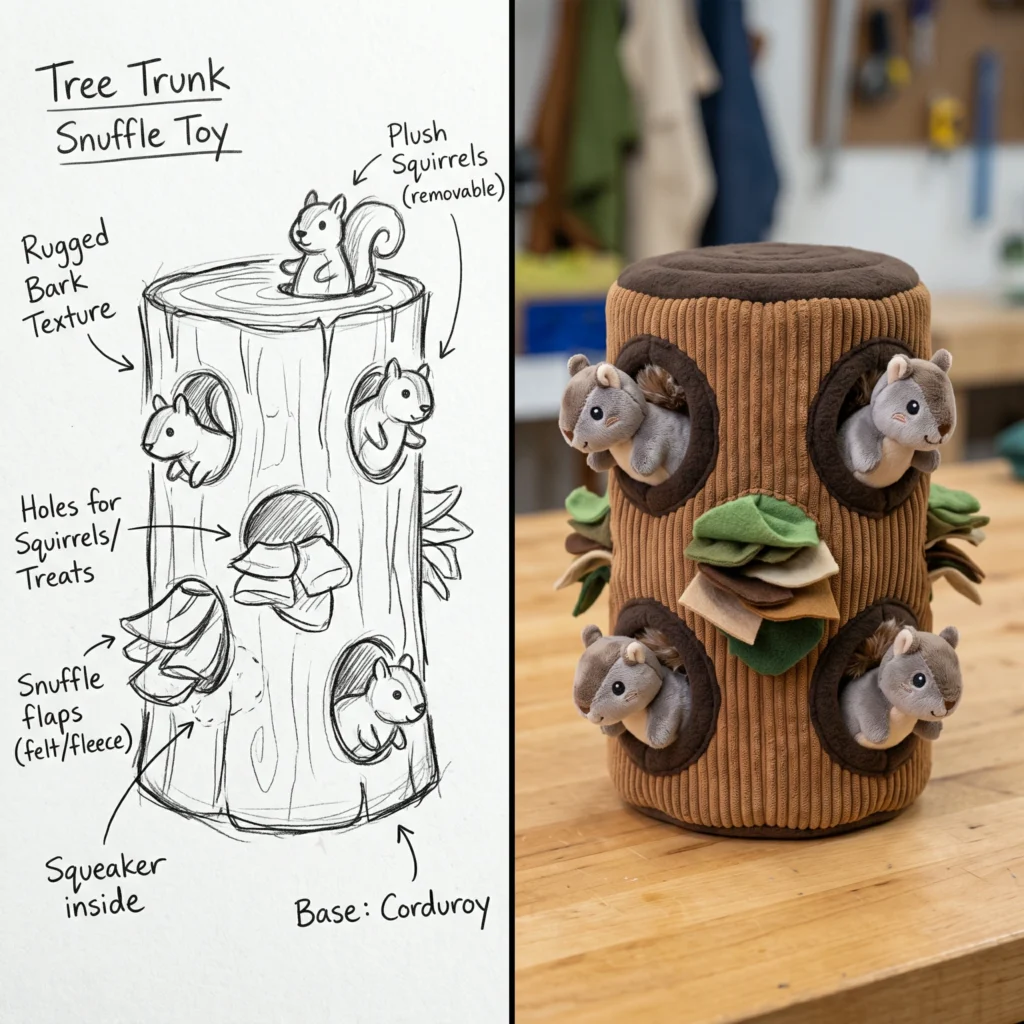
- Client Profile: Mid-sized US Pet Brand specializing in durable canine chew accessories.
- The Challenge: High incidence of seam rupture within 48 hours of consumer use, resulting in an unsustainable 15% retail return rate.
- The Wehaopets Solution: Upgraded base substrate to 600D PVC-backed oxford cloth and implemented double-needle lockstitching with Kevlar-blended nylon thread.
- The Result: Defect rate dropped to 0% across the subsequent 50,000-unit production run.
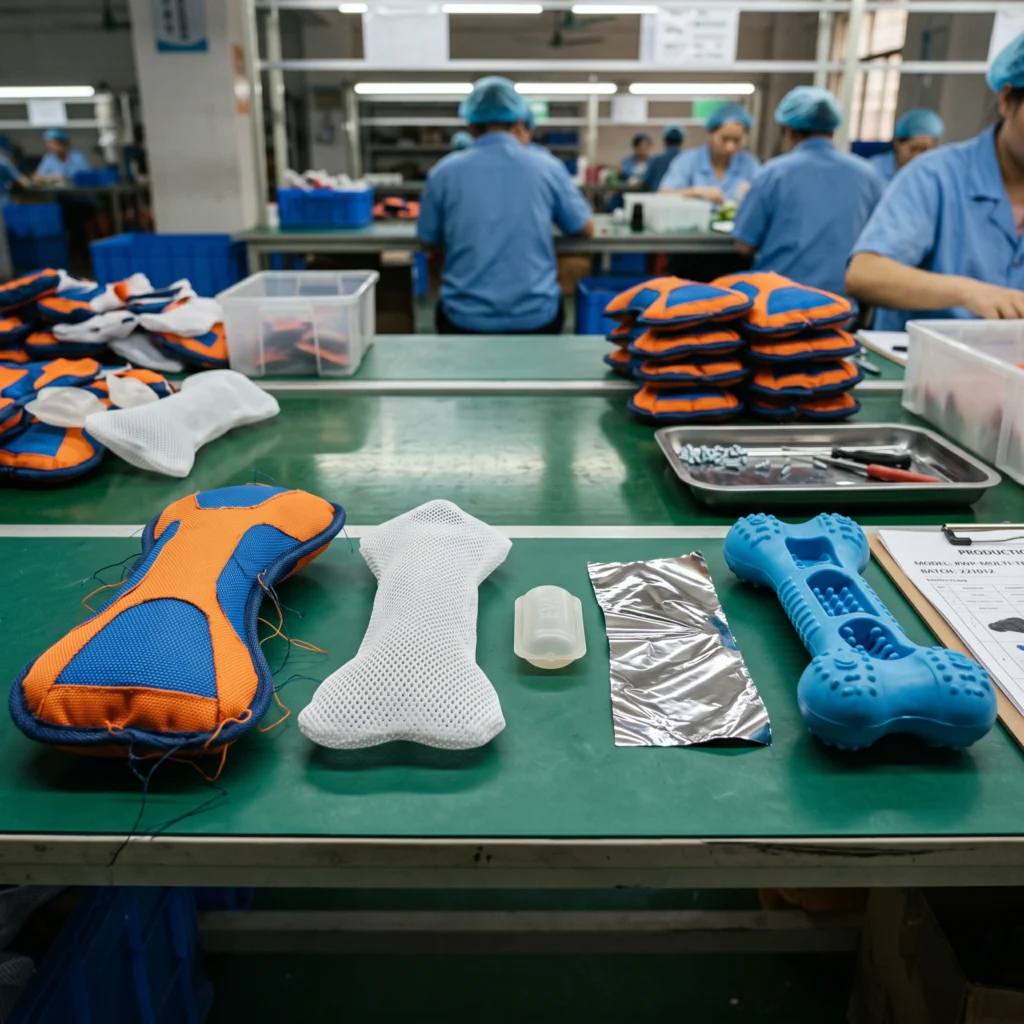
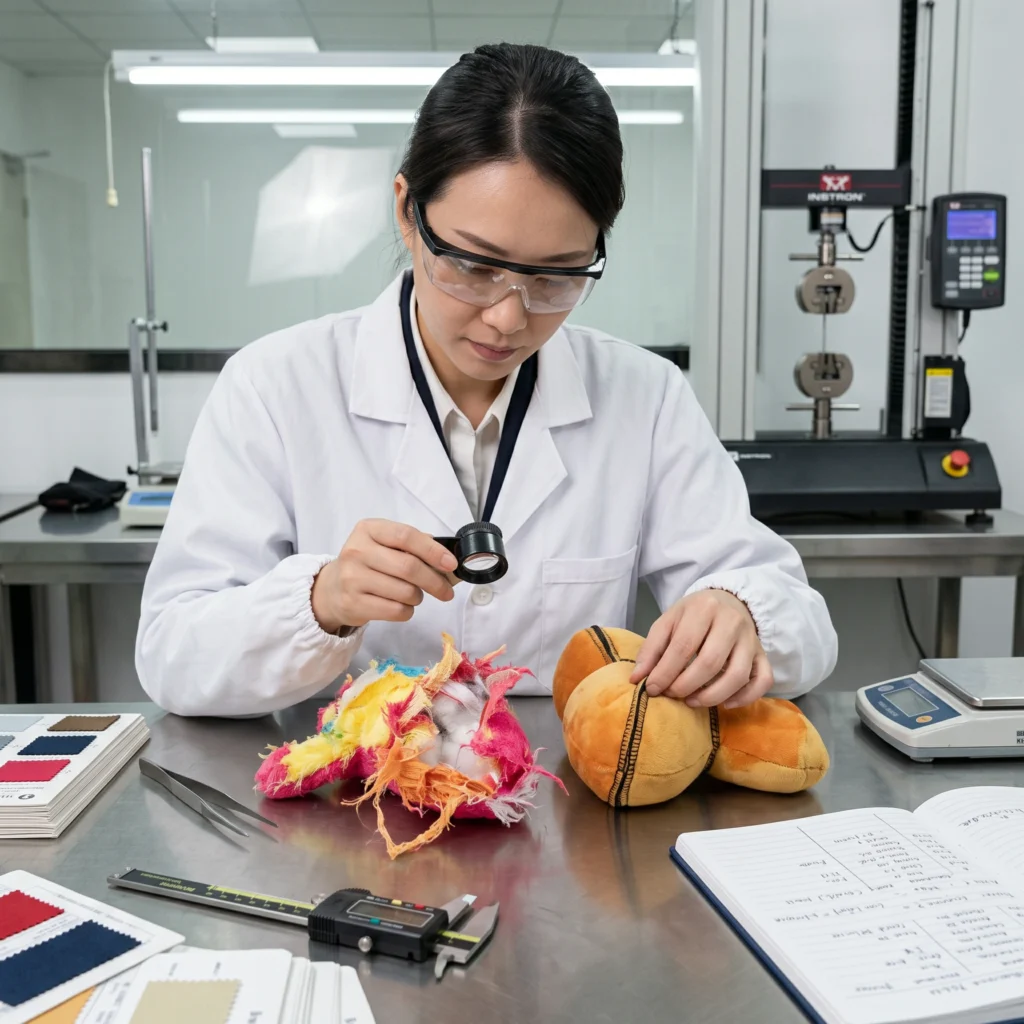
Our engineering team was tasked with a forensic teardown of a compromised inventory batch supplied by the client’s previous aggressive chewer toy supplier. On the production line, we evaluate mechanical failures strictly through empirical data. The client was hemorrhaging capital due to rapid structural decay of their flagship plush product, necessitating a complete re-engineering of the toy’s architecture from the fiber level up.
All baseline metrics for this teardown were benchmarked against our internal pet product safety standards.
🛑 Root Cause Analysis (RCA): Original Manufacturing Failures
Upon dissecting the failed units, our team isolated three critical mechanical oversights:
- 🛑 Insufficient Substrate Grammage & Coating: The previous factory utilized an unbacked 210D polyester (approximately 110 GSM). Under sheer stress from canine dentition, the warp and weft yarns separated instantly due to a lack of binding matrix.
- 🛑 Inadequate Seam Allowance & Stitch Density: Teardown revealed a microscopic 3mm seam allowance secured by a standard single-needle chain stitch (6 stitches per inch). This configuration created micro-perforations that acted as immediate tear-propagation points under load.
- 🛑 Absence of High-Stress Node Reinforcement: Articulated corners and appendage joints lacked cross-stitching or bar-tacking. These structural apex points were left entirely vulnerable to multi-directional tensile failure.
Macro-Structural Stitching Upgrades
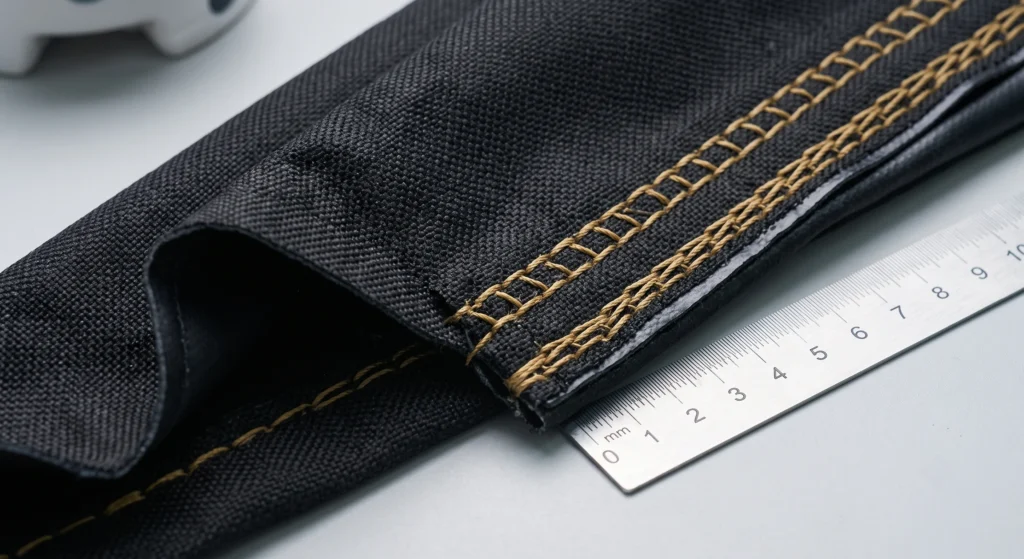
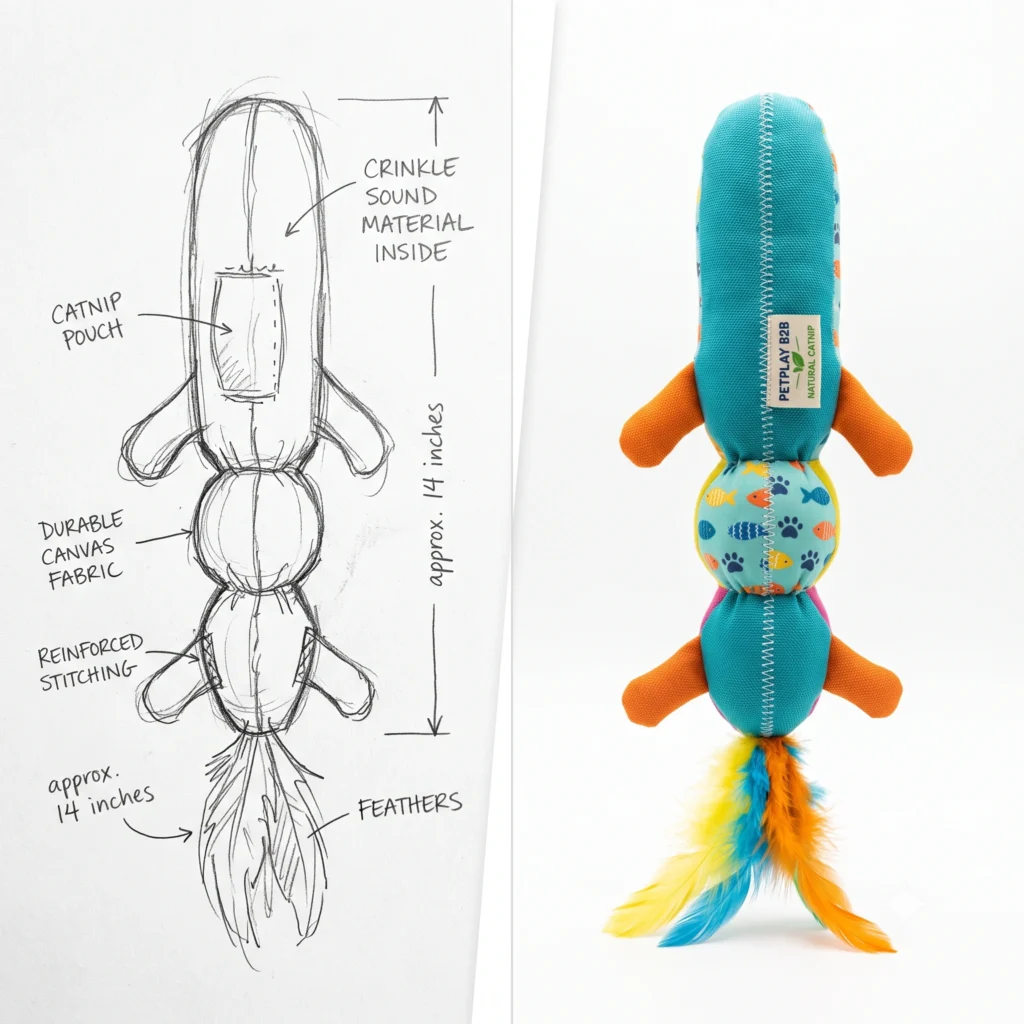
To transition this product from a fragile novelty to a viable heavy-duty sku, we systematically replaced every weak point in the Bill of Materials (BOM) and assembly protocol. As a leading custom tough dog toy OEM, we rely on exact mechanical tolerances rather than marketing claims.
Before & After Engineering Matrix
| Technical Parameter | Original Flawed Spec | Wehaopets Engineered Spec | Cost Impact per Unit |
| Fabric Substrate | 210D Polyester, unbacked | 600D Oxford, dense PVC backing (350 GSM) | +$0.12 |
| Stitching Method | Single-needle chain stitch | Double-needle lockstitching | +$0.05 |
| Thread Type | Standard cotton-poly blend | High-tensile bonded nylon (Tex 70) | +$0.03 |
| Joint Reinforcement | None | 42-stitch bar-tacking at critical nodes | +$0.04 |
| Seam Allowance | 3mm | 8mm with folded internal binding | +$0.02 |
Empirical Validation and Load Testing
Post-assembly, we subjected the newly engineered prototypes to rigorous lateral strain analysis using an Instron tensile tester. The original seams from the previous supplier experienced catastrophic failure at merely 85N of force.
The Wehaopets integration of a PVC backing prevented yarn slippage under acute localized puncture pressure. Furthermore, standardizing an 8mm seam allowance paired with double-needle lockstitching evenly distributed the mechanical load across the geometric profile of the toy. Post-engineering samples subjected to the ASTM D5034 Grab Test withstood lateral forces exceeding 450N before substrate yielding—a 429% structural improvement.
Partner With a True Heavy Duty Dog Toy Manufacturer
Are you an importer or brand owner experiencing unacceptable defect rates with your current aggressive chewer toy supplier? Stop hemorrhaging margin on returns and damaged brand equity. Send our engineering team your current physical sample or detailed Tech Pack for a comprehensive, free Engineering Teardown & Optimization Quote. Contact Us today to permanently resolve your manufacturing bottlenecks.
FAQ: B2B OEM Prototyping & Production
Q: What are the prototyping costs for complex, multi-layered heavy-duty pet toys?
A: Prototyping costs typically range from $100 to $300 depending on the complexity of the internal geometry, custom PVC-backed textiles, and reinforced stitching requirements. This fee is strictly for labor and raw material procurement and is usually fully refundable upon mass production order confirmation.
Q: What is the standard sampling lead time for custom molded tough dog toys?
A: For cut-and-sew plush toys utilizing double-needle lockstitching and heavy GSM fabrics, our standard engineering and sampling lead time is 7 to 10 business days. If custom TPR/rubber molds are required, sampling takes 15 to 20 days.
Q: How does Wehaopets protect our Intellectual Property (IP) and custom molds?
A: We operate under strict Non-Disclosure Agreements (NDAs). All custom Tech Packs, CNC molds, and proprietary textile blends are siloed to your specific project. We do not recycle client molds or share proprietary structural designs with third-party catalog buyers.
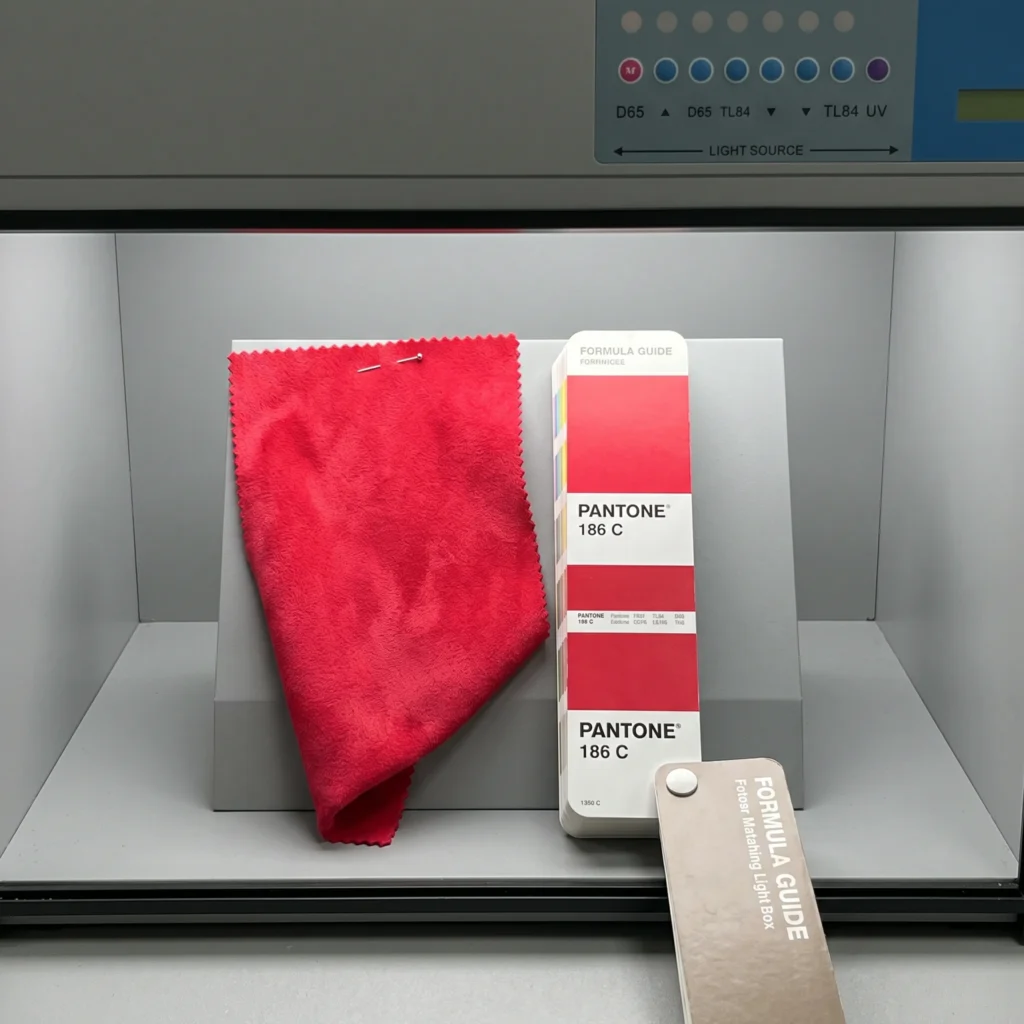
Q: Can you match specific Pantone colors for highly durable 600D or 1000D Oxford fabrics?
A: Yes. We can dye high-grammage Oxford fabrics with heavy PVC or TPU backing to exact Pantone (PMS) specifications. Please note that custom dyeing requires a Minimum Order Quantity (MOQ) of typically 1,000 to 3,000 yards depending on the substrate.
Q: Do you provide independent third-party lab testing for tensile strength and toxicity?
A: Absolutely. While we conduct in-house Instron tensile testing and QC checks on our production line, we routinely coordinate with SGS, Intertek, or TUV to provide certified, third-party lab results for ASTM textile strength, CPSIA compliance, and heavy-metal/toxicity screening.