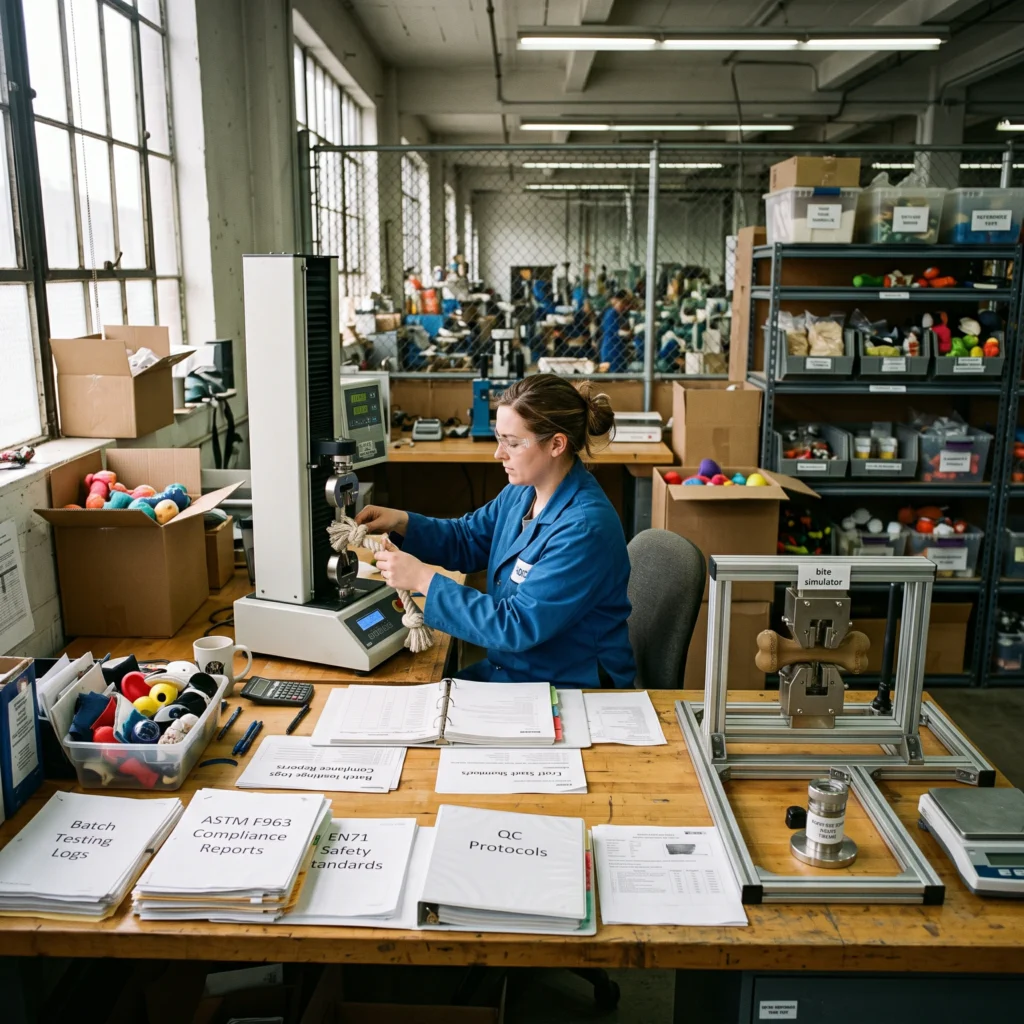
Overview: Successful pet product importing requires understanding real factory floor dynamics, not just looking at Alibaba pictures. The conclusion is simple: raw 100% cotton is rarely the safest choice for aggressive chewers. True safety lies in engineered cotton-poly blends, azo-free reactive dyeing, and strict structural tension. For B2B buyers, the implication is clear—prioritize material science and factory capabilities over superficial aesthetic demands to prevent catastrophic product failures and recalls.
Every single month, our engineering and sales teams here at Wehao Pets review hundreds of Requests for Quotation (RFQs) from buyers in the USA, Canada, Europe, and Singapore. And almost every day, we see the exact same impossible, contradictory demands. Buyers ask for “100% organic cotton, custom Pantone matched, indestructible, zero-fray rope toys” with a Minimum Order Quantity (MOQ) of 200 pieces.
As the General Manager and Senior Sourcing Consultant at Wehao Pets in Dongguan, China, I have to be blunt: these requests show a fundamental misunderstanding of manufacturing realities. You cannot defy physics, chemistry, and factory economics simply because a marketing department thought it sounded good on paper. If you are a B2B buyer, retailer, or brand owner, amateur sourcing mistakes will cost you serious money, ruin your brand’s reputation, and potentially harm pets.
Today, we are taking you directly onto our production lines to answer the critical question: are dog rope toys safe? We are uncovering the truth about cotton blends, ripping apart the myths, and showing you exactly how safe rope toys for dogs are actually engineered, tested, and manufactured.
Myth #1: “100% Pure Cotton is Always the Safest and Most Durable Option for Dogs.”
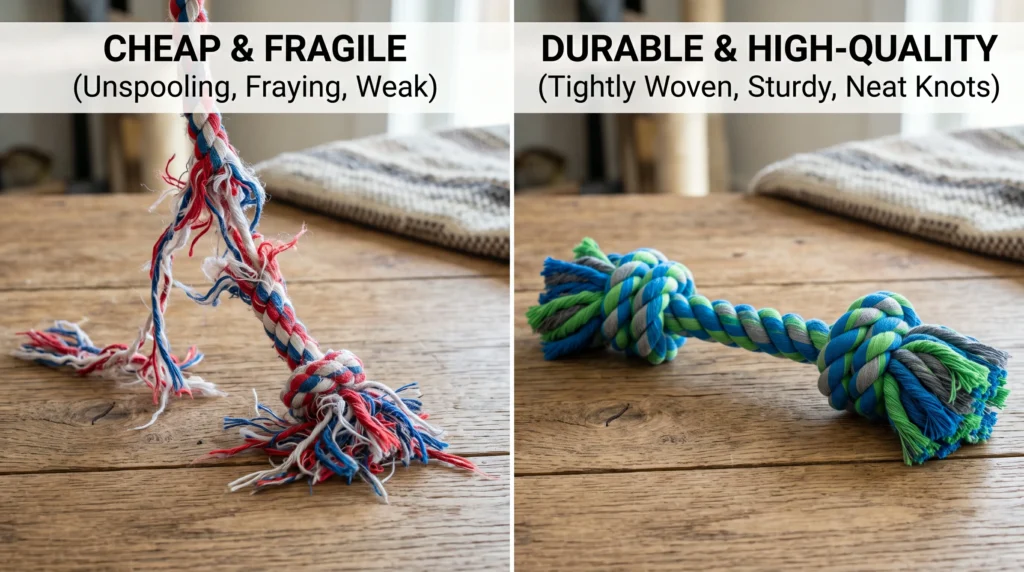
Fact: 100% pure cotton lacks the tensile strength to withstand aggressive chewing and is highly susceptible to dangerous, long-strand fraying that causes intestinal blockages.
The Factory Reality
On the factory floor, pure cotton is known as a short-staple fiber. While it feels soft to the human hand, it does not possess the structural integrity required to survive the shearing force of a dog’s carnassial teeth. When an aggressive chewer attacks a 100% cotton rope, the mechanical friction quickly breaks down the short fibers. This results in the toy unspooling into long, continuous threads. If a dog swallows these long threads, it can lead to a fatal linear foreign body impaction in their intestines.
To engineer genuinely safe rope toys for dogs, factories must utilize a calculated cotton-polyester blend (typically a 70/30 or 60/40 ratio). The integration of polyester introduces long-filament synthetic fibers into the yarn base. Polyester acts as a structural reinforcing skeleton. When a dog chews a proper cotton-poly blend, the fibers are engineered to break off in tiny, digestible micro-fragments rather than long, dangerous strings.
Furthermore, 100% cotton retains massive amounts of moisture. When saturated with dog saliva, it becomes a breeding ground for bacteria and begins to rot from the inside out. Poly-blends severely reduce moisture retention, accelerating drying times and extending the hygienic lifespan of the product.
Material Performance in Rope Toy Manufacturing
| Material Composition | Tensile Strength (Shear Force) | Fraying Characteristic | Moisture Retention | Safety Rating for Aggressive Chewers |
| 100% Natural Cotton | Low (Breaks under 50kg force) | Long, continuous strings | Very High (Promotes bacteria) | Low |
| 100% Polyester | Extremely High | Melts/Snaps abruptly | Very Low | Moderate (Can cause dental wear) |
| 70% Cotton / 30% Poly Blend | Optimal (Absorbs shock) | Short, safe micro-fibers | Moderate (Dries quickly) | High (The Industry Standard) |
Myth #2: “Bright, Vibrant Colors Mean Toxic Dyes; Unbleached Natural Rope is the Only Safe Option.”
Fact: Vibrant colors are perfectly safe if the factory utilizes proper high-temperature reactive dyeing processes with Azo-free compounds, whereas “natural” ropes can harbor agricultural pesticides if not processed correctly.
The Factory Reality
Many B2B buyers request “natural, un-dyed” ropes assuming they are inherently safer. What they fail to realize is that raw agricultural cotton contains impurities, natural waxes, and pesticide residues. Before raw cotton can be spun into safe pet toys, it must undergo scouring and bleaching. Therefore, “natural” does not mean unprocessed.
When buyers want colorful toys, they often fear toxic dyes. At Wehao Pets, we do not use cheap, surface-level direct dyes that bleed into a dog’s mouth. Instead, we use a complex reactive dyeing process. Reactive dyes form a covalent chemical bond with the cellulose fibers of the cotton blend. Once this bond is formed during the high-heat curing process, the dye becomes a permanent part of the fiber molecule. It cannot bleed, wash out, or be digested by a dog’s saliva enzymes.
Here is the exact protocol we follow on our production lines to ensure color safety:
- Azo-Free Selection: We strictly source synthetic dyes completely free of Azo compounds (which can release carcinogenic amines).
- High-Pressure Vat Dyeing: Yarn is loaded into high-pressure vats at 130°C to force the dye molecules into the core of the fiber.
- Chemical Fixation: An alkali solution is introduced to trigger the covalent bonding process.
- Extensive Scouring (Soaping Off): The dyed yarn goes through multiple industrial washing cycles with specialized detergents to remove any unfixed surface dye.
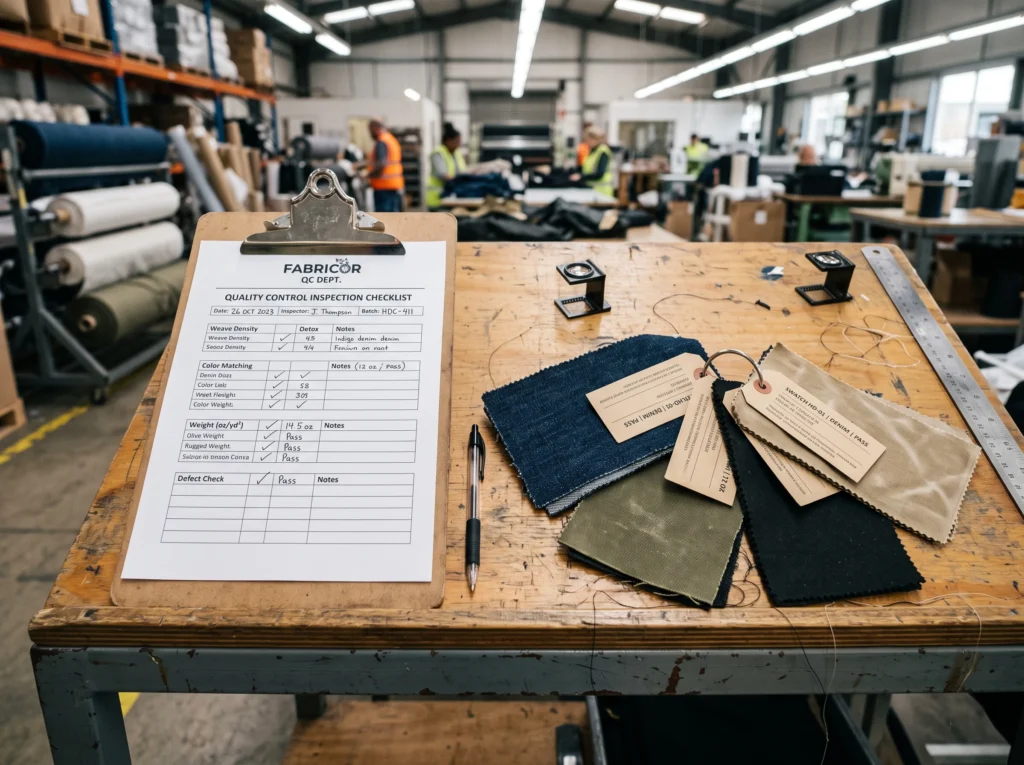
- Spectrophotometer Testing: Before leaving the dyeing facility, the yarn is tested to ensure zero color bleeding under acidic and alkaline conditions (mimicking dog saliva).
Myth #3: “A Tighter Weave Automatically Means a Safer and More Durable Toy.”
Fact: Over-torquing the yarn during the braiding process creates brittle stress points that snap instantly under canine jaw pressure.
The Factory Reality
It is a common visual misconception that the hardest, tightest rope is the strongest. We frequently receive tech packs from novice designers demanding maximum tension on the braiding machines. From a mechanical engineering standpoint, this is a disaster.
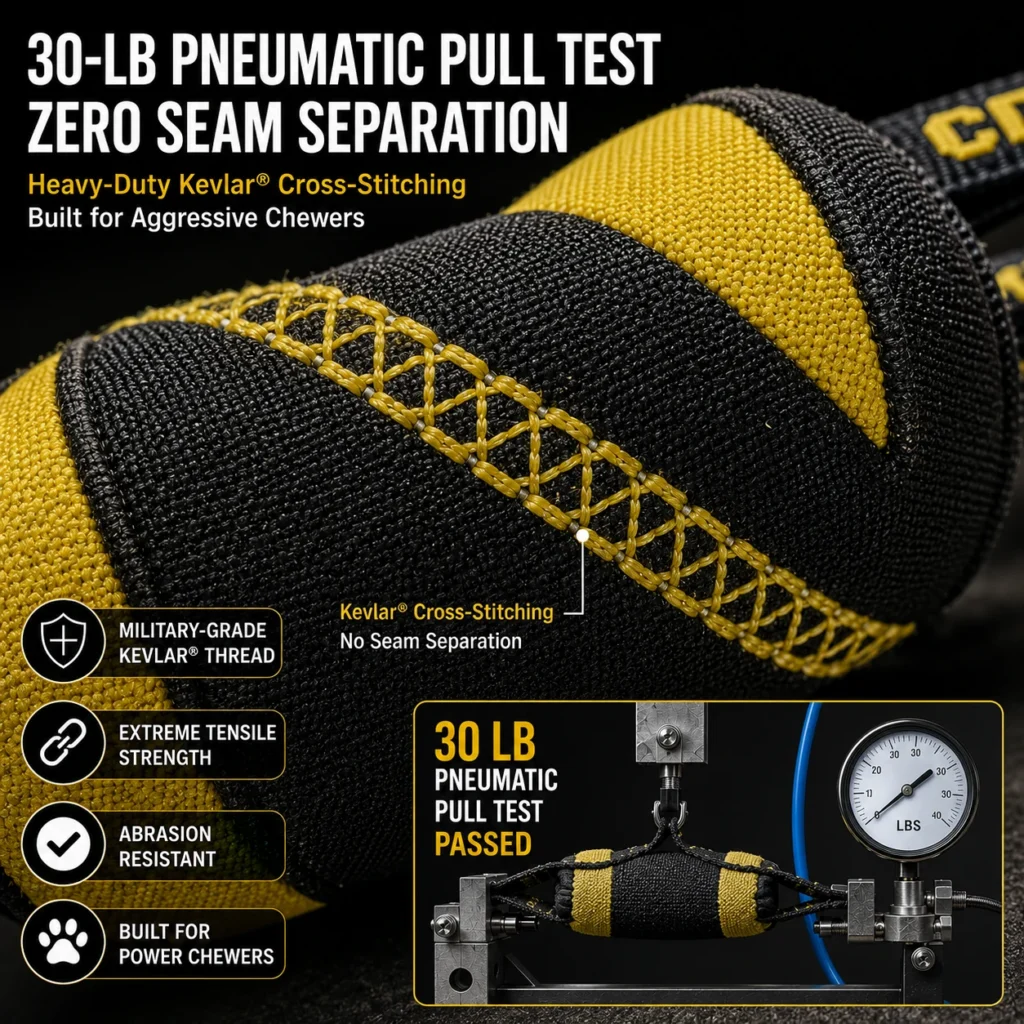
Rope toys require dynamic elasticity. When a dog bites down, the kinetic energy of their jaw must be dispersed throughout the rope’s matrix. If our braiding machines twist the yarn too tightly (over-torquing), the fibers lose all their shock-absorbing capacity. The moment a large breed dog bites down, the brittle fibers snap under the localized pressure, causing the rope to structurally fail in minutes.
The secret to manufacturing safe rope toys for dogs is achieving the perfect Balance of Torque (BoT). We calibrate our braiding machines to maintain a specific tension that allows the strands to flex and compress slightly upon impact, dissipating the bite force. Additionally, the type of knot used at the ends of the toy drastically affects safety. A standard overhand knot will loosen over time. We utilize compressed crown knots and mechanical heat-sealing on the interior synthetic cores to ensure the ends never unravel, regardless of the chewing angle.
Torque & Braiding Impact on Toy Safety
| Braiding Tension | Kinetic Energy Dispersion | Failure Mechanism | Ideal Dog Profile |
| Loose (Low Torque) | High | Unspools rapidly, tangles | Puppies, Senior Dogs |
| Balanced (Medium Torque) | Optimal | Gradual micro-fiber wear | Average & Heavy Chewers |
| Over-tight (High Torque) | Zero | Brittleness, sudden snapping | None (Dangerous) |
Myth #4: “A Factory Can Easily Run a 500-Piece Custom Colored Rope Toy Order.”
Fact: Industrial dyeing vats require massive quantities of water and yarn to operate efficiently, making small custom color batches financially and physically impossible for legitimate factories.
The Factory Reality
This is where Alibaba fantasies crash into factory floor realities. A buyer will send us a Pantone code for “Sunset Coral” and request 500 pieces of a custom rope toy.
Let me explain the thermodynamics and economics of our dyeing facility. Our industrial high-pressure dyeing vats have a minimum capacity of 300 to 500 kilograms of yarn per cycle. You cannot put 20 kilograms of yarn into a 500-kilogram vat; the water-to-yarn ratio (liquor ratio) will be entirely wrong, the chemical fixation will fail, and the machine will physically damage the small amount of yarn.
To produce 500 kilograms of custom-dyed yarn, we are talking about manufacturing thousands, if not tens of thousands, of dog toys depending on the weight of your specific SKU. When a trading company on Alibaba tells you they can do 500 pieces of a custom color, they are lying. They are either taking your money and using off-the-shelf surplus yarn that “sort of” looks like your color, or they are hand-dyeing it in a bucket with cheap, non-fixed direct dyes that will bleed toxic chemicals into a dog’s mouth on day one.
If you want true custom Pantone colors manufactured safely and professionally, you must meet the material MOQ. If you cannot meet the MOQ, we highly recommend utilizing our OEM and custom manufacturing services to select from our massive inventory of pre-dyed, safety-tested stock yarns. We can still customize the shape, length, knots, and packaging without triggering massive dyeing MOQs.
Myth #5: “All Rope Toys with Rubber and Plastic Components are Fused the Same Way.”
Fact: Cheap factories use toxic industrial glues to join rope to TPR (Thermoplastic Rubber) parts, whereas safe manufacturing requires complex thermal over-molding or mechanical anchoring.
The Factory Reality
Many modern designs integrate cotton-poly ropes with TPR chew spikes or squeakers. The critical failure point—and the biggest safety hazard—is the junction where the rope meets the rubber.
When B2B buyers negotiate strictly on price, they force cheap factories to cut corners. The fastest, cheapest way to attach a rope to a rubber mold is using cyanoacrylate or volatile polyurethane adhesives. These glues are highly toxic. When a dog chews the joint, the saliva breaks down the glue, the toy falls apart, and the dog ingests chemical adhesives.
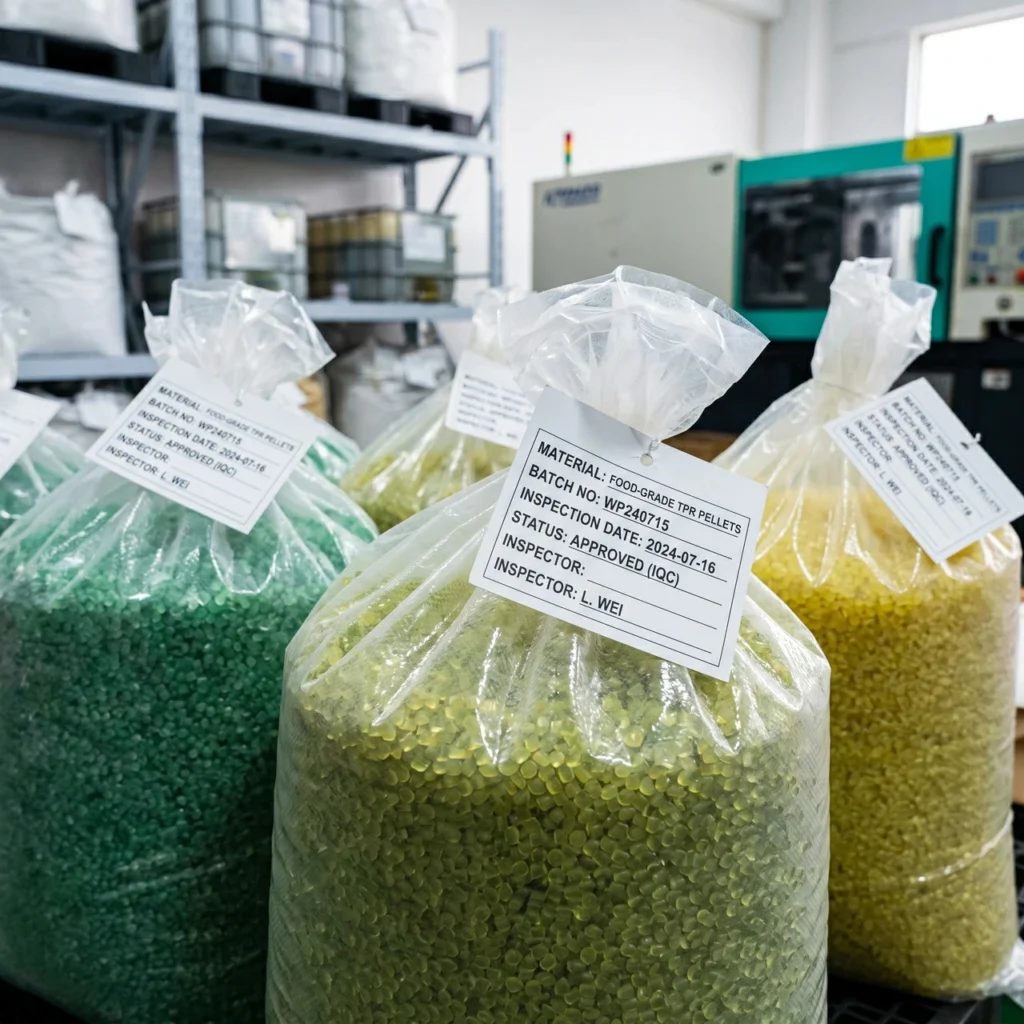
At Wehao Pets, we never use glue. We engineer mechanical anchors. The rope is pre-knotted or spliced with metal/heavy-plastic internal crimps. These crimps are then placed directly into the injection molding machine. When the liquid TPR is injected into the mold at 200°C, it flows around the rope and the anchor. As it cools and cures, the rubber physically encapsulates the rope in a solid, singular mass. The bond is entirely mechanical and thermal, containing zero chemical adhesives.
This thermal over-molding process requires precision tooling, longer curing times, and more expensive machinery, which marginally increases the unit cost. But are dog rope toys safe when held together by cheap glue? Absolutely not. You must pay for proper engineering.
Myth #6: “Machine Washability Means the Rope is Impervious to Bacteria.”
Fact: Washing a poorly constructed rope toy without proper internal airflow actually accelerates the growth of toxic black mold in the core of the toy.
The Factory Reality
Marketers love to slap “100% Machine Washable” on packaging. While washing pet toys is a good practice, the danger lies in the drying phase.
If a factory manufactures a rope toy that is excessively thick (e.g., a 3-inch diameter core) without integrating breathable synthetic channels, the core of that toy will never dry completely after being in a washing machine. The exterior will feel bone-dry to the touch, but the deep interior remains damp. Within 72 hours, trapped moisture mixed with residual dog saliva (organic matter) creates an incubator for Aspergillus and toxic black mold.
When we engineer thick rope toys, we utilize a proprietary core-spinning technique. We weave hydrophobic (water-repelling) polyester mesh through the absolute center of the rope. This creates micro-channels of airflow. When the toy is washed and thrown in a dryer, hot air penetrates the core, forcing moisture out through the breathable channels.
Toy Core Thickness vs. Drying Time & Mold Risk
| Toy Core Diameter | Hydrophobic Core Present? | Tumble Dry Time (Medium Heat) | Internal Mold Risk |
| 1 Inch (Thin) | No | 30 Minutes | Low |
| 2 Inches (Medium) | No | 90+ Minutes | High (Often stays damp) |
| 3 Inches (Thick) | Yes (Wehao Engineered) | 45 Minutes | Zero |
| 3 Inches (Thick) | No (Standard Cheap Build) | Will not dry completely | Critical Hazard |
Myth #7: “A Safety Certificate from One Country Covers Global Sourcing Compliance.”
Fact: Safety and toxicity thresholds for pet products vary wildly between regions, and a product compliant in the USA may be flagged and destroyed by customs in Europe.
The Factory Reality
One of the most devastating supply chain mistakes a B2B buyer can make is assuming universal compliance. We frequently receive POs (Purchase Orders) from European buyers who want to buy our stock items formulated strictly for the US market.
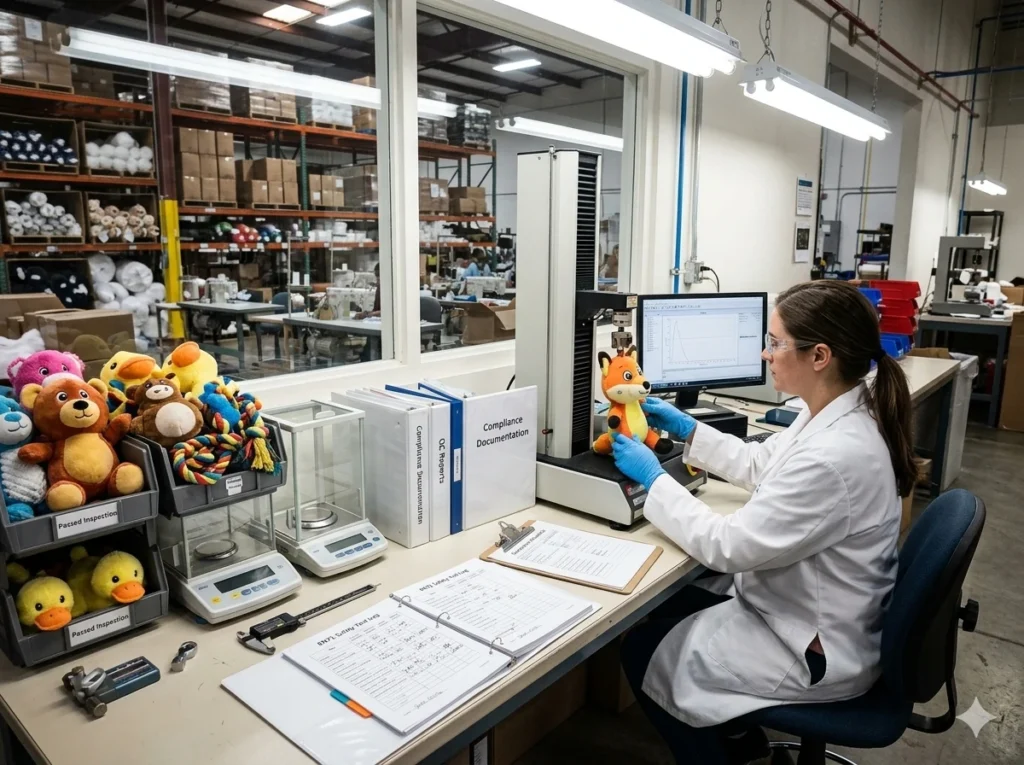
While the pet industry lacks the intense regulation of children’s toys, smart brands test to children’s standards to avoid liability. In the USA, the standard is ASTM F963. In Europe, it is EN71. The chemical thresholds for heavy metals, phthalates, and specific azo-dyes in EN71 are significantly stricter than ASTM F963. If we manufacture a rope toy using a specific red dye that passes USA ASTM standards, it might fail an EN71-3 test for heavy metal migration in the EU.
If you ship non-compliant goods, international freight authorities and customs will seize your cargo. This isn’t just a manufacturing issue; it’s a global logistics issue. If you study supply chain authority platforms like Freightos, you will see that compliance failures are a leading cause of container delays and port fines.
As a responsible factory, our pet product safety standards dictate that we must know the final destination of your goods before we spin a single yard of yarn. We adjust our raw material supply chain—sourcing OEKO-TEX certified yarns when necessary—to guarantee your goods clear customs seamlessly in your specific target market, whether that is the USA, Canada, Europe, or Singapore.
Conclusion: Stop Guessing and Start Engineering
Are dog rope toys safe? Yes, but only when they are treated as engineered mechanical products rather than cheap textile scraps. The myths surrounding pure cotton, natural dyes, and tight weaves are actively harming the pet industry and costing buyers thousands of dollars in defective products.
At Wehao Pets, we do not guess. We rely on material science, calibrated torque, chemical dye fixation, and rigorous cross-border compliance testing.
If you are a serious B2B buyer, retailer, or brand looking to scale your business with products that won’t fail on the shelf or in a dog’s mouth, stop wasting time with trading companies that promise the impossible. Send your tech packs, material requirements, and compliance standards directly to our engineering team for a realistic, factory-level manufacturing assessment.
Ready to build a better, safer pet product? Contact Us today and let’s talk about real manufacturing.
Frequently Asked Questions (FAQ)
1. Are 100% cotton rope toys safe for aggressive chewing dogs?
No. 100% cotton features short-staple fibers that lack tensile strength. Under aggressive chewing, they break down into long, continuous strings that pose a severe risk of linear foreign body impaction in the dog’s digestive tract. A cotton-polyester blend is required for true safety.
2. Why do factories require high Minimum Order Quantities (MOQs) for custom colored dog ropes?
Factories require high MOQs for custom colors because industrial dyeing vats demand large volumes of yarn and water (often 300kg+ per cycle) to maintain the correct liquor ratio. Small batches cannot be processed without failing the chemical dye fixation and damaging the yarn.
3. Do brightly colored rope toys use toxic dyes?
Not if manufactured correctly. Reputable factories use Azo-free reactive dyes that form a permanent covalent bond with the fiber at high temperatures. This ensures the dye cannot bleed or be broken down by dog saliva, making vibrant colors completely safe.
4. Does a tighter weave make a dog rope toy more durable?
No, over-torquing the yarn makes the rope brittle. A safe rope toy requires a balanced torque that allows the fibers to flex, compress, and disperse the kinetic energy of a dog’s bite, rather than snapping under immediate pressure.
5. How should rubber components be attached to a dog rope toy safely?
Rubber or TPR components should never be attached using chemical glues or adhesives, which are toxic. Safe manufacturing requires thermal over-molding, where liquid rubber is injected around a mechanical anchor clamped to the rope, creating a chemical-free bond.
6. Can thick dog rope toys develop mold after being machine washed?
Yes, poorly designed thick ropes can harbor toxic black mold if the deep interior remains damp. Safe, thick rope toys are engineered with hydrophobic (water-repelling) synthetic core channels that allow hot air to penetrate and dry the toy completely from the inside out.
7. Is a USA safety certification valid for selling dog toys in Europe?
No. Safety standards vary by region. The USA typically follows ASTM F963, while Europe uses EN71, which has stricter thresholds for heavy metals and phthalates. A toy compliant in the US may fail EU customs testing, requiring factories to adjust materials based on the destination.