Overview: The Engineering Behind Proprietary Pet Products
In the current B2B pet product landscape, brand founders and product designers are rapidly moving away from generic, off-the-shelf catalog items. The modern subscription box model, as well as premium boutique retail, demands proprietary IP to defend profit margins and build brand loyalty. Today’s pet owners are highly educated; they are not just looking for a plush squeaker, but rather cognitive stimulation tools that solve canine boredom and anxiety. This is where interactive toys become essential. However, the business model of selling premium cognitive toys is entirely dependent on the structural integrity of the product.
When you set out to make your own dog puzzle toy, you are not simply designing a cute shape. You are engineering an interactive product that must withstand intense mechanical stress—biting, tearing, pulling, and repeated machine washing—while maintaining its functional puzzle elements, such as hidden pockets, sliding components, or nesting shapes. As the Head Pattern Maker and Prototyping Lead here at Wehaopets, a specialized B2B pet product manufacturing factory in Dongguan, China, our team sees hundreds of conceptual designs every quarter. Brand founders often arrive with brilliant ideas but lack the architectural roadmap to translate those ideas into a manufacturable reality.
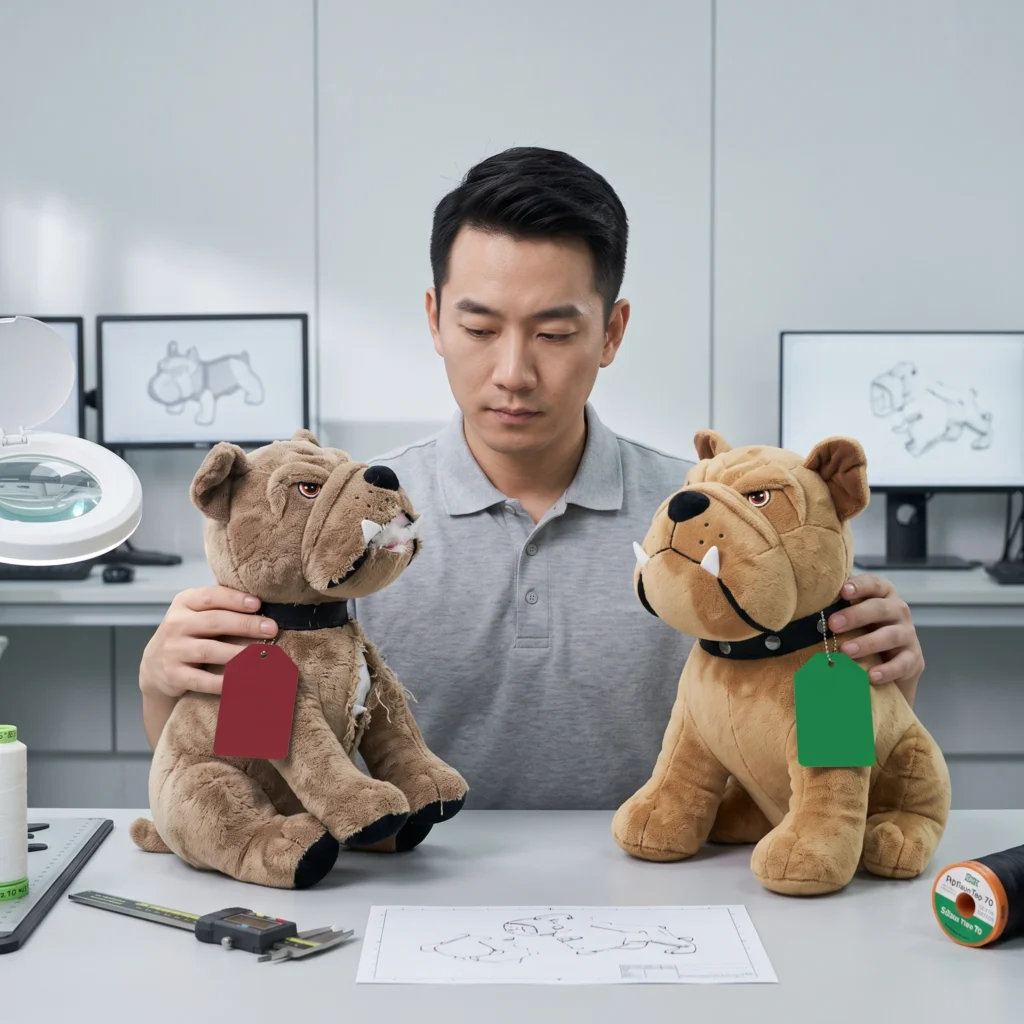
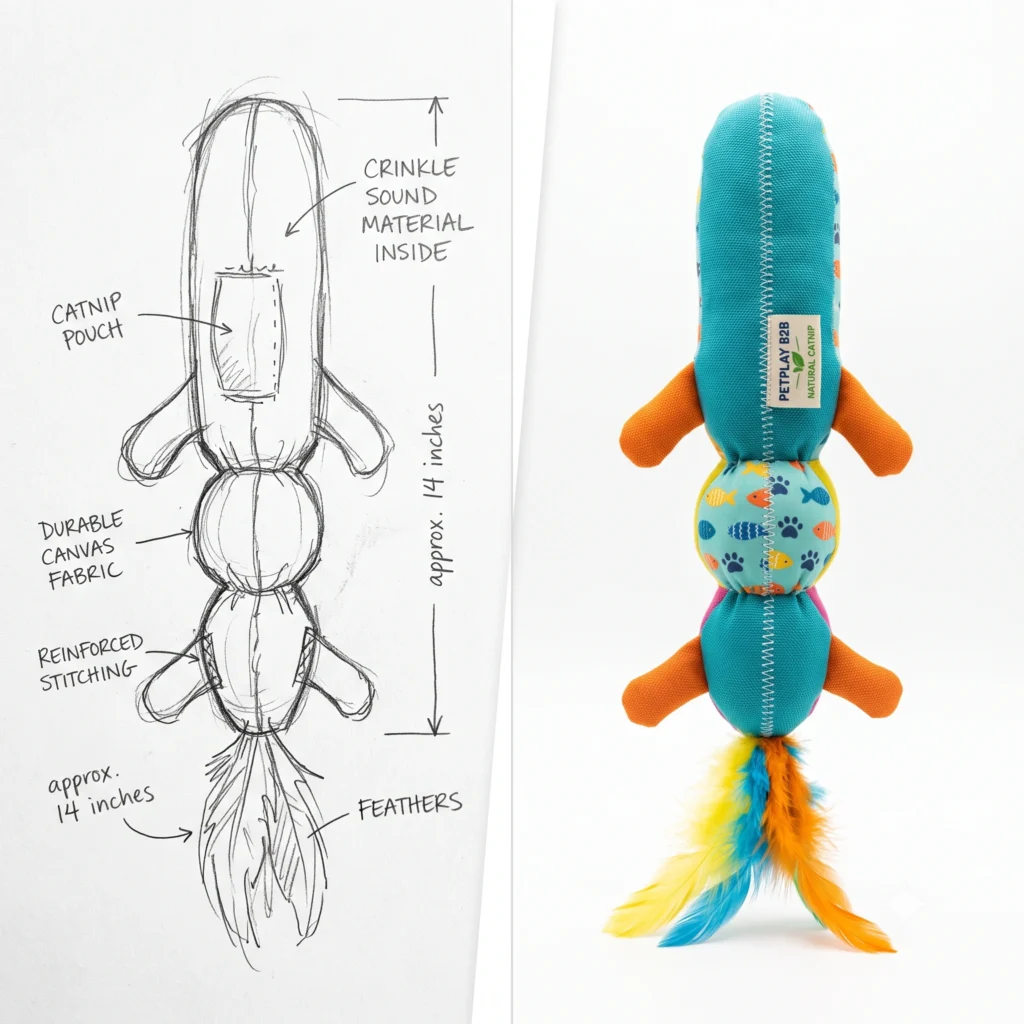
This technical case study is designed to bridge that gap. We will pull back the curtain on our sample room, demonstrating exactly how our pattern making team translates a flat, zero-dimension sketch into a fully engineered, mass-production-ready 3D prototype.
Mandatory Project Brief
To illustrate our strict engineering process, we will follow a recent prototyping cycle for a proprietary interactive snuffle toy.
- Client Vision: A multi-part interactive snuffle puzzle toy featuring a main base (a “tree trunk”) with three nested, removable components (squeaky “squirrels”) and multiple hidden treat-dispensing pockets.
- The Starting Point: A rough, hand-drawn 2D sketch on an iPad, containing zero measurements, no material specifications, and no internal structural directives.
- The Wehaopets Execution: Full 3D CAD modeling, volumetric spatial calculation, precision pattern grading for multiple size variations, targeted gusset construction for bite-resistance, and internal material structural support using bonded mesh liners.
- Time to Approved Prototype: 7 Days from initial CAD approval to the final physical White-Sample.
The Prototyping Roadmap: Development Milestone Table
The transition from a loose concept to a rigorous technical prototype requires a highly disciplined timeline. Below is the exact R&D timeline our sample room follows to ensure efficiency without sacrificing structural integrity.
| Development Phase | Factory Action | Client Required Input | Estimated Days |
| Phase 1: 2D to 3D CAD | Digitize sketch, map out geometry, calculate volumetric capacity in CAD software. | Provide rough sketch, define target retail price point, target dog size. | 1 – 2 Days |
| Phase 2: Paper Pattern Cutting | Master pattern maker drafts 2D flat molds based on CAD unwrapping. Define seams. | Approve digital 3D render and overall scale/dimensions. | 1 – 2 Days |
| Phase 3: White-Sample Prototyping | Cut raw muslin or base fabric, sew initial prototype to test structural geometry. | None (Internal factory structural audit). | 1 Day |
| Phase 4: Material & Die-Cutting | Finalize fabric sourcing, create steel rule dies for precision cutting. | Select specific fabric textures and pantone colors from our swatches. | 1 Day |
| Phase 5: Final Color Sample | Final assembly, stuffing distribution, seam burst testing, and QA review. | Final review via video/photos, await physical shipment of prototype. | 1 – 2 Days |
Phase 1: Spatial Awareness and 3D CAD Modeling
The journey to make your own dog puzzle toy begins in the digital realm. A flat 2D drawing inherently lies to the designer—it does not account for the physical space that fabric and stuffing will occupy. When our pattern making team receives a client’s sketch, our first step is to import the concept into advanced industrial textile design software. For complex plush and textile engineering, we utilize standards similar to CLO 3D, which allows us to simulate fabric drape, tension, and volume in a virtual space before a single piece of fabric is cut.
Resolving Geometric Impossibilities
In our reference project—the tree trunk with nested squirrels—the client’s initial drawing showed the nested toys fitting perfectly flush inside the holes of the main trunk. However, in physical reality, stuffing expands. If we cut the holes to the exact dimension of the nested toys, the expansive pressure of the PP cotton stuffing would push the toys out immediately.
Through 3D CAD modeling, we map the tension of the fabric. We calculate the exact negative space required inside the “tree trunk” holes to grip the nested toys firmly enough that the dog has to work to remove them (the “puzzle” aspect), but loosely enough that they don’t get permanently stuck. This requires calculating the compression rate of the specific plush fabric chosen. The CAD software allows us to virtually inflate the toy, revealing where stress points will occur and where seams are likely to warp.
Phase 2: Structural Engineering and Pattern Making
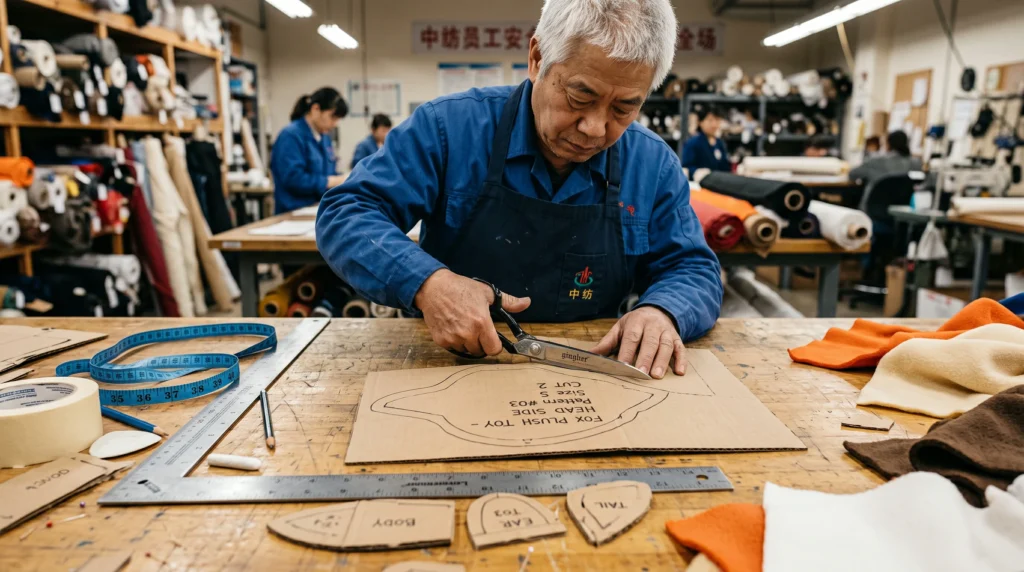
Once the 3D model is perfected, we must unwrap it into flat, 2D shapes that can be cut from rolls of fabric. This is where the true art and science of the master pattern maker come into play.
The Importance of Gusset Construction
A common mistake amateur designers make is assuming a 3D toy can be made by sewing two flat pieces of fabric together (like a ravioli). When stuffed, this “pancake” construction results in extreme stress on the perimeter seams, leading to immediate failure when a dog bites it. It also distorts the shape into an unidentifiable sphere.
To build the vertical walls of our tree trunk puzzle toy, our team utilizes gusset construction. A gusset is an engineered panel—often a long strip of fabric—inserted between the front and back pieces of the toy. This provides actual three-dimensional depth, allowing the toy to stand upright and giving the internal puzzle compartments room to exist without compromising the external walls.
Precise Tolerances and Seam Allowances
In textile manufacturing, there is no room for guesswork. Every single paper pattern piece drafted in our sample room includes a strict seam allowance (1/4 inch). This 1/4 inch is the critical zone where the fabrics are joined. If the pattern maker fails to account for this perfectly, the final toy will shrink in size by half an inch on every axis, destroying the precise fit of the puzzle components.
Furthermore, when dealing with puzzle toys, we must execute pattern grading. If the client wants to sell this toy for Small (Terrier), Medium (Beagle), and Large (Retriever) dogs, we cannot simply scale the pattern up by 150% on a photocopier. The physics of the toy change. The size of the hidden treat pockets cannot scale proportionally, or they will become too large to hold standard dog kibble. The pattern grading process requires us to mathematically recalculate the dimensions of every individual component for each size variation independently, ensuring the play mechanics remain identical across all SKUs.
Phase 3: Material Sourcing and Die-Cutting
A puzzle toy is only as durable as its weakest textile. Because puzzle toys are designed to be manipulated, sniffed, and pawed at, the materials must withstand both friction and saliva.
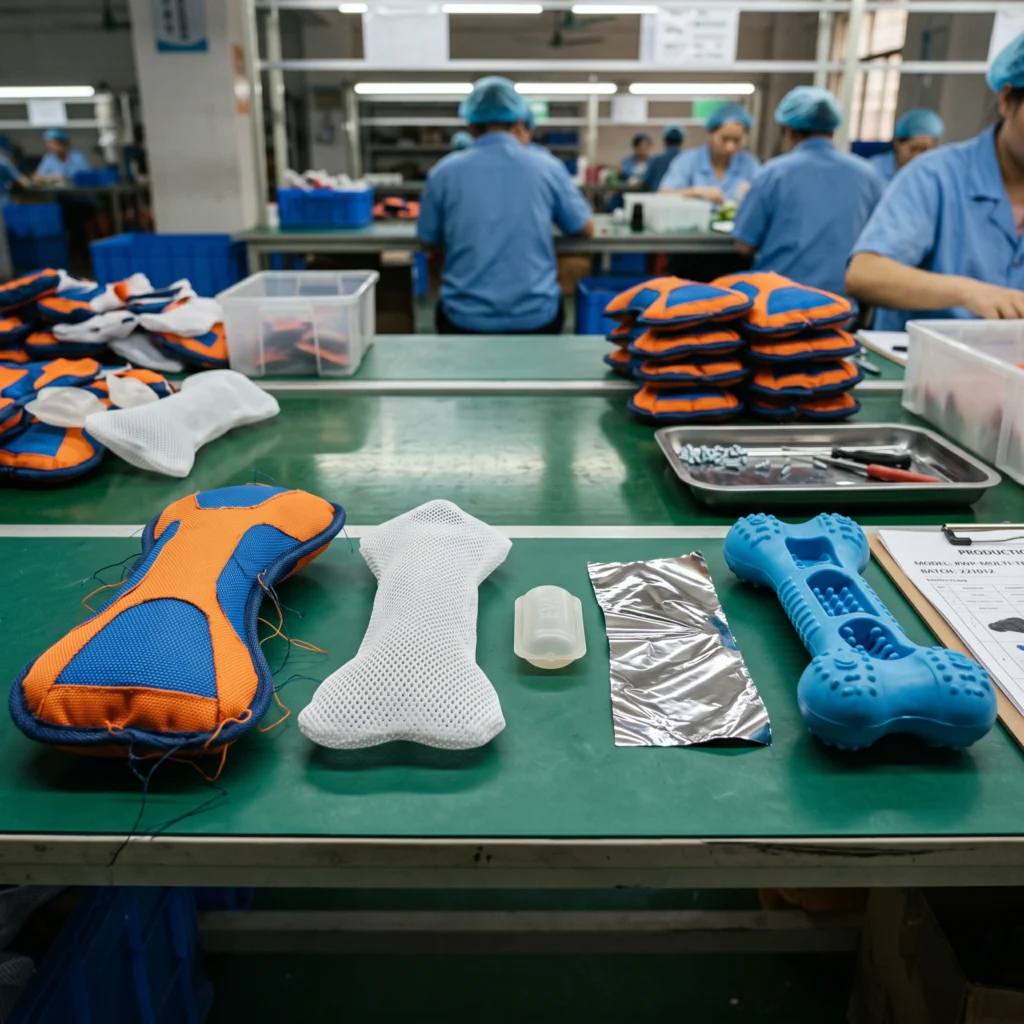
When you partner with us for your dog puzzle toys wholesale orders, we mandate the use of secondary structural layers. For the outer shell, we might select a dense corduroy or polar fleece for sensory engagement. However, beneath that soft exterior, our sample room fuses a high-tensile mesh liner. This dual-layer lamination process ensures that when the dog’s teeth puncture the plush, the internal mesh grid halts the progression of the tear.
Textile Specifications Table
To give you an idea of the strict material guidelines we follow, here is a breakdown of common textiles evaluated during the prototyping phase:
| Material Type | Grams per Square Meter (GSM) | Tensile Tear Strength | Primary Application in Puzzle Toys |
| Micro-Fleece | 250 – 300 GSM | Low-Medium | Snuffle pockets, treat-hiding flaps, soft sensory areas. |
| Corduroy (Wale 8) | 280 – 320 GSM | Medium-High | Outer shells, high-abrasion exterior walls. |
| Ballistic Nylon | 600D – 1000D | Extreme | Base reinforcement, heavy-duty chew components. |
| Laminated Mesh Liner | 120 GSM | High (Grid structure) | Internal fused backing to prevent tooth-puncture propagation. |
The Precision of Die-Cutting
For the prototype (the White-Sample), our pattern maker cuts the fabric by hand using the paper molds. However, to ensure the prototype is actually scalable for mass production, we must design it for die-cutting.
Once the pattern is approved, we manufacture steel rule dies. These are essentially heavy-duty, custom-shaped cookie cutters made of razor-sharp steel. A hydraulic press forces these dies through 20 layers of fabric at once. If the original pattern design includes overly sharp internal angles or unnecessarily complex curves, the die-cutter will fray the edges of the fabric. Our pattern making team continuously smooths and optimizes the geometry of the toy so that it can be die-cut cleanly and rapidly, ultimately lowering your unit cost in mass production.
Phase 4: Prototyping, Assembly, and Stuffing Distribution
With the pieces cut, we move to the sewing machines. For high-stress puzzle toys, we utilize industrial double-stitching or overlock machines with heavy-duty bonded nylon thread.
The Science of Stuffing Distribution
One of the most overlooked aspects of making your own dog puzzle toy is the exact mathematics of stuffing distribution.
Stuffing is not merely filler; it is an active structural component. If the main base of our tree trunk is overstuffed, the internal pressure will crush the hidden treat pockets, making it impossible for the dog to retrieve the reward. If it is understuffed, the toy will collapse under the dog’s paws, ruining the interactive experience.
In the sample room, we weigh the exact amount of PP (Polypropylene) cotton used in every single compartment down to the gram. We test the distribution by physically compressing the toy. We also incorporate different densities of stuffing—using high-rebound cotton for the structural walls, and leaving the puzzle flaps completely unstuffed (relying only on fabric stiffness) so they can be easily manipulated by a dog’s snout.
Defect Analysis and Engineering Solutions
During the White-Sample prototyping phase, we actively look for failure points. Here is a table detailing common prototyping defects we encounter and how our engineers solve them before presenting the final sample to the client.
| Prototyping Defect | Root Technical Cause | Wehaopets Engineering Solution |
| Seam Puckering | Tension mismatch between upper and lower threads, or fabric grain misalignment. | Adjust sewing machine tension; ensure pattern pieces are cut aligned to the fabric’s warp/weft grain. |
| Puzzle Component Stuck | Negative space cavity calculated incorrectly against stuffing expansion pressure. | Redraft pattern to increase cavity diameter by 5% and reduce localized stuffing weight by 10 grams. |
| Shape Distortion (Bulging) | Lack of internal structural anchors to hold opposing walls parallel. | Insert internal fabric baffles (hidden tension walls) to tie the front panel to the back panel. |
| Tear at Stress Point | Acute angles in the pattern design concentrating mechanical stress on one stitch. | Round off acute angles in the CAD file; reinforce high-stress corners with bar-tack stitching. |
The Final Output: The Master Tech Pack
The culmination of the prototyping process is not just the physical toy itself, but the creation of the Master Tech Pack. This is the ultimate blueprint. The prototype can be lost or destroyed, but the Tech Pack ensures the toy can be manufactured identically ten thousand times over.
Mandatory Tech Pack Checklist
Before any client approves a design for mass production, we require them to sign off on a rigorous checklist. These are the non-negotiable elements that dictate the quality and consistency of the final product.
- 📐 Exact Dimensional Tolerances: Every axis (L x W x H) must be recorded in millimeters, with a clearly defined acceptable variance (e.g., ± 5mm). Plush toys are soft goods and will vary slightly, but the tolerance limits must be locked in.
- 📝 Strict Seam Allowances: Confirmation of the seam allowance (1/4 inch) on all joins, ensuring that factory floor workers do not take deeper margins that would shrink the final product.
- 📐 Precise Stuffing Weights: A per-compartment breakdown of stuffing weight in grams. The head of a squirrel component might require 12g, while the body requires 25g.
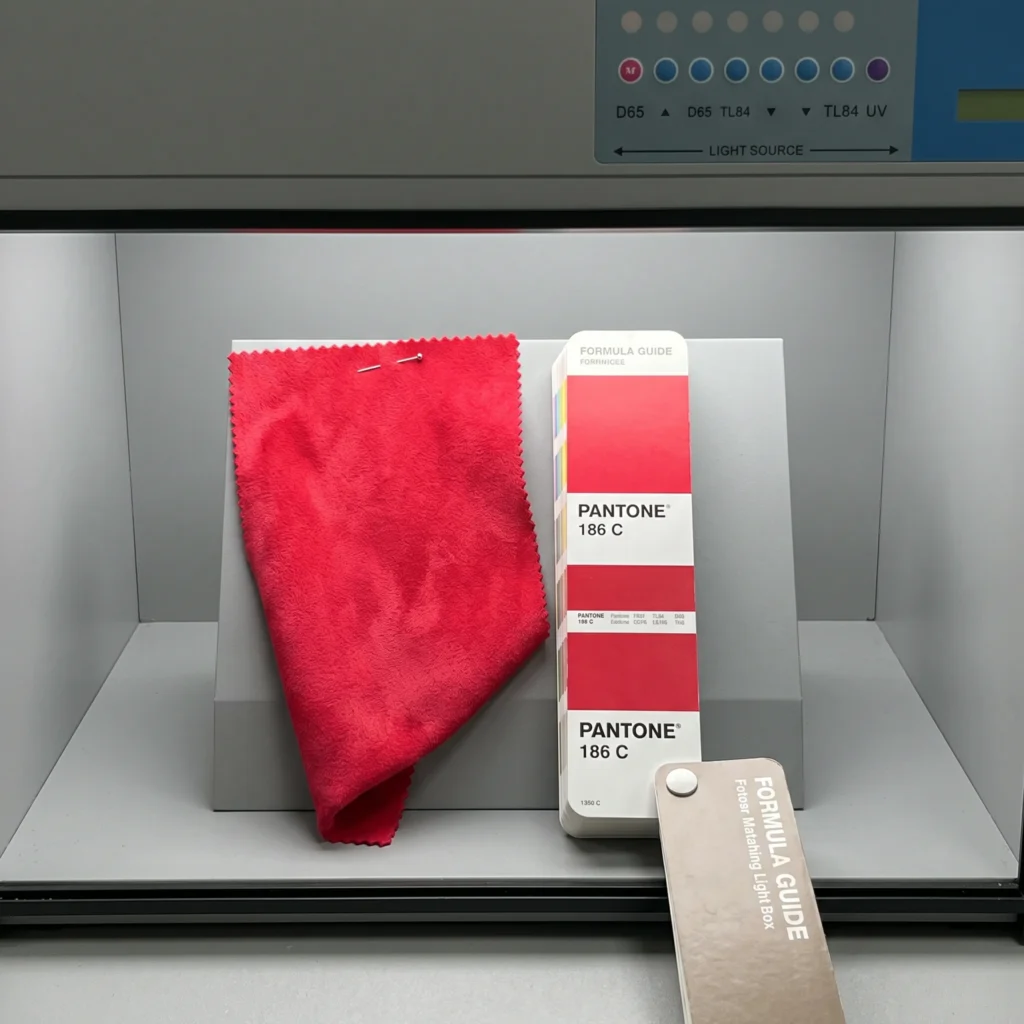
- 📝 Material and PMS Color Codes: Exhaustive listing of all outer shell fabrics, internal mesh liners, thread denier, squeaker types (e.g., 35mm EVA squeaker), and exact Pantone Matching System (PMS) codes for fabric dyeing.
Quality Assurance and Seam Burst Testing
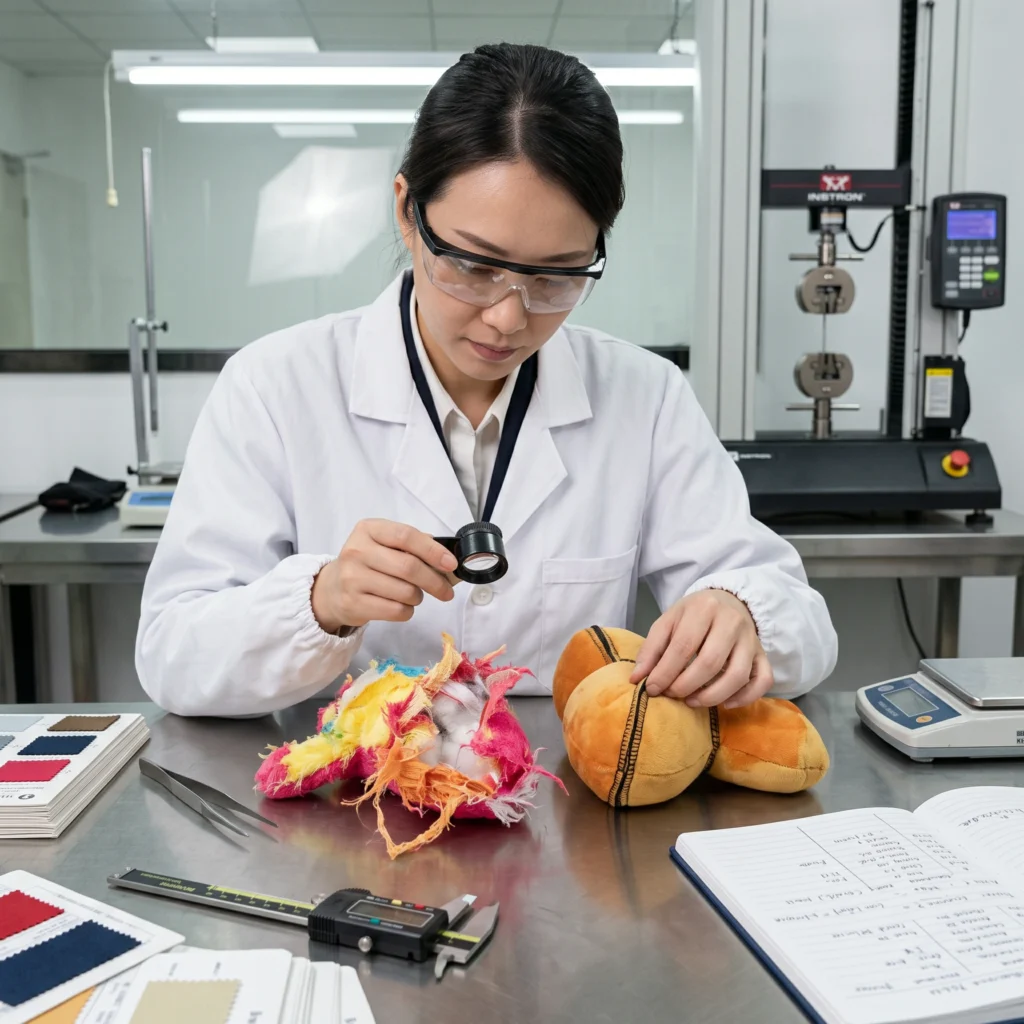
Before the final color sample is boxed up and air-freighted to the client for final approval, it undergoes our internal QA stress testing. A dog puzzle toy is uniquely vulnerable because dogs use their front paws to pin the base while using their teeth to rip at the interactive puzzle components. This creates extreme opposing shearing forces.
To simulate this, we execute the following standardized testing protocol:
- Isometric Pull Testing: We clamp the base of the toy to a stationary pneumatic rig and attach clamps to the puzzle flaps and nested components. We apply gradual tension up to 15kg to test the tensile strength of the joining seams.
- Seam Burst Analysis: We inspect the stitch density (Stitches Per Inch – SPI). If the thread breaks before the fabric tears, we upgrade to a higher denier thread. If the fabric tears at the stitch line, we increase the seam allowance or mandate a denser mesh backing.
- Washability Testing: Puzzle toys often hold treats, which means they accumulate saliva and food residue. They must be machine washable. We run the prototype through standard agitation wash cycles to ensure the PP cotton does not clump and the internal squeakers do not rust or retain water.
- Choke Hazard Review: We aggressively attempt to dislodge any attached components (like embroidered eyes or sewn-on labels) to ensure they cannot become choking hazards during aggressive play.
By the time the prototype reaches your desk, it has survived a gauntlet of engineering scrutiny. It is not just a representation of your idea; it is a battle-tested, mass-production-ready asset.
FAQ: Prototyping Fees, Revisions, and IP Ownership
As a B2B factory, we frequently receive technical and logistical questions from brand founders regarding the R&D process. Here are the most common inquiries regarding how to make your own dog puzzle toy with Wehaopets.
1. Do I need to provide a 3D CAD file, or is a rough sketch enough?
You do not need to provide 3D files. A rough 2D sketch, reference photos, or even a detailed written description is sufficient. Our in-house pattern making team handles all the 3D CAD modeling and digital spatial calculations.
2. What is the typical cost for prototyping a custom dog puzzle toy?
Prototyping fees generally range from $100 to $250 USD, depending on the complexity of the puzzle elements, the number of nested components, and custom material requirements. This fee covers the CAD modeling, pattern drafting, material sourcing, and physical sample creation.
3. Is the prototyping fee refundable if I proceed with mass production?
Yes. At Wehaopets, the initial prototyping fee is fully credited back to your account and deducted from the total invoice of your first bulk mass production order (subject to Minimum Order Quantity requirements).
4. How many revisions are included in the prototyping phase?
Our standard prototyping package includes the initial White-Sample (for structural geometry approval) and one major round of revisions for the final Color Sample. Minor tweaks to stuffing weight or thread color can be adjusted at no extra cost before mass production.
5. Who owns the Intellectual Property (IP) and the Tech Pack once the prototype is finished?
You do. Once the prototyping fee is paid, the design, the paper patterns, and the proprietary elements of the toy belong strictly to your brand. We are a contract manufacturer; we do not sell your custom designs to other clients.
6. Will Wehaopets sign a Non-Disclosure Agreement (NDA) before I share my sketches?
Absolutely. We strongly encourage all brand founders and product designers to request our mutual NDA template before sharing any proprietary sketches, business models, or target market data. Protecting your IP is our priority.
7. How do you ensure the puzzle toy passes international pet safety standards?
During the material sourcing phase, we exclusively select fabrics, non-toxic dyes, and internal components (like squeakers and crinkle paper) that comply with US (ASTM F963) and EU (EN71) safety standards, ensuring heavy metals and toxic chemicals are entirely absent from the manufacturing process.
Bring Your Blueprint to the Sample Room
The transition from a two-dimensional idea to a three-dimensional, highly profitable pet product requires more than just a sewing machine; it requires structural engineering, precise pattern grading, and a deep understanding of canine behavioral play.
If you have a rough sketch sitting in a notebook or an iPad, do not let it stall because you lack a technical pattern maker. Our sample room in Dongguan is ready to assess the structural viability of your concept.
We urge all brand founders and product designers to take the first step toward building defensible, proprietary IP. Send us your rough sketches under a strict NDA, and our engineering team will provide a free manufacturability assessment.
Ready to engineer your next bestseller? Reach out via our Contact Us page today. For more information on our full manufacturing capabilities, explore our OEM & ODM Services.