Overview
The transition to eco-friendly pet toys requires adopting GRS-certified post-consumer recycled (PCR) materials, which typically increases unit costs by 12-18%. However, failing to transition invites severe legal and financial risks under tightening regulations. Conclusion: Authentic sustainability requires verified supply chain traceability, not just marketing claims. Implication: Procurement teams must prioritize acquiring GRS Transaction Certificates to legally claim eco-friendly status, protect profit margins, and secure market access in the EU and North America.
The End of Greenwashing: Navigating New Legal Risks in Pet Product Imports
The era of slapping a generic green leaf sticker on a TPR dog chew and vaguely labeling it as an “eco-friendly pet toy” is officially dead. As the Director of Sustainable Manufacturing at Wehaopets—where our material sourcing team and I maintain complete, independent administrative and operational control over our production frameworks—I have watched European and North American customs agencies systematically dismantle importers who rely on unsubstantiated sustainability claims. Greenwashing in the pet industry is no longer just a marketing faux pas; it is a critical legal liability.
If your factory cannot provide valid, verifiable traceability certificates, your entire supply chain is at risk. Under stringent frameworks like the EU Green Claims Directive, B2B buyers and importers face severe penalties, shipment confiscations, and permanent retail delistings for unsubstantiated environmental marketing. When you claim a plush dog toy is made from “recycled ocean plastics,” regulatory bodies now demand the exact chain of custody, from the waste aggregation facility to the final cut-and-sew assembly line. We are writing this guide to advise procurement managers on how to technically upgrade their product lines to meet these uncompromising EU and North American sustainability mandates without destroying their profit margins in the process.
Material Science: Transitioning from Virgin Plastics to PCR Resins
Achieving compliance requires a fundamental shift in material science. Transitioning to certified eco friendly pet toys means replacing stable, highly predictable virgin polymers with post-consumer recycled (PCR) resins and recycled polyethylene terephthalate (RPET). This is not a simple 1:1 substitution. It requires rigorous re-engineering of the manufacturing process.
The Complexities of RPET and Yarn Denier Consistency
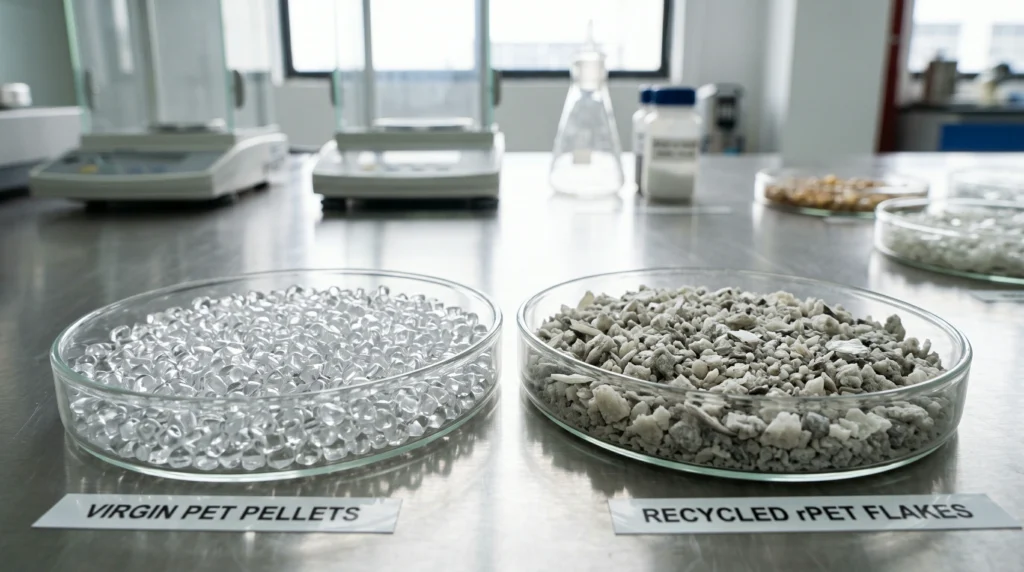
For plush eco-friendly pet toys, RPET is the industry standard. However, our material sourcing team constantly battles the physical realities of recycled fibers. When PET bottles are mechanically recycled, washed, flaked, and extruded into yarn, the polymer chains experience thermal degradation. This leads to a drop in intrinsic viscosity (IV).
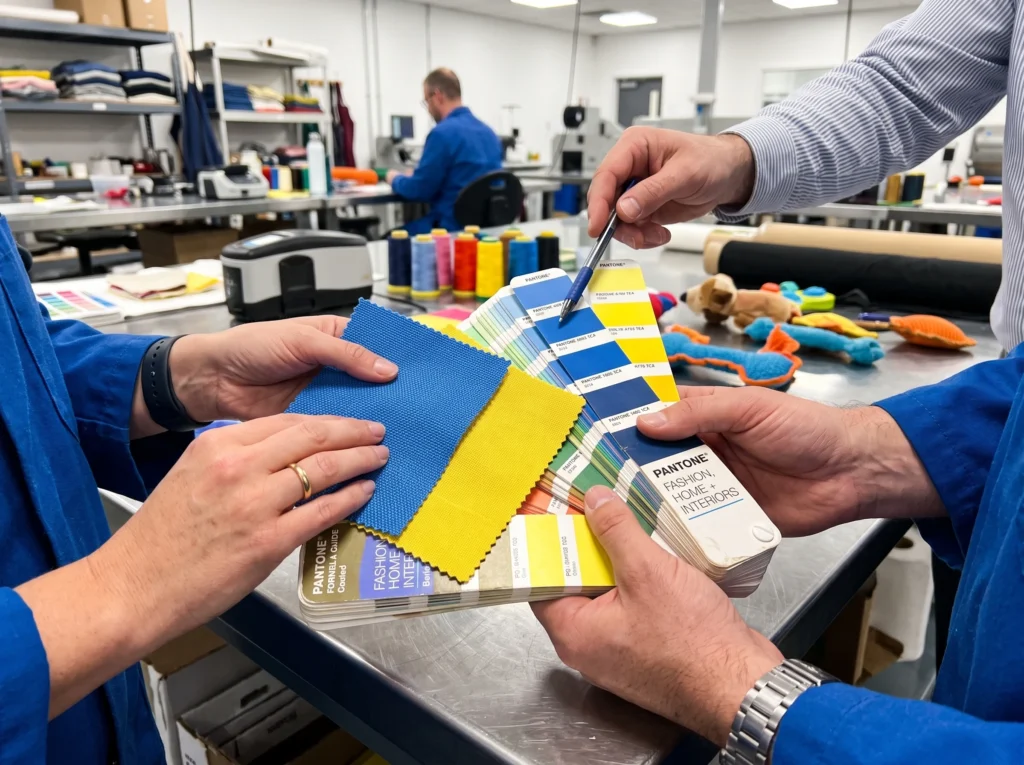
In practical manufacturing terms, this thermal degradation makes it exceedingly difficult to maintain strict yarn denier consistency. Virgin polyester yarn can be extruded with microscopic precision, ensuring the fabric is perfectly uniform and resistant to tearing—a crucial metric for aggressive chewers. With RPET, achieving the exact same denier requires highly calibrated extrusion machinery and frequent quality control interventions. Furthermore, the dyeing process for RPET requires specific temperature profiles, as recycled fibers often possess a slight grey or yellowish undertone that must be color-corrected without utilizing heavy-metal-laden, non-compliant dyes.
Biodegradable Masterbatch Limitations in Injection Molding
For hard toys, the challenges multiply. Many brands push for “biodegradable” plastics, often looking toward PLA (Polylactic Acid) blends or PHA (Polyhydroxyalkanoates). However, there are severe biodegradable masterbatch limitations in injection molding when producing durable pet toys.
Durable chew toys require high tensile strength and impact resistance. Biodegradable polymers are inherently designed to break down, which creates a paradoxical engineering challenge. During injection molding, PLA blends are highly sensitive to shear stress and thermal degradation. If the barrel temperature exceeds optimal limits by even a few degrees, the polymer begins to degrade inside the screw, leading to brittle toys that pose a choking hazard to dogs. Additionally, the mold shrinkage rates for PCR resins and biodegradable masterbatches differ significantly from virgin TPR (Thermoplastic Rubber) or TPU (Thermoplastic Polyurethane). This means existing steel molds often cannot be reused; new tooling must be cut to accommodate the specific shrinkage tolerances of the eco-friendly materials.
Mandatory Transition Matrix
To visualize the engineering and financial shifts required, we have compiled the following transition matrix.
| Material Metric | Virgin Polyester / TPR Spec | RPET / PCR TPR Spec | Estimated Unit Cost Difference | Required Certification |
| Tensile Strength (Fabric) | High consistency, standard denier | Variable, requires continuous monitoring | +12% to +15% | GRS (Global Recycled Standard) |
| Melt Flow Index (Injection) | Highly predictable, stable | Fluctuates based on PCR batch purity | +18% to +22% | RCS or GRS |
| Color Matching (Dyeing) | Pantones easily matched | Requires specialized non-toxic correction | +8% to +10% | OEKO-TEX® Standard 100 |
| Tooling & Mold Shrinkage | Standard shrinkage (e.g., 1.5%) | Variable (e.g., 1.8% – 2.2%) | High upfront CapEx for new molds | ISO 9001 for QMS adjustments |
The Financial Reality: Margin Protection During Eco-Transition
Sustainability is expensive. Procurement managers must accurately model the cost variables associated with manufacturing eco-friendly pet toys to avoid margin erosion. The premium on recycled materials is driven by the intensive labor and energy required for sorting, cleaning, and processing post-consumer waste.
Audits, Compliance Fees, and MOQs
Beyond the raw material costs, the administrative burden of compliance is substantial. Securing a Global Recycled Standard (GRS) certification involves comprehensive third-party audits of the factory’s environmental practices, social compliance, and chemical management systems. These annual audits cost thousands of dollars, an overhead that factories inevitably amortize into the unit price of the toys.
Minimum Order Quantities (MOQs) also shift dramatically. Because custom dyeing GRS-certified RPET fabric requires specialized, separated vats to prevent cross-contamination with virgin materials, fabric mills enforce much higher MOQs. A standard virgin plush fabric might require an MOQ of 1,000 meters, whereas custom-dyed RPET often demands an MOQ of 3,000 to 5,000 meters. Procurement teams must optimize their forecasting and consolidate colorways across multiple SKU lines to absorb these elevated MOQs without tying up excessive working capital in inventory.
Cost-Benefit Analysis of Eco-Compliance over 3 Years
To further illustrate the financial trajectory of transitioning your supply chain, review the following projected cost-benefit table.
| Phase / Timeline | Capital Expenditure (CapEx) | Operational Adjustments | Expected Market Benefit | Margin Impact |
| Year 1: Transition | High (New molds, R&D testing) | High (Audit fees, high MOQs) | Maintaining current retail compliance | -5% to -8% short-term dip |
| Year 2: Optimization | Low (Tooling amortized) | Medium (Streamlined GRS TCs) | Expanding into premium eco-tiers | Stabilization, returning to baseline |
| Year 3: Maturation | Zero (Maintenance only) | Low (Volume-based material discounts) | Securing exclusive B2B retail contracts | +3% to +5% above original margin |
Securing Your Supply Chain: The Greenwashing Defense Framework
To survive European customs scrutiny and retailer compliance audits, you must construct an impenetrable wall of documentation. Verbal assurances from your manufacturer are legally worthless. As a buyer, you must adopt a zero-trust policy regarding environmental claims.
Below is the mandatory Greenwashing Defense Framework. You must systematically collect these documents from your manufacturing partners for every single PO.
📋 Essential Supply Chain Documents for Eco-Compliance:
- GRS Scope Certificate (SC): Verifies that the manufacturing facility itself is audited and authorized to produce goods under the Global Recycled Standard. You must check the expiration date and ensure “Pet Toys” or relevant textile categories are explicitly listed in the scope.
- GRS Transaction Certificates (TC): This is the most critical document. A TC is issued for a specific batch of goods, proving that the exact volume of recycled material purchased aligns with the volume of eco-friendly pet toys shipped. Without a TC, you have no proof for that specific PO.
- Bill of Materials (BOM) Traceability Log: A highly detailed BOM that specifies the exact percentage of PCR resin or RPET in every component of the toy (e.g., 100% RPET outer shell, 80% recycled PP cotton stuffing, 0% recycled squeaker).
- Chemical Compliance Test Reports: Third-party lab tests (from SGS, Intertek, or TÜV Rheinland) proving that the recycled materials do not contain restricted substances like phthalates, lead, or BPA, which can sometimes contaminate post-consumer recycling streams.
- LCA (Life Cycle Assessment) Summary: For advanced compliance, a simplified LCA showing the carbon footprint reduction compared to the legacy virgin product, which is heavily favored by EU retail buyers.
Technical Implementation: Adjusting Production Lines for Eco-Friendly Pet Toys
Upgrading to sustainable manufacturing is a highly technical endeavor. Wehaopets has heavily invested in retrofitting our production floors to handle the nuances of PCR resins and RPET textiles. For procurement managers, understanding these factory-level adjustments is crucial for negotiating lead times and managing quality expectations.
Moisture Control and Desiccant Drying
One of the most profound challenges in utilizing PCR PET for hard toys or internal plastic components is its hygroscopic nature. Recycled PET absorbs ambient moisture much faster than virgin polymers. If PCR resin is fed into an injection molding machine without rigorous pre-drying, the moisture turns to steam during the plastication phase. This causes severe defects known as “splay” (silver streaks on the toy’s surface) and catastrophic drops in structural integrity due to hydrolytic degradation. To combat this, factories must install advanced desiccant bed dryers, maintaining the PCR resin at specific dew points for hours before molding.
To ensure our eco-friendly pet toys meet the rigorous durability standards required by aggressive chewers, we have implemented strict processing rules.
⚙️ Quality Control Protocols for PCR Integration:
- Pre-Drying Mandate: All PCR resins must be processed through closed-loop desiccant dryers for a minimum of 4-6 hours at 120°C prior to extrusion.
- MFI Batch Testing: The Melt Flow Index (MFI) of every incoming batch of recycled plastic flakes is tested in-house to calibrate the injection pressure parameters.
- Seam Tensile Testing: All RPET plush toys undergo automated seam-pull testing at 90 Newtons to ensure the recycled thread matches the durability of virgin polyester thread.
- Contamination Purging: Extruder barrels are subjected to mandatory heavy purging protocols when switching from standard TPR to PCR blends to prevent cross-contamination that could invalidate GRS audits.
- Weight Tolerance Audits: Because PCR materials can vary slightly in density, automated scale systems reject any molded toy that falls outside a strict ±2% weight tolerance, ensuring uniform material distribution.
Performance Metrics: Traditional vs. Eco-Friendly Durability
How do these eco-friendly pet toys actually perform on the shelf and in the home? Let’s analyze the technical durability metrics.
| Performance Metric | Virgin Material Standard | Eco-Friendly (RPET/PCR) Standard | Manufacturing Adjustment Required |
| Bite Puncture Resistance | 120 lbs/sq inch | 115 – 118 lbs/sq inch | Increase outer wall thickness by 0.5mm |
| UV Degradation (Outdoor Play) | High resistance (with additives) | Moderate resistance | Integration of eco-safe UV stabilizers |
| Tear Strength (Seams) | 100 Newtons | 95 – 98 Newtons | Implementation of double-stitched reinforced RPET binding |
| Washability (Plush) | Machine washable at 40°C | Machine washable at 30°C (Eco-cycle) | Updated care labels to prevent microplastic shedding |
Managing Global Recycled Standard (GRS) Audits and Transaction Certificates
The core of B2B eco-compliance revolves around the Global Recycled Standard. For an importer to legally label a product with the GRS logo, every entity in the supply chain—from the recycling facility to the final assembly factory—must hold a valid GRS Scope Certificate.
However, holding a Scope Certificate only proves the factory is capable of producing sustainable goods. It does not prove that your specific order of eco-friendly pet toys actually contains recycled material. This is where the Transaction Certificate (TC) comes in.
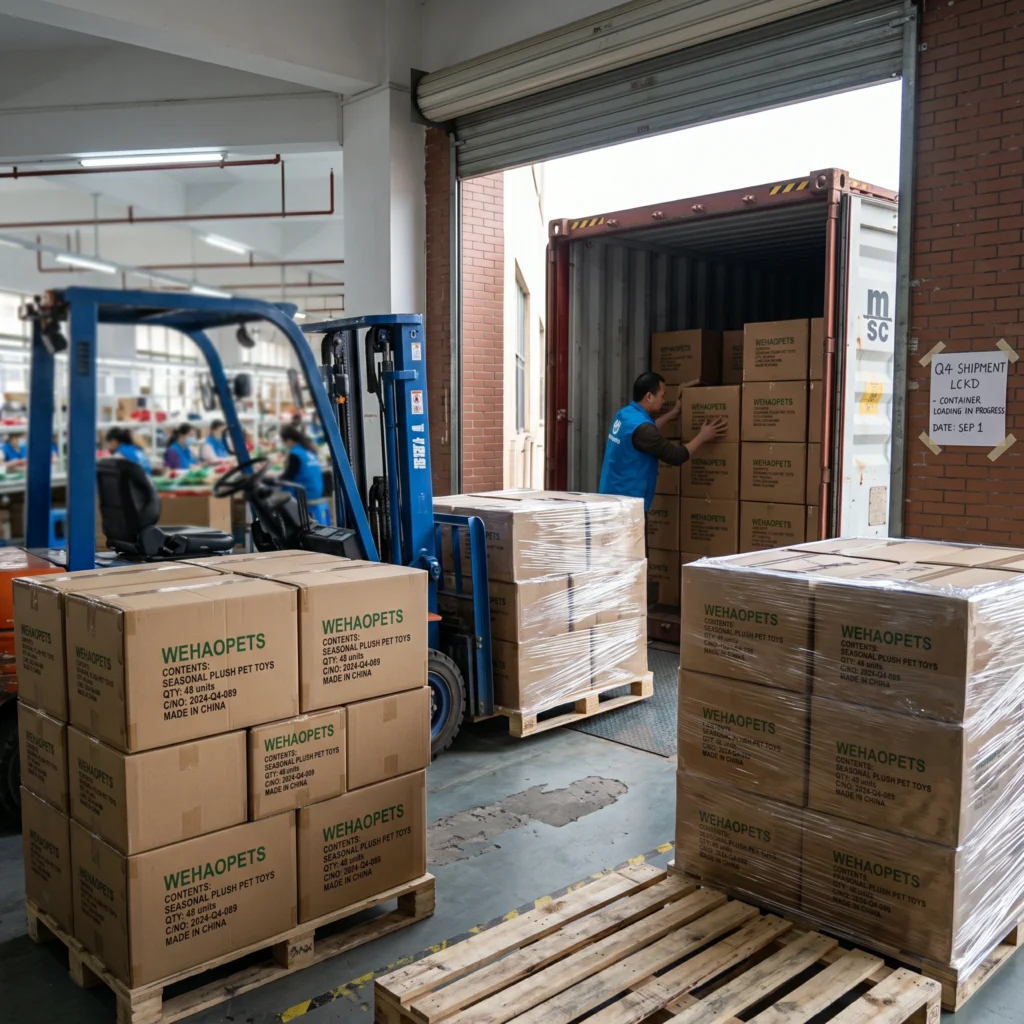
When Wehaopets sources RPET fabric, our certified yarn supplier issues a TC to us. When we manufacture the final dog toys and ship them to your distribution center in North America or the EU, we must apply to our auditing body (e.g., Control Union) to issue a final TC to you, the buyer. The auditing body mathematically verifies our mass-balance records: they check that the total weight of recycled material we purchased matches the total weight of the finished toys we shipped to you, minus standard manufacturing waste. This mass-balance calculation makes it impossible for factories to secretly substitute cheaper virgin materials into an eco-friendly order.
Procurement managers must explicitly build the cost and lead time of TC generation into their purchasing contracts. TCs are not free—auditing bodies charge per certificate, and processing can take several weeks after the bill of lading is issued. We highly recommend exploring our detailed insights on certifications and compliance to understand how to streamline this documentation pipeline.
Step-by-Step Transition Strategy for Procurement Managers
Transitioning an entire catalog of pet toys to sustainable materials is daunting. We advise a phased approach to mitigate risk and control costs.
- Phase 1: The Soft Transition (Stuffing and Packaging)Do not immediately attempt to replace the outer shells of your most durable chew toys. Begin by replacing the internal PP cotton stuffing in plush toys with 100% recycled PP cotton. Simultaneously, transition all packaging headers and hangtags to FSC-certified recycled paper printed with soy-based inks. This requires minimal tooling changes and allows you to market a percentage of recycled content immediately.
- Phase 2: The Plush Exterior (RPET Integration)Transition the outer fabrics of your best-selling plush toys to GRS-certified RPET. Because the cut-and-sew manufacturing process remains largely the same, the main hurdle here is securing the higher MOQs for custom-dyed RPET fabric.
- Phase 3: Hard Plastics and Elastomers (PCR Injection Molding)This is the most technically complex phase. Isolate a few high-volume TPR or Nylon toys. Work with our engineering team to design new molds specifically calibrated for the shrinkage rates and flow dynamics of PCR resins. Conduct extensive chew-testing to ensure the material degradation inherent in recycling has not compromised the product’s safety profile. For further details on how our factory handles these advanced requests, visit our eco-friendly manufacturing facility overview.
Conclusion and Next Steps
The mandate for eco-friendly pet toys is no longer driven solely by consumer sentiment; it is now enforced by international law. B2B buyers who fail to adapt to the rigorous traceability requirements of the EU and North American markets will face insurmountable legal barriers and supply chain disruptions.
Transitioning from virgin plastics to GRS-certified PCR resins requires acknowledging the technical realities of material science: increased unit costs, complex injection molding parameters, and the absolute necessity of Transaction Certificates. Greenwashing is obsolete. Verifiable, audit-backed sustainability is the new baseline for market entry. By partnering with a factory that deeply understands the engineering and compliance metrics of this transition, procurement managers can successfully navigate this shift, protecting both their profit margins and their brand integrity.
Ready to future-proof your pet product supply chain?
Stop guessing about the financial impact of sustainability. Request a free, highly detailed “Eco-Transition Cost Analysis” for your current best-selling toy. Our engineering team will break down the exact CapEx, MOQ adjustments, and unit cost differences required to make your product GRS-certified and EU-compliant. [Contact Us today] to secure your margins and your market share.
Frequently Asked Questions (FAQ)
1. What is the standard Minimum Order Quantity (MOQ) for custom-dyed GRS-certified RPET fabrics?
Because fabric mills must thoroughly clean dyeing vats to prevent virgin material contamination, the MOQ for custom-dyed GRS-certified RPET fabric is typically between 3,000 to 5,000 meters per color, which is significantly higher than the 1,000-meter average for virgin polyester.
2. How much does it cost to generate a GRS Transaction Certificate (TC) per shipment?
The cost of a GRS Transaction Certificate varies depending on the certifying body (like Control Union or Intertek), but it generally ranges from $30 to $80 USD per certificate, plus a potential processing fee. This cost should be factored into your total landed cost calculations.
3. Can we mix virgin polyester with PCR materials and still legally claim it is an “eco-friendly pet toy”?
Yes, but your marketing claims must be precisely quantified. Under the EU Green Claims Directive, you cannot make a broad “eco-friendly” claim. You must state the exact percentage, for example: “Made with 50% GRS-certified post-consumer recycled plastic.”
4. Why do RPET plush pet toys cost more to manufacture than virgin polyester toys?
RPET costs 12% to 15% more because the process of collecting, sorting, washing, and mechanically extruding post-consumer plastic bottles into usable yarn is highly labor and energy-intensive compared to standard crude oil polymerization.
5. Are biodegradable masterbatches a viable option for highly durable, aggressive dog chew toys?
Currently, they are not highly viable. Biodegradable plastics like PLA blends are highly sensitive to heat and shear stress during injection molding. They tend to yield brittle products that lack the high tensile strength and puncture resistance required for aggressive chew toys, posing a potential safety hazard.
6. How long does a factory GRS audit take, and does it impact production lead times?
A standard factory GRS audit takes 2 to 4 days on-site, but the preparation and document review process takes several months. While the audit itself does not stop production, the administrative overhead required to maintain mass-balance records can slightly extend overall project lead times for new product development.
7. What is the fundamental difference between RCS (Recycled Claim Standard) and GRS (Global Recycled Standard) certifications?
Both verify recycled content, but GRS is much stricter. RCS only tracks the chain of custody of recycled materials. GRS tracks the chain of custody and mandates strict environmental processing criteria, chemical restrictions (no harmful chemicals), and stringent social/labor compliance standards at the factory level.