Overview: The primary conclusion of this guide is that delaying your seasonal production orders directly destroys profit margins. To guarantee ocean freight arrival before the targeted holiday, brands must finalize all tech packs by our drop-dead date of June 15th. The critical implication here is that late planning forces brands into paying crippling air freight fees, ultimately turning seasonal B2B sourcing from a revenue driver into a severe logistical loss.
The Anatomy of a Q4 Sourcing Disaster
It happens every single year without fail. An inventory manager or procurement director from a mid-sized global e-commerce brand reaches out to our production planners in late August. They have conceptualized a brilliant new line of wholesale christmas dog toys, the marketing budget is locked, and the launch date is ambitiously set for November 1st. They want to place a purchase order for 50,000 units and fully expect the goods to be on the water by late September.
We are then forced into the uncomfortable position of breaking reality to them. By August, attempting a November product launch for a massive volume of seasonal goods means one thing: the brand will be forced to pay upwards of $10,000 in air freight to bypass the bottlenecked ocean ports. What began as a high-margin holiday strategy instantly transforms into a margin-eradicating salvage operation.
As your trusted holiday pet toy manufacturer, we see these supply chain failures unfold in real-time. In the B2B manufacturing world, operating on a B2C timeline is the fastest way to bankrupt a product launch. Our production planners and supply chain analysts have spent years tracking these devastating patterns. The root cause is almost always a profound misunderstanding of the true lead times required for mass production, especially when competing for resources during the global manufacturing peak season.
We are writing this guide to put an end to this cycle. If you are a brand owner, a buyer, or an inventory manager who has previously lost money due to late factory deliveries, this is your blueprint for survival. The timeline we present here is strict, risk-averse, and absolutely mandatory for protecting your Q4 bottom line.
Why “Early” in B2C is “Late” in B2B Supply Chains
To understand the urgency of our timeline, we must first dismantle the illusion of rapid manufacturing. Many brands assume that once a tech pack is submitted, the factory can simply flip a switch and begin pumping out tens of thousands of plush toys or TPR chewables. This ignores the immutable laws of physical production and material science.
Raw Material Curing Times
One of the most overlooked aspects of pet toy manufacturing is raw material curing times. For durable rubber and TPR (Thermoplastic Rubber) toys, the injection molding process is only the first step. These materials require specific thermal cooling and curing periods to achieve the correct Shore hardness and tensile strength required by safety standards. If you attempt to rush the curing process to meet a compressed holiday deadline, the structural integrity of the toy is compromised, leading to massive failure rates during Quality Control (QC) or, worse, safety hazards for the end consumer. We refuse to compromise on these metrics, meaning our lead times are fixed by the chemistry of the materials themselves.
Q3 Factory Capacity Constraints
Furthermore, you are not just competing with other pet brands. The entire global manufacturing sector experiences massive Q3 factory capacity constraints. Electronics, consumer goods, apparel, and seasonal novelties are all monopolizing factory floors across Asia. When you delay your order, you are essentially gambling that a highly sought-after factory will have idle machines during the busiest time of the year. They will not. Securing your spot on the production line requires advance booking. For a deeper understanding of our operational bandwidth and how we allocate production slots, you can review our detailed OEM/ODM Services and Production Capacity.
Reverse Sourcing Calendar for Q4 Holiday Pet Toys
To ensure your wholesale christmas dog toys arrive safely in your domestic warehouse by October 15th (giving you two weeks for distribution before a November 1st launch), you must work backward from that date. Below is our uncompromising reverse sourcing calendar.
Table 1: Mandatory Q4 Reverse Sourcing Calendar
| T-Minus Timeline | Action Required by Brand | Factory Phase | Bottleneck Risk |
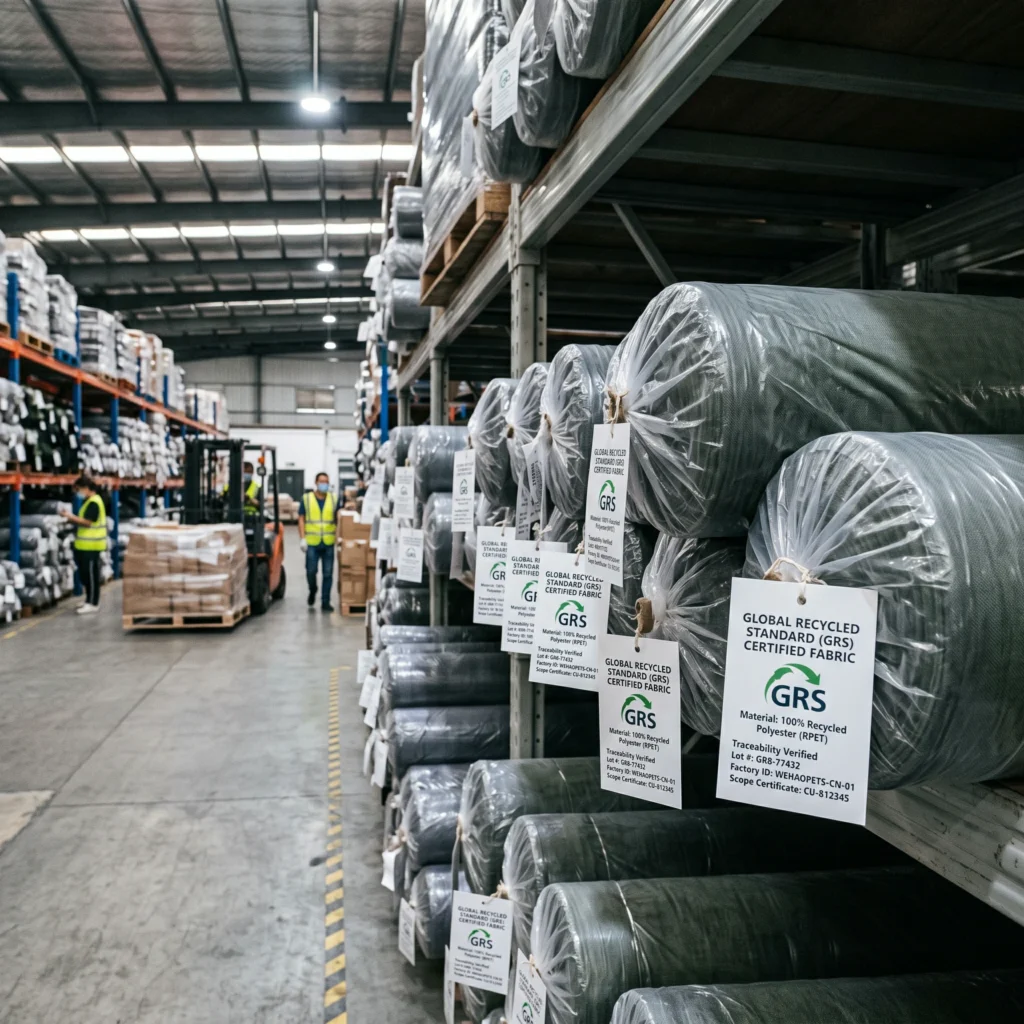
| 8 Months Out (Feb 15) | Initial concept pitch & raw material selection. | Feasibility analysis & material sourcing. | Delays in sourcing specialty eco-friendly or proprietary materials. |
| 7 Months Out (Mar 15) | Submit V1 Tech Packs & CAD files. | Initial rapid prototyping & mold drafting. | Revisions to complex geometries causing mold redesigns. |
| 6 Months Out (Apr 15) | Review V1 physical samples; submit revisions. | Tooling adjustments & second-round sampling. | Repeated revisions eating into mass production lead time. |
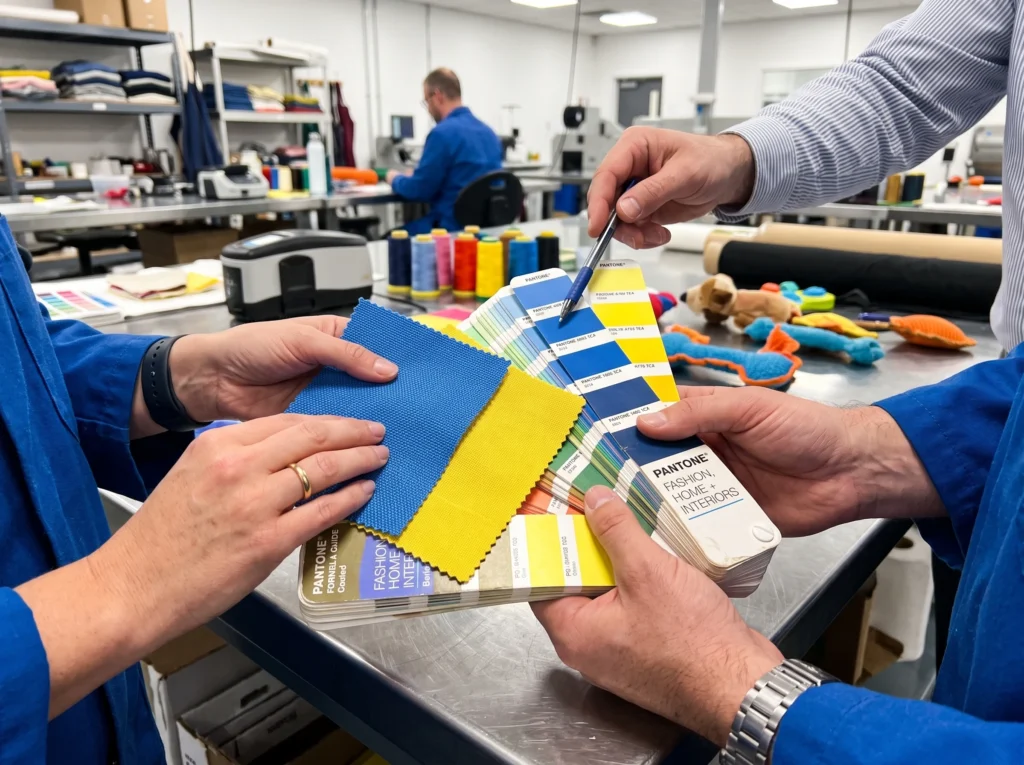
| 5 Months Out (May 15) | Finalize and approve the golden sample. | Finalizing Bill of Materials (BOM) & locking supply chain. | Indecision on pantone colors or packaging finishes. |
| 4 Months Out (Jun 15) | LOCK 3D CADs & Final Tech Packs. | Material purchasing & blanking. | Critical Failure Point: Missing this date jeopardizes everything. |
| 3 Months Out (Jul 10) | Pay Mass Production Deposit & Issue PO. | Mass production begins (Molding, cutting, sewing). | Raw material shortages during Q3 ramp-up. |
| 2 Months Out (Aug 15) | Finalize 3rd party inspection criteria. | Assembly, squeaker insertion, curing, & internal QC. | High defect rates requiring immediate rework on the line. |
| 1.5 Months Out (Sep 1) | Approve Final QC & Arrange Forwarder. | Packaging, palletizing, and container loading. | Critical Failure Point: Port congestion & vessel space. |
| 1 Month Out (Sep 15) | Track ocean freight & clear customs. | Goods in transit (Ocean Freight). | Customs holds, blank sailings, or transshipment delays. |
| Target Date (Oct 15) | Receive goods at 3PL or domestic warehouse. | Post-delivery support. | Domestic drayage shortages or warehouse receiving delays. |
The 3 Absolute Hard Cut-Offs
While the calendar above provides a strategic overview, there are three dates where any slippage will guarantee a missed holiday launch. We refer to these as our “Hard Cut-Offs.” If a brand attempts to modify designs, alter quantities, or delay approvals past these markers, we immediately escalate the risk profile to critical.
- 🛑 June 15th: Final Tech Pack & 3D CAD Lock. By this date, every dimension, pantone color, squeaker type, and material specification must be frozen in stone. Changing a fabric type on June 16th means re-ordering raw materials during peak season, which adds 3 to 4 weeks to the lead time.
- 🛑 July 10th: Mass Production Deposit & PO Issuance. Production does not officially commence until the commercial invoice is signed and the deposit hits the ledger. A PO sitting in your outbox does not hold a spot on our assembly line. If the deposit clears on July 20th instead of July 10th, you forfeit your priority slot to another brand.
- 🛑 September 1st: Final QC & Container Loading. Your designated freight forwarder must have a container at our loading dock by this exact date. If your forwarder cannot secure a chassis or a container, your goods will sit in our warehouse accumulating storage fees while the peak season shipping window slams shut.
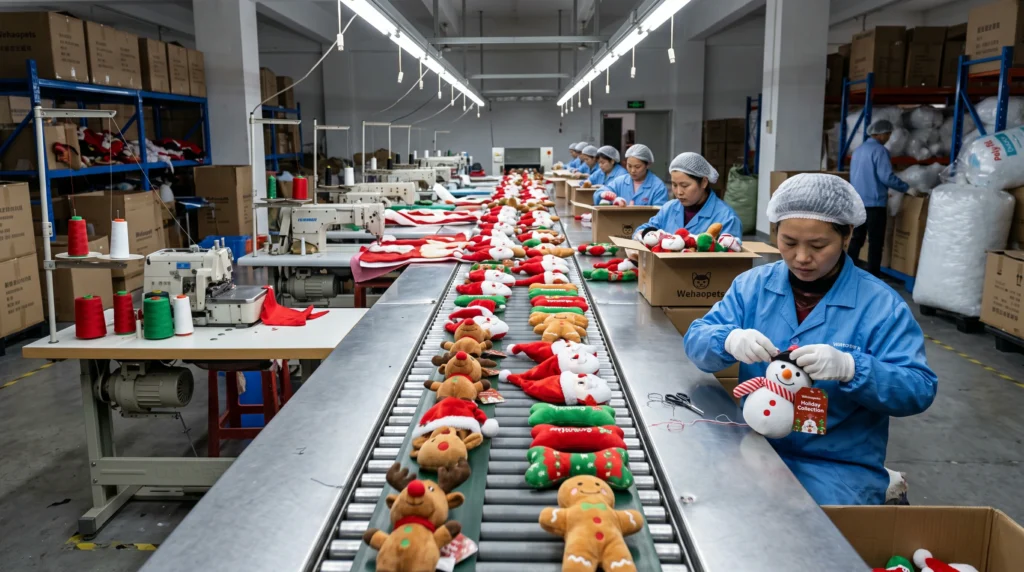
[ACTION REQUIRED: Insert real factory photo of Holiday-themed plush toys moving down the assembly line]
Hidden Surcharges & Shipping Nightmares: What Happens When You Delay
The financial penalties for late sourcing are staggering. As the Chief Forecasting Officer, my primary objective is to shield our partners from these margin-destroying variables. Let us examine the exact fiscal dangers you face when missing the June 15th tech pack deadline.
Peak Season Surcharge (PSS)
Ocean carriers are not benevolent entities; they are highly analytical profit engines. As Q3 progresses and demand for transpacific shipping skyrockets, carriers implement a Peak Season Surcharge (PSS). This is an arbitrary fee added to the base freight rate, sometimes inflating container costs by 30% to 50%. A 40-foot High Cube (40HQ) container that cost $4,000 in April could easily cost $7,500 by late August. If your goods are ready in late September because you placed your PO in July, you will be paying the maximum possible PSS, destroying the profitability of your seasonal pet products B2B strategy.
Vessel Space Booking Delays
Even if you are willing to pay the exorbitant PSS, money does not conjure container ships out of thin air. By September, vessel space booking delays are severe. It is common for cargo to be “rolled” (bumped from its scheduled ship to a later one) multiple times. A projected 25-day ocean transit can easily devolve into a 50-day nightmare of port congestion, blank sailings, and transshipment purgatory. We closely monitor metrics like the Freightos Baltic Index
to track these rolling delays, and the data conclusively proves that late shippers are penalized disproportionately.
Analyzing Freight Options and Lead Times
To further illustrate the financial impact of poor planning, we have compiled a matrix of freight modalities. If you fail to meet the ocean freight deadlines, your only remaining option to hit your holiday launch is air freight, which fundamentally alters the unit economics of your wholesale christmas dog toys.
Table 2: Freight Modality & Financial Impact Matrix
| Freight Modality | Average Transit Time (Asia to US) | Cost Multiplier vs. Base | Risk of Delay | Ideal Use Case |
| Ocean FCL (Full Container Load) | 25 – 35 Days | 1.0x (Baseline) | Low to Medium (If booked early) | High-volume POs placed by July 10th. |
| Ocean LCL (Less than Container) | 35 – 45 Days | 1.5x – 2.0x | High (Consolidation delays) | Smaller volume POs placed by July 10th. |
| Rail / Land Bridge (To EU) | 20 – 25 Days | 2.5x – 3.5x | Medium (Border crossing holds) | Mid-volume POs for the European market. |
| Air Freight (Standard) | 7 – 10 Days | 8.0x – 12.0x | Low | Emergency rescue for late August POs. Destroys margins. |
| Air Express (Courier) | 3 – 5 Days | 15.0x+ | Very Low | Sending golden samples and vital prototypes only. |
As clearly demonstrated, relying on Air Freight to correct a scheduling error increases your shipping costs by a factor of 10. A $1,000 ocean freight bill becomes a $10,000 air freight invoice.
Strategic Product Categories for Holiday Launches
The complexity of the toy you are manufacturing also dictates your required lead time. Not all pet toys are created equal on the assembly line. A simple molded TPR bone requires vastly different machinery and labor allocation than a multi-layered, interactive plush toy with concealed squeakers and crinkle paper.
If you are already running late on the calendar, we strongly advise pivoting your strategy toward lower-complexity items. Our production planners have categorized our capabilities to help you assess risk. For an expansive look at our complex plush manufacturing, you can review our Custom Dog Plush Toys portfolio.
Table 3: Product Complexity & Recommended Buffer Times
| Product Category | Manufacturing Complexity | Minimum Viable Lead Time | Primary Bottlenecks |
| Basic TPR/Rubber Chew Toys | Low (Single Injection Mold) | 30 – 45 Days | Mold creation; TPR curing times. |
| Nylon Rope & Tug Toys | Low to Medium (Braiding/Dyeing) | 40 – 50 Days | Dyeing yarn to match specific holiday pantones. |
| Standard Plush with Squeaker | Medium (Cutting, Sewing, Stuffing) | 50 – 60 Days | Intricate embroidery; manual sewing precision. |
| Multi-Textured Interactive Toys | High (Mixed Materials, Complex Assembly) | 70 – 90 Days | Assembling TPR, plush, and crinkle paper; rigorous QC testing. |
| Electronic/Moving Pet Toys | Critical (Motors, Batteries, PCBs) | 90 – 120 Days | Sourcing microchips; extreme QA and safety compliance. |
If you approach us in late July, we will unequivocally reject an order for highly complex electronic toys for Q4, but we may still have the capacity to execute a high-volume run of basic TPR chew toys. Understanding these nuances is what separates novice buyers from master supply chain strategists.
Frequently Asked Questions (FAQ)
To address the most common concerns regarding seasonal pet products B2B sourcing, our forecasting team has compiled this definitive FAQ.
1. Can we expedite our seasonal orders if we miss the June 15th tech pack deadline?
Expediting is severely limited during peak season. If you miss the June 15th deadline, we may not be able to guarantee raw material procurement in time. Any expedited requests are subject to a heavy rush-order surcharge, and even then, ocean freight timelines cannot be sped up.
2. What happens if we submit late tech packs but offer to pay for priority production?
Paying for priority production can move you up the queue internally, but it does not solve external bottlenecks. Raw material curing times, supplier delays for specialty fabrics, and vessel space booking delays are completely immune to priority production fees. You will still likely miss the holiday window.
3. Are there viable ways to avoid peak season surcharges (PSS) on wholesale Christmas dog toys?
The only guaranteed method to avoid PSS is to ship your goods before the surcharge is implemented by the carriers, which typically happens in late July or August. Placing your PO in early June and loading containers by late July bypasses the PSS entirely.
4. How do raw material curing times directly affect the delivery of seasonal pet products?
Certain materials, especially robust rubbers and proprietary TPR blends used in heavy-duty chew toys, require specific cooling and curing durations to meet tensile strength requirements. Attempting to bypass these times results in brittle, unsafe products that will fail third-party QA testing, forcing a total factory rebuild and catastrophic delays.
5. Can we switch our freight method from ocean to air if our Q4 production is delayed?
Yes, you can theoretically switch to air freight, but the financial implications are usually fatal to product margins. Air freight can cost 10x to 12x more than ocean freight. For bulky items like plush toys, you are paying for volumetric weight, which can easily erase all projected holiday profits.
6. Does booking vessel space early guarantee our seasonal pet toys won’t be delayed?
Booking early significantly reduces risk but does not eliminate it entirely. Carriers can still implement “blank sailings” (canceled routes) or roll your container to a later ship due to overbooking. This is why our hard cut-off for container loading is September 1st—it builds in a 3-week buffer for maritime logistics failures.
7. What is the absolute latest date to finalize a PO for a B2B holiday pet toy order?
To safely utilize ocean freight and land your goods by October 15th, the absolute drop-dead date to issue a final PO and pay the production deposit is July 10th. Any date past this forces reliance on air freight or risks the goods arriving after Christmas.
Final Warning: Secure Your Q4 Capacity Now
Supply chains do not reward optimism; they reward precision and extreme preparation. As your strategic partner in B2B pet product manufacturing, our priority is ensuring your Q4 launches are both seamless and highly profitable. Do not wait until August to realize your inventory is trapped on a whiteboard.
We urge you to lock in your tech packs and raw material allocations immediately. Download our 2026-2027 Seasonal Production Calendar or book your factory capacity slot today by reaching out directly to our production planners.
Take control of your Q4 supply chain today: Contact Us to secure your holiday production timeline before our remaining Q3 capacity is completely allocated.