Overview
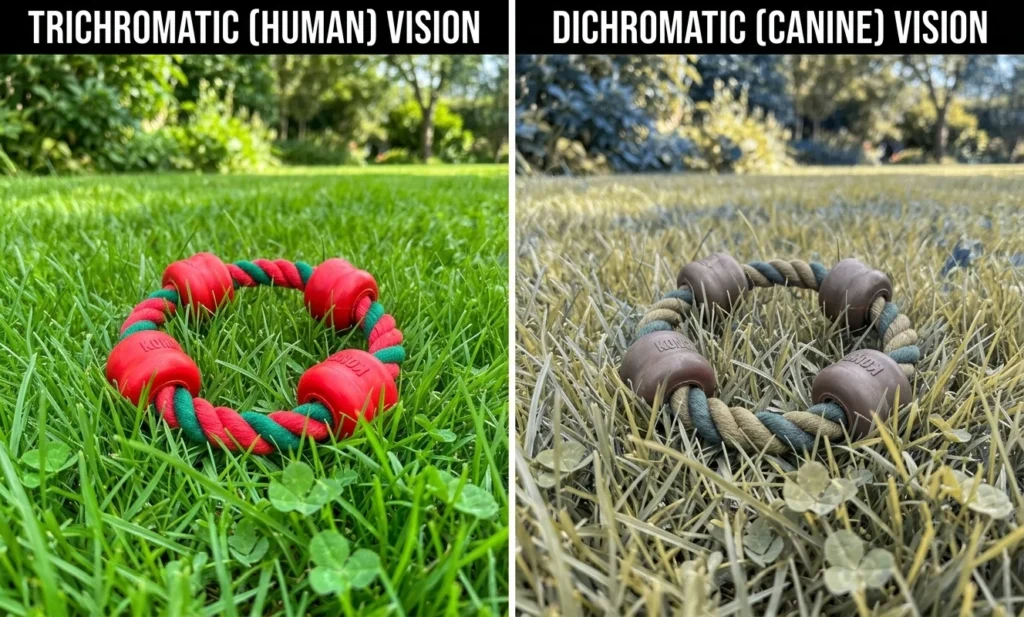
Stop designing wholesale interactive dog toys for human eyes. Canines are dichromatic; they only perceive blue and yellow hues. Red and green toys appear as indistinguishable dark greys, destroying canine engagement. Maximize your product line’s market viability by strictly utilizing Pantone Blues (e.g., PMS 293 C) and Yellows (e.g., PMS 109 C) for high-contrast visibility.
The Biological Reality of Pet Toy Design
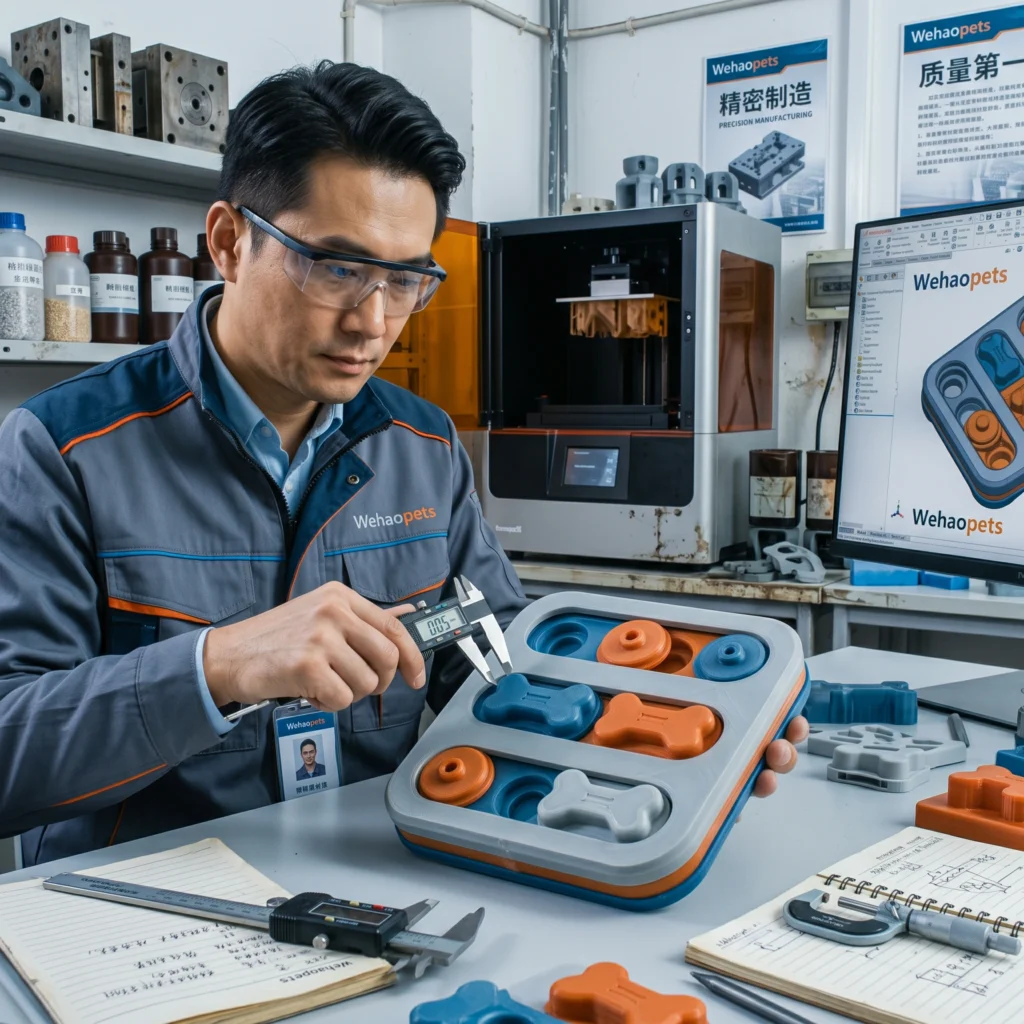
In our prototyping lab, we consistently observe brand founders commit a fatal commercial error: prioritizing retail shelf appeal over biological functionality. The B2B market reality is stark—up to 70% of bright red and green dog toys underperform in rigorous field testing simply because the end-user cannot distinguish them against grass or dark carpeting. When sourcing managers evaluate pet toy design, failing to account for canine dichromatic vision translates directly to dead inventory. As a custom dog toy manufacturer, we advise that designing strictly for biological constraints is the only reliable metric for maximizing long-term product lifecycle and wholesale reorder rates.
Scientific Parameter Comparison: Human vs. Canine Vision
To bridge the gap between human aesthetic preferences and canine utility, our R&D team has standardized the following color implementation guidelines for all OEM/ODM projects.
| Visual Target | Human Color Perception | Canine Color Reality | Recommended Factory Material Color |
| High Contrast (Grass/Outdoor) | Bright Red / Orange | Dark Grey / Muddy Brown | Pantone Reflex Blue C / PMS 293 C |
| Target Acquisition (Indoors) | Vivid Green | Faded White / Grey | Pantone Yellow 109 C / PMS 012 C |
| Camouflage / Low Stimulus | Deep Purple | Dull Blue-Grey | Pantone Cool Gray 8 C |
| Optimal High-Visibility | Neon Pink | Muted Grey | High-Vis Cyan (PMS 298 C) |
| Reference Table 1.0: Manufacturing color parameters mapping optical realities. |
Mandatory R&D Checklist for Tech Packs
When submitting a Tech Pack for prototyping, imprecise color requests lead to costly sampling delays. Ensure the following parameters are explicitly defined based on biological visual data:
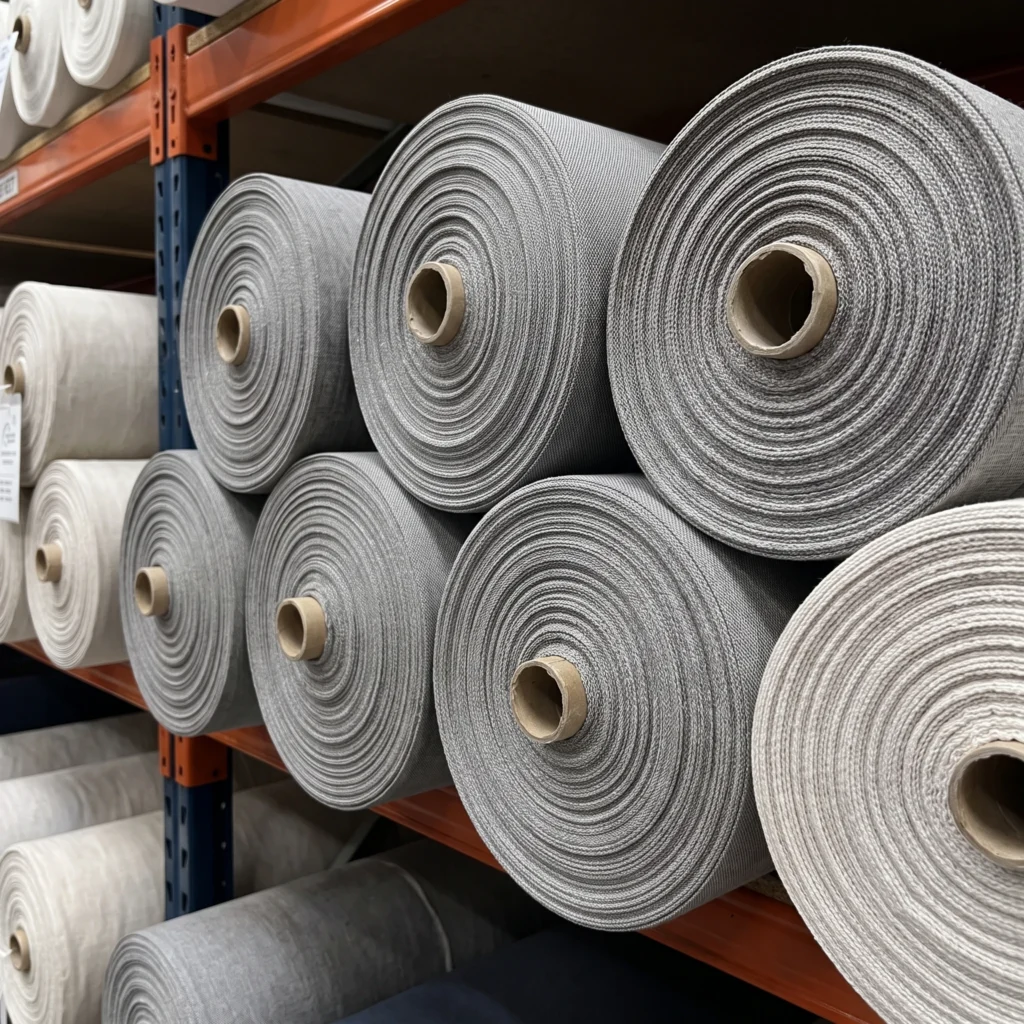
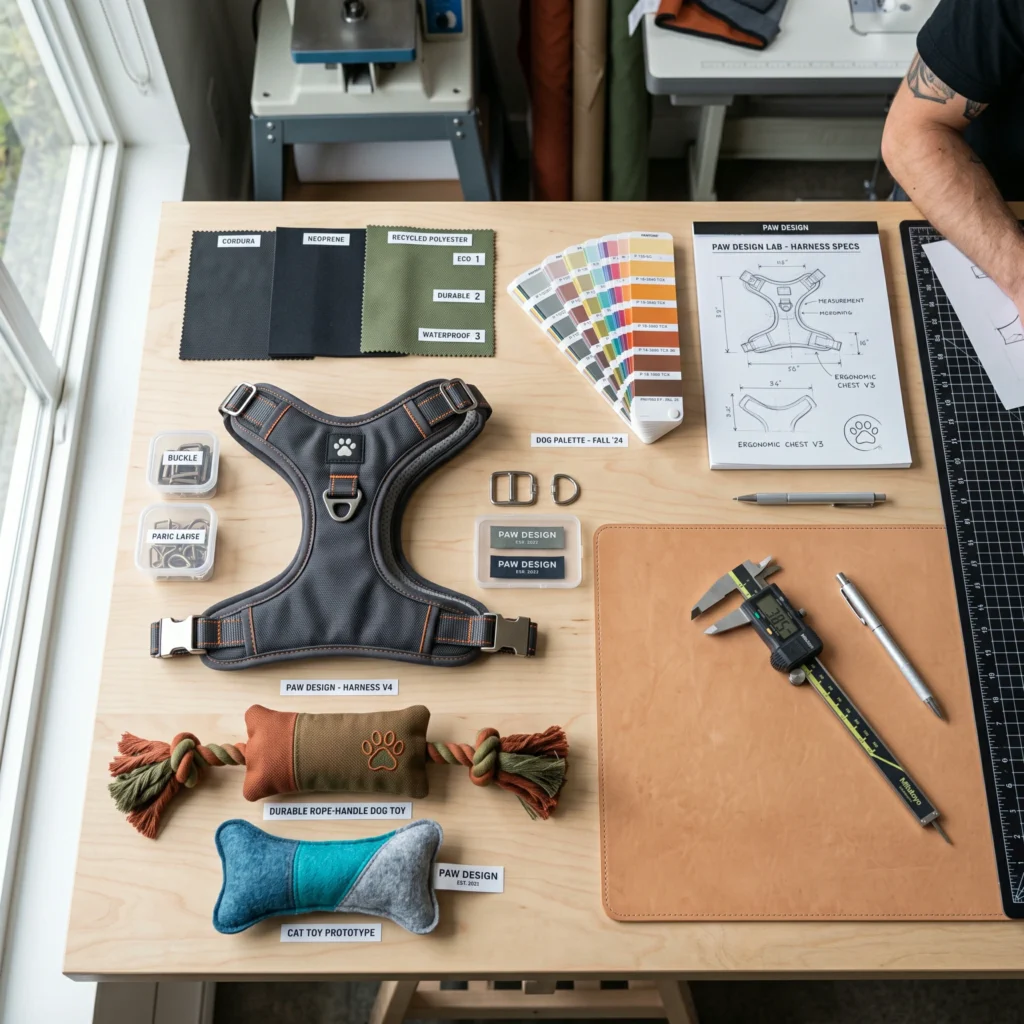
- 📐 Specify Exact PMS Codes: Never request “bright yellow.” Standardize requests using the Pantone Matching System (PMS) to ensure exact fabric swatch dyeing and consistency across production batches.
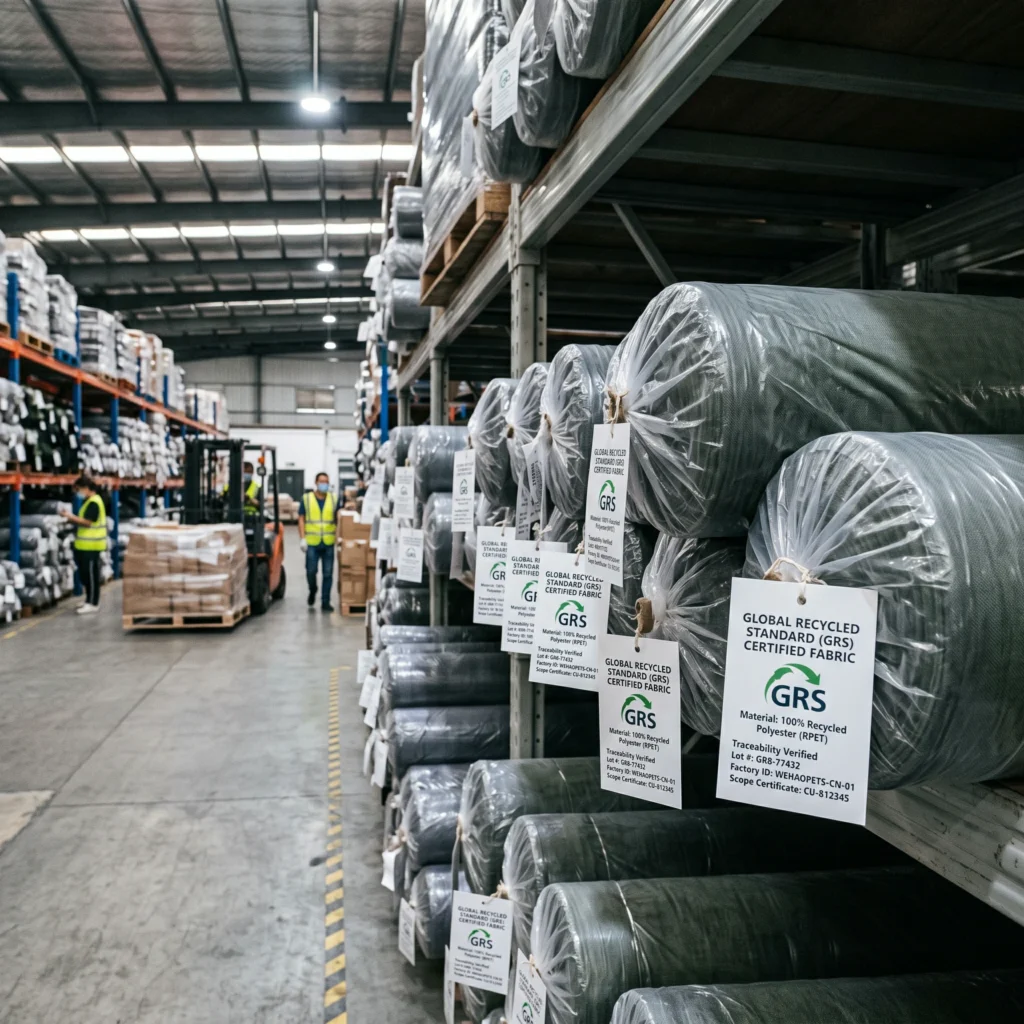
- 🔬 Require ISO 105 Colorfastness: High-visibility blues and yellows require rigorous ISO 105 colorfastness testing to prevent dye leaching during heavy salivation or mastication.
- 📐 Define Polymer Color Masterbatches: For TPR or rubber interactive toys, stipulate the exact injection molding color masterbatches required to achieve canine-visible contrast without compromising the structural integrity of the polymer.
Securing Market Share with Biological Sourcing
The intersection of veterinary optical science and industrial manufacturing is where true product differentiation occurs. According to studies published in the Journal of Veterinary Behavior, high-contrast blue and yellow environments drastically improve canine target acquisition speed. By applying these principles to our wholesale dog puzzle toys, we engineer products that naturally stimulate the animal, driving higher end-consumer satisfaction.
Brands seeking to overhaul their current catalog should leverage our extensive OEM/ODM customization services to audit their existing color palettes against canine visual parameters.
Send Us Your Tech Pack Today
Stop guessing on color viability. Send your conceptual sketches to our R&D team for a free technical review and color feasibility check to ensure your next product line actually functions for the animal using it. Contact Us for a Free R&D Review
Industrial Sourcing FAQs
What is the standard MOQ for dyeing custom Pantone colors on plush materials?
For custom Pantone fabric swatch dyeing engineered for canine high-visibility, our standard Minimum Order Quantity (MOQ) typically ranges from 1,000 to 3,000 units, depending on the specific textile density and the volume of dye required for the production run.
How does ISO 105 colorfastness testing affect the vibrancy of high-visibility blue and yellow toys?
Strict adherence to ISO 105 colorfastness standards ensures that high-saturation Pantone Blues and Yellows do not fade under UV exposure or leach toxins during chewing. While reaching Level 4-5 colorfastness can sometimes marginally mute neon tones, it guarantees compliance with global safety standards while maintaining enough contrast for canine visibility.
Can injection molding color masterbatches precisely match canine-visible Pantone shades for TPR toys?
Yes. Our injection molding process utilizes advanced color masterbatches that can be formulated to match specific Pantone targets within a 5% delta. This ensures that even highly durable, wholesale interactive dog toys maintain the precise blue and yellow wavelengths necessary for canine engagement.