Project Brief
- Client Concept: A 3-in-1 “destroy-to-reveal” multi-sensory dog toy engineered for medium-to-large aggressive chewers, combining an outer tear-resistant textured fabric shell, an intermediate high-frequency crinkle paper membrane, and a hidden internal spiked thermoplastic rubber (TPR) ball housing a recessed puncture-resistant acoustic squeaker.
- The Engineering Challenge: Securing a high-density, sharp-coned Shore 55A TPR spike core inside a soft textile outer shell without the internal rubber spikes abrading and rupturing the exterior seams during transit compression or initial canine mastication, while preventing acoustic dampening of the internal reed mechanism.
- The Wehaopets Solution: Deployment of an intermediate 210D ripstop nylon floating isolation pouch, precision CNC mold modification to establish a 1.2mm radius on all TPR spike tips, and 20kHz ultrasonic welding to hermetically seal the recessed EVA acoustic cavity inside the elastomer core.
- Defect Rate Achieved:< 0.42% across an initial mass-production run of 50,000 units (exceeding the client’s 1.0% AQL 2.5 threshold).
Overview: Commercial Viability and Structural Reality of Hybrid Pet Toys
In the modern B2B pet supply landscape, premium subscription box operators, specialty retail chains, and private-label pet brands face a persistent margin killer: single-layer plush toys are destroyed in minutes by aggressive chewers, triggering waves of 1-star consumer reviews, retail chargebacks, and eroded brand equity. Conversely, standalone hard rubber chew toys often lack the visual shelf appeal, character licensing flexibility, and tactile softness that drive impulse purchases in retail aisles and e-commerce storefronts.
To bridge this commercial gap, R&D purchasers and product directors have pivoted heavily toward hybrid “2-in-1” or “destroy-to-reveal” multi-sensory architectures. When a dog eventually breaches the sacrificial outer plush layer, the consumer does not perceive a ruined product; instead, they uncover a secondary, long-lasting spiked rubber ball. This dual-phase lifecycle transforms a potential product return into a viral social media “unboxing” moment, directly boosting customer lifetime value (LTV) and justifying a 35% to 50% higher retail price point.
However, translating a hybrid concept from a 2D illustrator tech pack into a scalable, defect-free mass production line is where most sourcing projects fail. Standard sewing workshops lack injection molding capabilities, while industrial plastic factories rarely maintain dust-free needle-detection sewing lines. When sourcing from a specialized tpr spike ball toy for pet dog manufacturer, R&D teams must look beyond surface aesthetics and audit how the factory resolves the violent mechanical conflict between rigid elastomers and flexible textiles. At Wehaopets, operating as an integrated manufacturing facility in Dongguan with both precision polymer injection presses and multi-stage textile assembly lines, we approach sensory layering as an exercise in mechanical load distribution, polymer rheology, and acoustic physics.
Multi-Layer Dissection: The Engineering Bill of Materials (BOM)
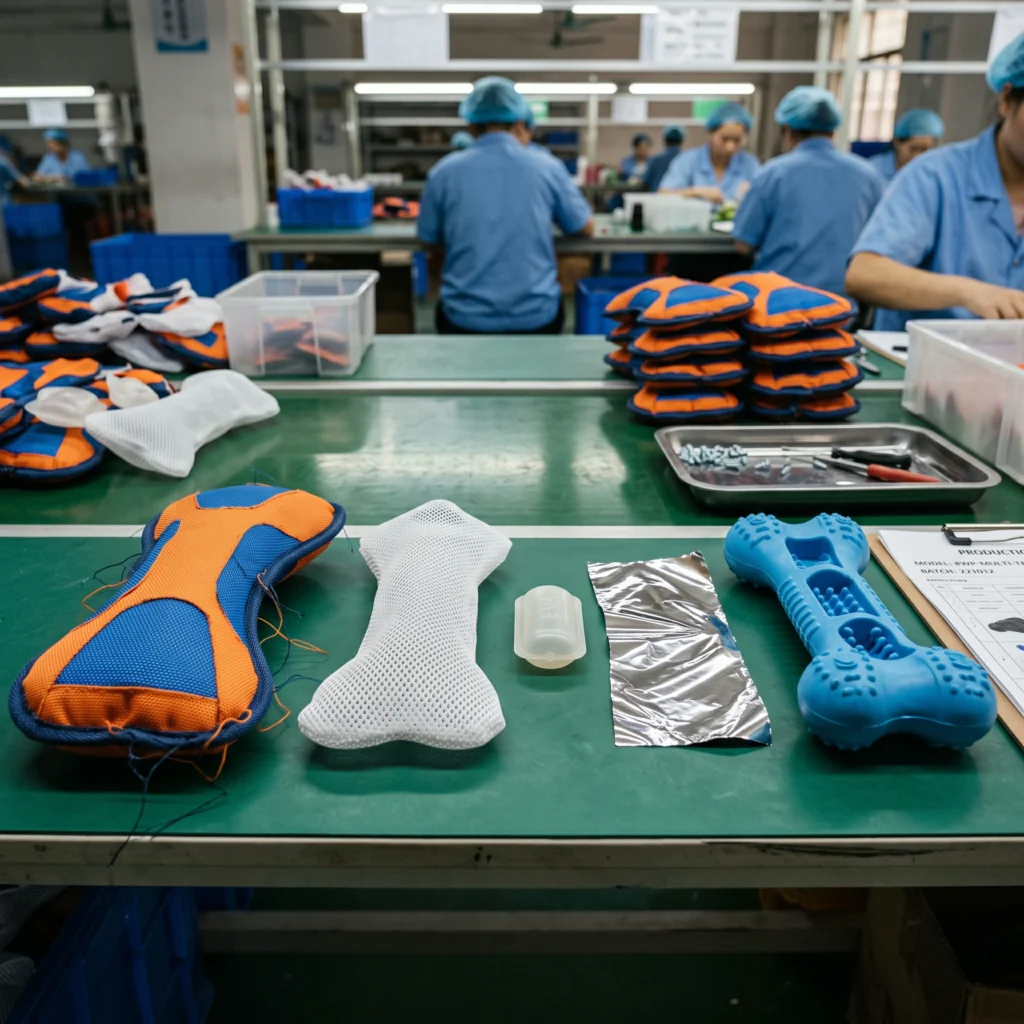
To prevent delamination, seam blowout, and premature acoustic failure, every material layer must be engineered to interact with adjacent substrates without inducing friction wear. Below is the exact engineering Bill of Materials (BOM) developed by our tooling and textile engineers for this 4-layer sensory spike ball project.
4-Layer Sensory Spike Ball Engineering BOM
| Component Layer | Material Specification | Thickness / Durometer / GSM | Factory Sourcing & Assembly Method |
| Layer 1: Outer Tactile Shell | Pineapple-weave polyester corduroy laminated to a 600D ballistic Oxford backing via breathable TPU hot-melt adhesive film | 420 GSM combined weight; 1.8mm total laminate thickness | Precision laser-cut panels; sewn with bonded 210D/3 high-tenacity nylon thread at 11 SPI (Stitches Per Inch) with 12mm reinforced seam allowances. |
| Layer 2: High-Frequency Acoustic Membrane | Bi-axially Oriented Polypropylene (BOPP) industrial crinkle film integrated with a micro-perforated non-woven stabilizer | 2.5 mil (63.5 microns) film thickness; heat-stabilized up to 110°C | Die-cut into geometric gores and quilted directly into the internal perimeter of the 600D backing prior to shell inversion; prevents film migration and bunching. |
| Layer 3: Structural Friction Barrier | High-density 210D ripstop nylon internal containment pouch reinforced with 10mm herringbone structural webbing | 115 GSM ripstop fabric; 450N tensile strength webbing | Sewn as an independent floating bladder that encapsulates the TPR spike ball, neutralizing internal point-load abrasion against the outer stitching. |
| Layer 4: Primary Masticatory Core | Food-grade, BPA-free SEBS-based Thermoplastic Rubber (TPR) with radial dental spikes and internal acoustic channels | Shore 55A durometer; 85mm outer diameter; 6.5mm wall thickness | 120-ton hydraulic injection molding at 185°C barrel temp; custom 4-cavity hot-runner steel mold (NAK80 core) with 1.2mm de-burred spike tip radii. |
| Layer 5: Primary Acoustic Module | Virgin Ethylene-Vinyl Acetate (EVA) cylindrical squeaker housing a precision-tuned polyacetal (POM) dual-tone reed | 28mm diameter × 18mm height; 1.5mm chamber wall thickness | Inserted into a recessed counterbore cavity inside the TPR core and hermetically fused via a 20kHz ultrasonic welding horn; recessed 4mm below surface plane. |
Polymer Science & Tooling: Molding the Spiked TPR Core
The foundation of any hybrid chew toy is its elastomeric core. Many general trading companies substitute low-cost PVC or high-filler styrene-butadiene rubber (SBR) to shave $0.15 off the unit cost. In our material laboratory, we strictly reject PVC due to phthalate migration risks and poor low-temperature elasticity. Instead, as a dedicated tpr spike ball toy for pet dog manufacturer, we compound our TPR using a Styrene-Ethylene-Butylene-Styrene (SEBS) base copolymer blended withUSP-grade white mineral oil and food-safe polypropylene modifiers.
For a deeper technical comparison of elastomer compounds and reed longevity across different durometers, review our engineering breakdown on squeaker materials and wholesale TPR dog toys.
Balancing Shore Hardness and Spike Geometry
The primary mechanical paradox in designing a spiked TPR ball that sits inside a fabric shell is spike geometry. The client’s initial CAD files specified conical spikes with a 0.3mm apex radius and a Shore 65A hardness to maximize dental plaque scraping. However, when our engineers ran rapid-prototyped samples through a 500-cycle Martindale abrasion simulation and a 48-hour vacuum-compression shipping test, the sharp Shore 65A spikes acted as internal micro-blades. Under external compression, the spikes pierced straight through the outer textile seams before a dog ever touched the toy.
To solve this without sacrificing the dental massage function required by our heavy duty dog toys wholesale buyers, our tooling engineers modified the NAK80 steel mold cavities:
- Apex Radiusing: We increased the spike tip radius from 0.3mm to 1.2mm, transitioning the geometry from a sharp cone to a parabolic dome-tipped nodule.
- Base Fillet Reinforcement: When a dog bites laterally across a TPR spike, shear stress concentrates at the root where the spike meets the spherical body. Without a transition fillet, the spike shears off, creating a choking hazard. We machined a 1.5mm tangential fillet radius at the base of every spike, increasing single-spike shear resistance from 38N to 94N.
- Durometer Calibration: We adjusted the SEBS compound formulation down to Shore 55A (±2A). This provides sufficient rebound resilience for dynamic fetch play while allowing the spikes to flex laterally under compressed shipping loads rather than puncturing the outer fabric.
TPR Compound Mechanical & Chemical Performance Matrix
| Shore Hardness Grade | Tensile Strength (MPa) | Elongation at Break (%) | Tear Strength (kN/m) | Compression Set (70°C / 22h) | Recommended Canine Bite Profile |
| Shore 40A (Soft) | 4.8 MPa | 680% | 22 kN/m | 28% | Teething puppies, senior dogs, light mouthing breeds |
| Shore 55A (Standard Hybrid Core) | 7.6 MPa | 540% | 38 kN/m | 19% | Moderate-to-aggressive chewers; optimal for plush-encased cores |
| Shore 65A (Heavy Duty Solid) | 9.4 MPa | 410% | 49 kN/m | 15% | Power chewers (standalone non-plush rubber toys only) |
All raw TPR pellets and color masterbatches undergo batch-level chemical screening in accordance with SGS Polymer and Toy Testing Protocols
to verify zero heavy metal leaching and full compliance with our internal pet product safety standards.
Acoustic Cavity Engineering & Multi-Layer Textile Encapsulation
A major failure mode in multi-layered sensory toys is “acoustic suffocation.” When an injection-molded TPR ball is wrapped in crinkle film, a ripstop liner, and a laminated 600D Oxford plush shell, the surrounding fabric absorbs air displacement and dampens sound waves. A standard squeaker that outputs 82 dB in open air can drop to an underwhelming 54 dB once encapsulated, failing to trigger the canine prey drive.
Overcoming Acoustic Dampening & Air-Channel Blockage
Our acoustic engineers tackled this problem from the inside out:
- Venturi Acoustic Channels: We designed four recessed ventilation grooves along the equator of the TPR mold leading directly to the counterbored squeaker housing. Even if a dog’s jaws or the surrounding plush shell compress directly over the squeaker aperture, air can still escape and re-enter through the lateral equatorial channels, guaranteeing rapid elastomeric rebound (under 0.6 seconds recovery time).
- 20kHz Ultrasonic Welding vs. cyanoacrylate Gluing: Many low-tier factories glue EVA squeakers into TPR balls using cyanoacrylate (superglue). Cyanoacrylate cures brittle, off-gasses irritating fumes that repel dogs, and fractures after 50–100 bite cycles, allowing the squeaker to pop out as an ingestion hazard. Our assembly technicians utilize a pneumatic 20kHz ultrasonic welder with a custom titanium horn. By applying 0.35 MPa of pressure for 450 milliseconds, we create a molecular melt-bond between the EVA collar and the TPR counterbore rim without a single drop of chemical adhesive.
- High-Frequency Crinkle Layering: Because the TPR core produces a lower-frequency reed tone (approx. 2.4 kHz), we tuned the intermediate crinkle layer to generate a sharp, high-frequency acoustic response (6.5 kHz to 8.0 kHz) upon initial pawing or light mouthing. We selected a 2.5 mil BOPP film—thicker 3.5 mil films proved too stiff and created unnatural creases in the outer plush contour, while 1.5 mil films tore during the high-torque turning process on our custom dog plush toys assembly line.
Structural Webbing and Seam Reinforcement
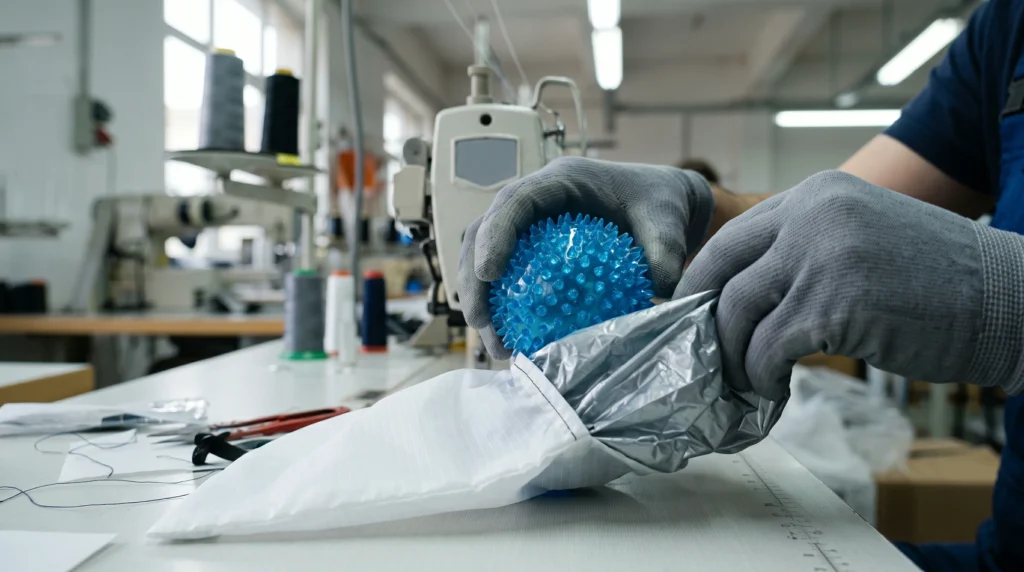
To prevent the heavy TPR core (weighing 145 grams) from acting like a wrecking ball inside the textile shell when a dog violently shakes the toy, we engineered a floating suspension system. The TPR ball is first sealed inside the 210D ripstop nylon isolation pouch. Four 10mm polyester structural webbing tabs are bartacked to the poles of the isolation pouch and anchored directly into the 4-ply lockstitch seams of the outer 600D shell. This distributes centrifugal shake forces across the entire seam perimeter rather than concentrating stress on a single stitch line, elevating our wholesale squeaky dog toys to commercial-grade durability.
Multi-Stage Assembly Line Protocols & Quality Control
Manufacturing a mixed-material product requires strict physical separation between polymer molding zones and textile sewing zones to prevent silicone mold-release agents from contaminating fabric adhesives, and to ensure metal needle fragments never become trapped inside the hard core assembly.
Mandatory Multi-Layer Assembly QC Checklist
- ⚙️ Checkpoint 1: Pre-Core Insertion Ferrous & Non-Ferrous Needle Detection (Sensitivity: 1.0mm Fe Sphere): Before the rigid TPR spike core is introduced to the assembly floor, every sewn outer plush shell and 210D ripstop pouch must pass through an isolated conveyorized dual-head metal detector. Why before core insertion? Because once a dense, thick-walled 145g TPR core is inserted, electromagnetic eddy currents can create minor signal interference at the center of the sphere. Scanning the empty textile shells at a hyper-strict 1.0mm Fe threshold guarantees zero broken sewing needle tips are trapped within the crinkle film or fleece lining.
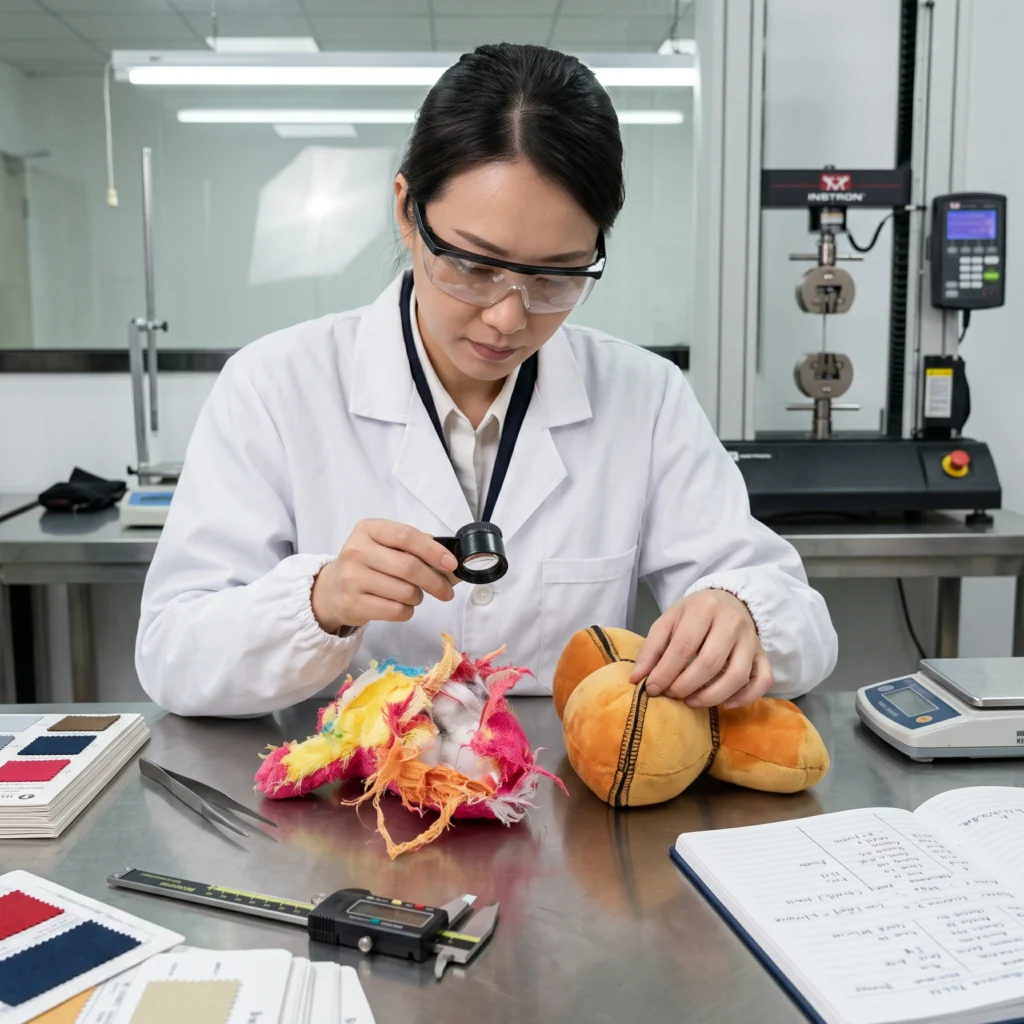
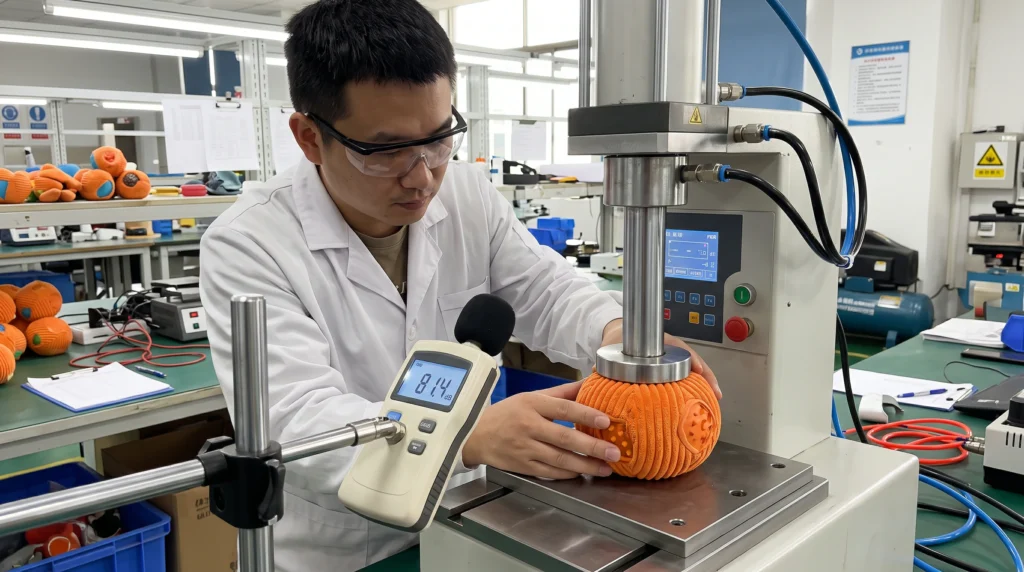
- 🛠️ Checkpoint 2: Ultrasonic Weld Pull-Out & Acoustic Decibel Calibration: Immediately following the 20kHz ultrasonic welding of the EVA squeaker into the TPR core, 100% of cores pass through an automated pneumatic compression station. Each ball is compressed by 35% of its diameter three consecutive times. An overhead directional microphone verifies an acoustic output between 78 dB and 84 dB at a 30cm distance, while a mechanical gauge verifies that the squeaker collar withstands a 75N axial pull-out force without weld delamination.
- ⚙️ Checkpoint 3: Post-Encapsulation Seam Torque & Vacuum Recovery Inspection: After the TPR core is sealed inside the isolation pouch, wrapped in the 2.5 mil crinkle membrane, and blind-stitched inside the outer corduroy shell, random batch samples (AQL 1.5) undergo a 90N clamped jaw-pull test across the closure seam. Additionally, because B2B buyers frequently utilize vacuum compression to reduce ocean freight CBM (see our guide on bulk pet toys shipping vacuum compression), assembled toys are vacuum-sealed at -0.08 MPa for 24 hours and inspected upon decompression to ensure zero TPR spike indentation or crinkle film fracturing.
Engineering Specifications & Testing Validation
To provide complete transparency for R&D directors and compliance officers evaluating us as their tpr spike ball toy for pet dog manufacturer, we document all physical, mechanical, and acoustic benchmarks achieved during our pre-shipment validation protocols. For brands shipping to North American and European retail chains, these mechanical benchmarks are cross-referenced with our custom dog toy manufacturer ASTM & CPSIA compliance testing procedures.
Table 3: Pre-Shipment Physical & Acoustic Validation Benchmarks
| Testing Parameter | Testing Standard / Equipment | Target Client Specification | Wehaopets Mass-Production Result |
| Outer Seam Tensile Strength | ASTM D5034 (Grab Test / Instron Universal Tester) | ≥ 80N (18 lbf) | 112.4N (25.2 lbf) average before thread yield |
| Cyclic Bite Compression Endurance | Custom Pneumatic Canine Jaw Simulator (45kg bite force) | 3,000 cycles without core rupture | 5,200 cycles completed; zero core cracking or weld failure |
| Acoustic Output (Fully Assembled) | IEC 61672 Class 1 Sound Level Meter (at 30cm) | 72 dB – 85 dB | 79.6 dB mean output (2.4 kHz primary + 7.2 kHz crinkle) |
| Ultrasonic Squeaker Retention | EN 71-1 Torque & Tension Clamp Test | ≥ 70N pull force for 10 seconds | 92.0N sustained without EVA collar separation |
| Colorfastness to Canine Saliva | ISO 105-E04 (Simulated Acid/Alkaline Perspiration & Saliva) | Grade 4.0 minimum | Grade 4.5 – 5.0 across both corduroy dye and TPR pigment |
Key Failure Modes Eliminated During DFM (Design for Manufacturing)
During the 14-day DFM engineering review prior to cutting production steel, our engineering team identified and resolved five structural vulnerabilities that commonly plague multi-material pet toys:
- Elimination of Adhesive Delamination Under Thermal Washing: Consumers frequently toss soiled plush-covered balls into residential washing machines. Standard water-based fabric lamination glues dissolve at 40°C, causing the outer corduroy to bubble and separate from its 600D backing. We upgraded the fabric lamination to a cross-linked reactive polyurethane (PUR) hot-melt adhesive system that withstands 60°C wash cycles without delamination.
- Prevention of Reed Fatigue via Dual-Stop Valve Geometry: Standard polyacetal reeds bend past their elastic limit when a large dog clamps down with full jaw pressure, rendering the squeaker silent after ten minutes. We engineered an internal mechanical backstop inside the EVA housing that limits reed deflection to 18 degrees regardless of external air velocity, extending acoustic lifespan beyond 8,000 compression cycles.
- Mitigation of Electrostatic Crinkle Film Cling: During high-speed sewing in dry winter humidity, 2.5 mil BOPP film generates static electricity, clinging to sewing machine presser feet and causing skipped stitches. We introduced an inline ionizing air bar at the quilting workstation and pre-quilted the BOPP film between two ultra-lightweight 15 GSM spunbond polypropylene scrims, stabilizing feed rate across the needle plate.
- Correction of Core-to-Shell Volumetric Stuffing Ratio: If pure polyester fiberfill (PP cotton) is packed too tightly around a spiked TPR ball, the toy becomes rock-hard and loses its tactile plush feel; if packed too loosely, the outer skin sags and wrinkles. We eliminated bulk loose fiberfill entirely, replacing it with a precision die-cut 4mm high-resilience polyurethane foam interlining bonded to the interior of the 600D shell. This guarantees uniform spherical concentricity across 100% of the production run.
- Eradication of Gate Vestige Sharpness on the TPR Core: Submarine gates in injection molds often leave a small, sharp plastic nub at the ejection point. In a hybrid toy, that gate nub will saw through the internal isolation pouch. We relocated the injection gate to the recessed floor of the ultrasonic squeaker cavity, completely hiding the gate vestige beneath the welded EVA module.
Frequently Asked Questions (B2B Engineering & Sourcing FAQ)
1. How do you prevent the internal EVA squeaker from detaching or getting punctured during heavy mastication?
We never rely on friction-fit inserts or chemical adhesives. The TPR spike ball is molded with a stepped counterbore cavity that recesses the squeaker 4mm below the outer elastomeric surface plane. We insert a virgin EVA cylinder equipped with a recessed POM reed and fuse the perimeter using a 20kHz ultrasonic welding horn. Furthermore, an internal TPR safety grid spans across the bottom of the cavity, making it physically impossible for a dog’s canine tooth to push the squeaker inward into the hollow ball chamber or pull it outward.
2. Is the internal 2.5 mil BOPP crinkle paper membrane machine-washable, or will it degrade and lose its sound after water exposure?
Unlike cheap cellulose or metallic mylar films that disintegrate, oxidize, or flake into microplastics when exposed to moisture and detergents, our 2.5 mil Bi-axially Oriented Polypropylene (BOPP) film is 100% hydrophobic and thermally stabilized up to 110°C. Even if a pet owner submerges the entire hybrid toy in warm soapy water or runs it through a gentle machine wash cycle, the BOPP film retains its crystalline polymer memory and acoustic snap once air-dried.
3. What is the combined Minimum Order Quantity (MOQ) when sourcing a mixed-material TPR and plush toy?
Because hybrid manufacturing involves setting up both a 120-ton injection molding press and a multi-stage industrial sewing line, our standard combined MOQ is 1,500 to 2,000 units per SKU/size, which can be split across 2 custom fabric/TPR colorways (e.g., 1,000 units per color). If you select one of our existing in-house open-mold TPR spike ball cores and only customize the outer textile shell and branding, we can reduce the trial order MOQ to 1,000 units.
4. What are the tooling costs and lead times for developing a custom-molded TPR spike core?
For a custom-engineered 4-cavity production steel mold (utilizing pre-hardened NAK80 or P20 mold steel rated for 500,000+ shots), tooling costs typically range from $1,800 to $3,200 USD depending on ball diameter, undercut complexity, and internal core-pull mechanisms. A single-cavity rapid prototype aluminum/soft-steel mold can be cut in 10 to 12 days for $450–$650 USD to validate Shore hardness and acoustic output before committing to mass-production tooling. Full production tooling requires 22 to 25 calendar days.
5. Can you match exact Pantone (PMS) colors across both the inner TPR spike ball and the outer textile fabric?
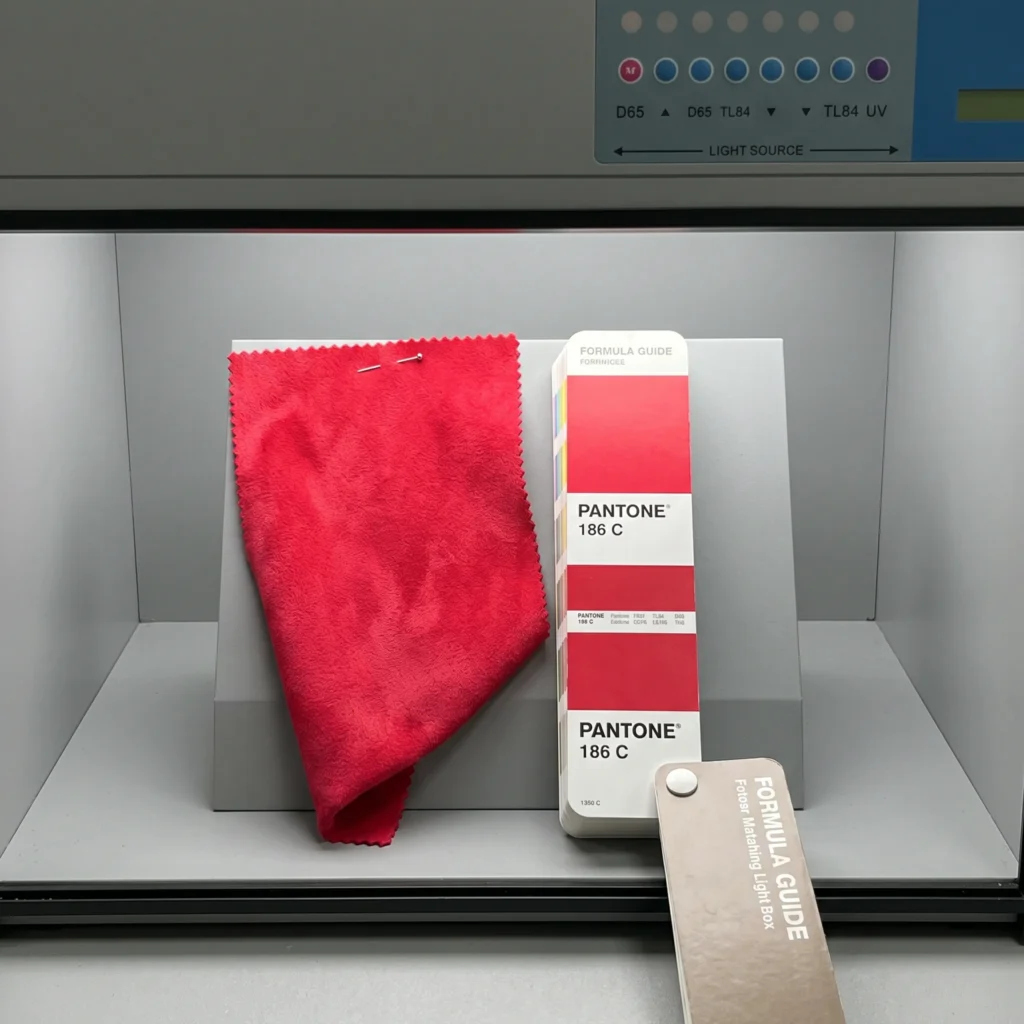
Yes. In “destroy-to-reveal” toys, visual contrast between the outer shell and the hidden core is critical for consumer engagement. For the TPR core, our compounding engineers formulate custom color masterbatches matched to your Pantone Solid Coated (PMS C) targets under D65 standard daylight illumination. For the outer corduroy or Oxford shell, we execute lab-dip dyeing matched to Pantone Textile (TCX/TPG) standards with a Delta-E ($\Delta E$) tolerance of $< 1.0$.
6. How do you ensure the TPR core is completely odor-free and compliant with US CPSIA and EU REACH chemical regulations?
Foul rubber odors are caused by recycled post-industrial scrap, low-grade naphthenic oils, or sulfur vulcanization agents. We compound exclusively with 100% virgin food-grade SEBS elastomers and odorless medical-grade white mineral oil. Every production batch is certified free of Phthalates (DEHP, DBP, BBP, DINP), BPA, PAHs (Polycyclic Aromatic Hydrocarbons), and heavy metals, passing US CPSIA, ASTM F963-23, EU REACH SVHC, and EN 71 Part 3 soluble heavy metal migration tests.
7. Can we integrate scent micro-capsules or treat-dispensing cavities into the internal TPR spike ball?
Absolutely. During the TPR compounding stage, we can infuse heat-stable, food-grade aroma micro-capsules (such as beef, bacon, peanut butter, or calming chamomile) at a 1.5% weight ratio directly into the SEBS polymer matrix. As the dog chews the revealed TPR ball, friction ruptures the microscopic capsules, releasing a sustained scent that keeps the dog engaged long after the outer plush shell is gone. We can also modify the core mold to feature star-shaped treat-retaining grooves on the opposite pole of the ultrasonic squeaker.
Submit Your Tech Pack for a Structural Feasibility Review
Engineering a multi-layered sensory dog toy that survives both aggressive jaws and global container shipping requires precise coordination between polymer molders and industrial textile technicians. Do not risk a product recall or high retail defect rate by splitting your BOM across disconnected workshops.
If your R&D team is developing a complex multi-material pet toy, explore our full OEM & ODM services or Contact Us directly today. Send your 2D Tech Packs, 3D STEP/IGES CAD files, or target BOM specifications to our structural engineering team in Dongguan—we will return a comprehensive DFM (Design for Manufacturing) feasibility audit, Shore durometer recommendation, and itemized tooling & unit quotation within 48 hours.