Overview
The global pet supply landscape is undergoing an irreversible structural transformation driven by pet humanization, heightened consumer expectations, and stringent international safety standards. B2B pet brands, large-scale distributors, and specialty retailers can no longer rely on commoditized, low-cost manufacturing without exposing themselves to catastrophic product liability risks, supply chain disruptions, and margin erosion.
Core Conclusion: Success in today’s pet supplies market requires shifting from generic contract purchasing to strategic, engineering-driven procurement. Sourcing partners must deliver verifiable chemical non-toxicity, robust mechanical resistance, and advanced functional designs—such as anxiety-calming mechanisms, sensory stimulation, and ergonomic load-distribution hardware.
Strategic Implications:
- Importers and private labels must audit suppliers against ASTM F963, EN 71, and CPSIA toy safety benchmarks rather than accepting self-declared certificates.
- Freight optimization through precision bulk packaging (such as high-ratio vacuum packaging) directly protects operating margins against volatile international container shipping costs.
- Diversifying standard product lines into high-growth sub-niches—specifically therapeutic enrichment beds, functional training harnesses, and interactive mental stimulation toys—delivers significantly higher customer lifetime value (LTV) and retail price defense.
Shifting Paradigms in Pet Humanization and Consumer Behavior
The commercial pet sector has separated itself from general consumer goods by exhibiting steady counter-cyclical growth. Modern pet parents demand premiumization across every purchase category, mirroring premium human wellness, infant toy safety, and lifestyle fashion.
Pet Sourcing Evolution:
Commodity Sourcing (Price Driven) ➔ Certified Compliance (ASTM/CPSIA) ➔ Functional & High-Margin Niches
Pet owners increasingly inspect seam stitching, scrutinize synthetic dyes, and evaluate behavioral ergonomics before purchasing. This consumer awareness shifts operational risk up the supply chain directly to brand owners and procurement directors. Retailers and B2B brands that fail to upgrade material specifications experience escalating return rates, negative digital reviews, and costly retail buybacks. Strategic differentiation relies on partnering with experienced OEM/ODM services equipped to customize products from technical sketch to certified bulk container load.
Rigorous Quality Engineering & Global Pet Product Safety Standards
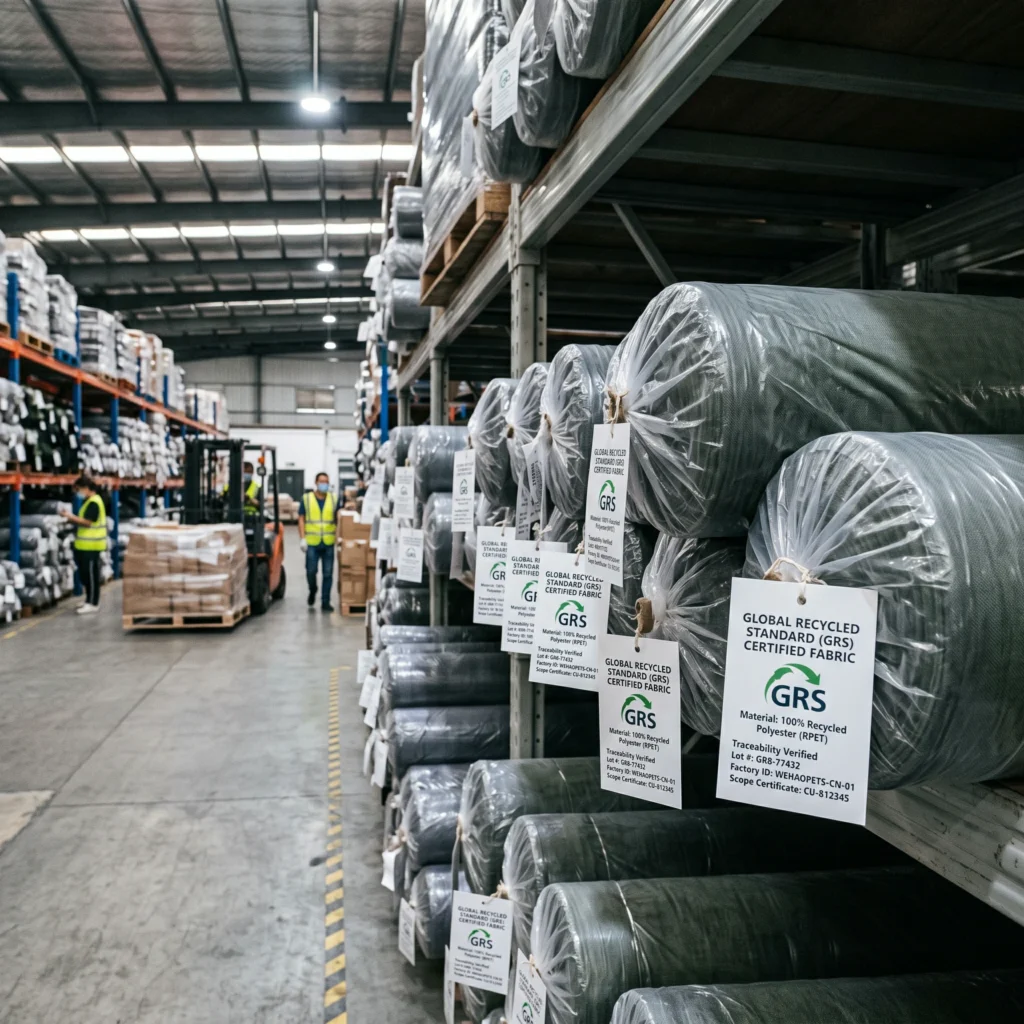
Unlike children’s toys, pet toys and everyday accessories face inconsistent global oversight. Regulatory agencies across North America and the European Union increasingly apply cross-category consumer protection statutes to pet products. Brands must align their supply base with international safety benchmarks to prevent costly border holds and recalls.
       ┌────────────────────────────────────────────────────────┐
       │   International Pet Safety Quality Engineering         │
       └───────────────────────────┬────────────────────────────┘
                                   │
         ┌─────────────────────────┴─────────────────────────┐
         ▼                                                   ▼
┌─────────────────────────────────┐       ┌─────────────────────────────────┐
│       Mechanical Safety         │       │        Chemical Safety          │
│ • Seam burst tests (>120 N)     │       │ • Lead & Phthalate compliance   │
│ • Internal squeaker cages       │       │ • Zero BPA, Non-toxic dyes      │
│ • Tensile hardware validation   │       │ • Formaldehyde-free adhesives   │
└─────────────────────────────────┘       └─────────────────────────────────┘
Navigating International Regulatory Frameworks
When vetting factories, relying on unverified vendor claims introduces severe brand liability. Compliance requires strict alignment with established standards detailed in the pet product safety standards manual:
- ASTM F963 & CPSIA (United States): Although originally formulated for infant products, third-party compliance with custom dog toy manufacturer ASTM/CPSIA standards certifies that plush fabrics, vinyl compounds, and internal noisemakers contain no regulated heavy metals, banned phthalates, or toxic volatile organic compounds.
- EN 71 Parts 1, 2, and 3 (European Union): Essential for checking mechanical integrity, flammability thresholds, and specific toxic element migration limits across all soft toys and feeding accessories.
- REACH Compliance: Ensures that synthetic coatings, hardware platings, and artificial leather bindings are free from Substances of Very High Concern (SVHC).
- Prop 65 (California): Mandates zero detectable lead, cadmium, and reproductive toxicants in surface paints, hardware treatments, and rubber chewing components.
Chemical and Mechanical Sourcing Risks
The table below highlights critical failure modes during manufacturing along with professional prevention protocols:
| Hazard Category | Component At Risk | Chemical/Mechanical Risk Factor | Sourcing Mitigation Protocol |
| Toxic Plasticizers | PVC leashes, vinyl balls, plush coatings | Phthalate migration (DEHP, DBP, BBP) causing endocrine disruption | Mandate virgin TPU or food-grade silicone; specify certified waterproof PVC vs TPU collars. |
| Choking Foreign Bodies | Squeakers, plastic eyes, internal rattles | Fragmented internal noisemakers puncturing intestines | Enclose squeakers in protective TPR barriers or heavy poly-mesh casing; utilize embroidered facial details. |
| Heavy Metal Leaching | Metal snap hooks, D-rings, zinc zippers | Lead, nickel, and cadmium release from cheap electroplating | Require salt-spray testing (>48 hrs) and acid digestion testing on all load-bearing zinc-alloy buckles. |
| Structural Seam Failure | Plush toys, dog bed outer walls, orthopedic liners | Low-tensile threading resulting in fiberfill ingestion and impaction | Implement double-folded interlocking seams, bar-tacking on stress points, and heavy-duty nylon thread. |
Category Intelligence: Product Engineering, Material Matrix, and Margin Analysis
Profitable inventory planning requires selecting categories with strong customer demand, reliable wholesale margins, and proven durability.
Key Sourcing Verticals:
1. Behavioral & Calming Solutions  ──► High LTV, Premium Retail Margins
2. High-Durability Toys           ──► Low Return Rates, Verified Materials
3. Tactical Restraint & Harnesses ──► Engineering Focus, High Liability Defense
1. Calming & Behavioral Wellness Niches
Modern pet owners actively spend on behavioral wellness tools to soothe separation anxiety and hyperactivity.
- Sensory Soothing Beds: High-pile pet beds, such as the wholesale shag faux fur donut calming pet bed and the corduroy plush donut dog bed, replicate maternal fur textures. These units require premium PP cotton fill that maintains resiliency after long-term shipping compression.
- Therapeutic Anxiety Toys: Devices integrating tactile warmth or mechanical heartbeats provide significant retail margins. Core examples include the heartbeat soothing lamb anxiety relief toy, the wholesale heartbeat warming calming pet toy, and the microwaveable calming soothing sheep.
- Scent & Enrichment Relievers: Natural herbs offer proven behavioral therapy. For canines, explore the warming soothing lavender bone dog toy. For felines, products like wholesale catnip toys and the shaggy hedgehog plush catnip toy drive reliable repeat orders.
2. High-Durability Chews, Noisemakers, and Interactive Toys
Standard plush items tear quickly against aggressive chewers, leading to high return rates. B2B buyers should specify reinforced textiles and specialized squeaker compounds:
- Engineered Internal Squeakers: Traditional poly squeakers puncture instantly. Upgrading to vulcanized materials, as documented in our guide on squeaker materials and wholesale TPR dog toys, ensures noisemakers survive repetitive crushing.
- Textured and Ribbed Textiles: Corduroy ridges and nubbed polyester create mechanical friction that resists chewing forces. Top performers in our custom dog plush toys line include the grey corn kernel plush elephant dog toy, the corduroy dinosaur dog squeaky chew toy, and the textured plush duck dog squeaky toy.
- Double-Layer Backing: Backing exterior fleece with durable ripstop mesh stops surface tears from splitting open the toy. Browse our catalog of wholesale squeaky dog toys and reinforced heavy duty dog toys wholesale.
- Mental Enrichment & Scent Work: Scent-dispensing puzzles engage dogs mentally to reduce destructive behaviors. High-volume selections include the interactive dog snuffle mat puzzle toy, the carrot patch dog snuffle puzzle toy, and the dog puzzle toys wholesale collection.
3. Feline Enrichment, Play Stimulators, and Safe Collars
The feline accessories market is expanding rapidly beyond basic scratching posts into interactive predatory play accessories and certified safety collars:
- Predatory Kicker Toys: Ergonomically designed toys that cats can hold and kick with back paws, such as the chevron plush fish catnip toy and the shaggy plush catnip kicker toy.
- Sensory Plush Mimics: Plush items featuring real feathers and lifelike shapes stimulate feline hunting drives. Recommended items from the custom cat plush toys inventory include realistic bird plush cat toys with feathers, the vibrant parrot plush cat toy, and the realistic clownfish plush cat toy.
- Breakaway Safety Hardware: Feline neckwear must feature rapid-release breakaway buckles (releasing under 2.5–4.0 kg tension) to protect outdoor and climbing cats. Review our options for wholesale breakaway cat collars, the olive green polka dot cat collar, and wholesale elegant bow tie cat collars.
4. Technical Restraints, Walk Accessories, and Ergonomic Hardware
Walk accessories represent a mission-critical safety category where hardware failures directly threaten pet well-being:
- No-Pull Load Dispersal: Distributes pull force across chest muscle tissue instead of the trachea. Leading production items in our custom dog collars and harnesses program include the wholesale orange padded no-pull dog harness and the wholesale no-pull reflective mesh dog harness.
- Tactical Control Construction: Military-grade 1050D nylon, heavy zinc alloy clasps, and reinforced grab-handles protect working and large breeds. High-performing inventory items include the wholesale heavy duty tactical no-pull dog harness and the matching tactical dog collar with metal buckle handle.
- Low-Light Visibility: Integrating 3M reflective threading into nylon webbings preserves night visibility. Sourcing models include the wholesale ultra reflective high visibility dog harness and the blue padded reflective dog collar.
- Impact-Absorbing Leashes: High-tensile bungee leashes reduce jerk shock for both pets and handlers. Examine our shock absorbing bungee dog leash alongside our heavy duty dog leash wholesale series.
Restraint Hardware Tensile Architecture:
[1050D Technical Nylon] ──► [Bar-Tack Cross-Stitching] ──► [Die-Cast Zinc D-Ring (>200kg Load)]
The table below contrasts technical metrics, ideal target applications, and production margin profiles across primary inventory categories:
| Sourcing Category | Core Material Matrix | Tensile / Burst Standard | Target Niche & Channel | Margin Potential |
| Tactical Dog Harnesses | 1050D Oxford Nylon, Neoprene lining, Zinc alloy hardware | Seam retention >150 kg; D-ring pull strength >250 kg | Working breeds, active outdoor owners, specialized pet boutiques | High (60%–75% Retail Gross) |
| Ergonomic Calming Beds | PV High-pile plush (40mm), 7D virgin siliconized PP fiber | Seam burst resistance >120 N; anti-slip base | Senior canines, rescue dogs, separation anxiety relief | High (55%–70% Retail Gross) |
| Reinforced Plush Chewers | Textured corduroy, composite Oxford mesh, TPR squeaker | Tear strength >180 N; non-toxic mastication safety | Power chewers, everyday indoor play, subscription boxes | Moderate (50%–60% Retail Gross) |
| Breakaway Cat Collars | Sublimated polyester, quick-release POM plastic clip | Buckle separation at 2.5 kg to 4.0 kg | Indoor/outdoor cats, impulse retail checkout fixtures | Exceptional (70%–80% Retail Gross) |
Strategic Sourcing Workflows and Supply Chain Optimization
Managing overseas manufacturing requires clear quality checkpoints to protect lead times and unit margins.
       Procurement Timeline & Milestone Gating:

Step 1: Technical Pack & 2D/3D Mechanical CAD Drawings
         │
Step 2: Golden Master Prototype Review & Material Lab Testing
         │
Step 3: Mid-Production (DUPRO) Inline Inspection (20%-30% complete)
         │
Step 4: Pre-Shipment (PSI) Inspection to AQL 2.5 / 4.0
         │
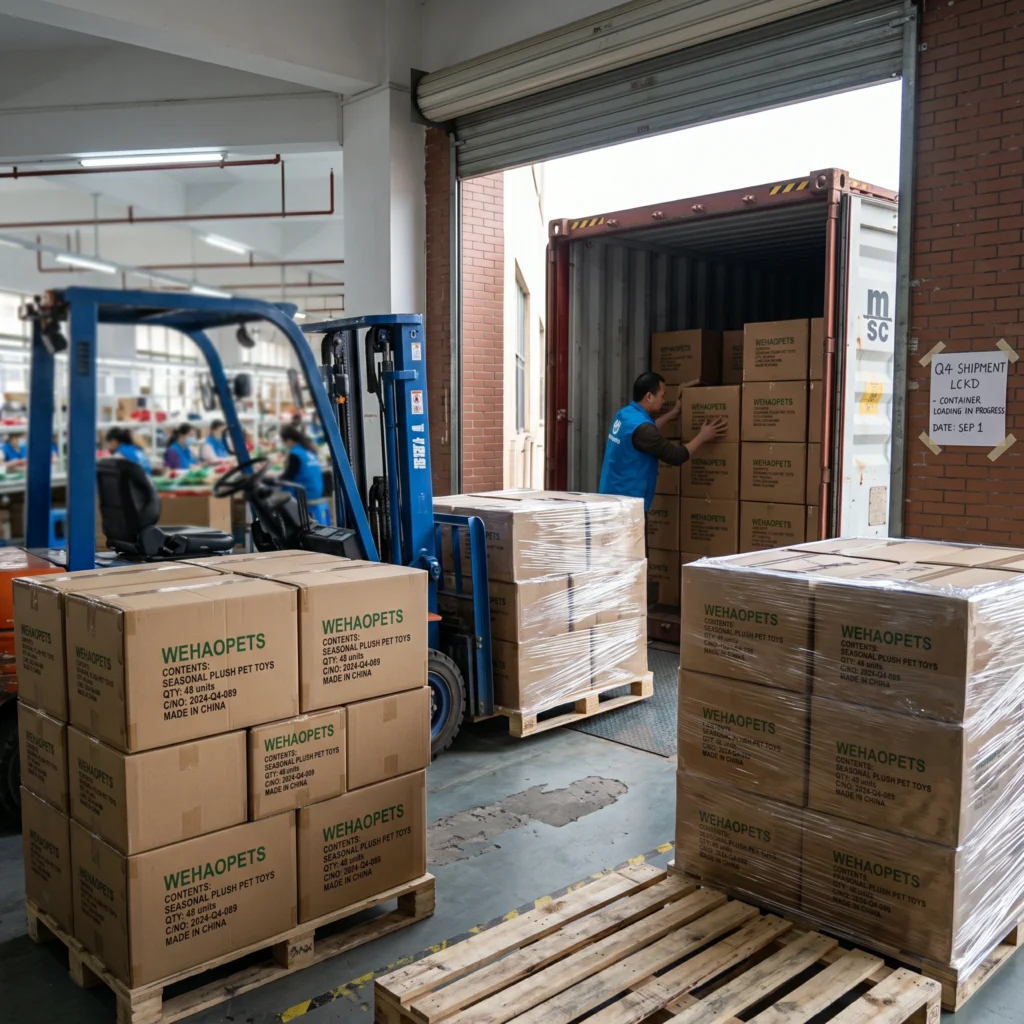
Step 5: High-Ratio Vacuum Sealing & Palletized Export Consolidation
Essential Sourcing Execution Checklist
To maintain supply chain stability, buyers must establish strict production gates across the sourcing cycle:
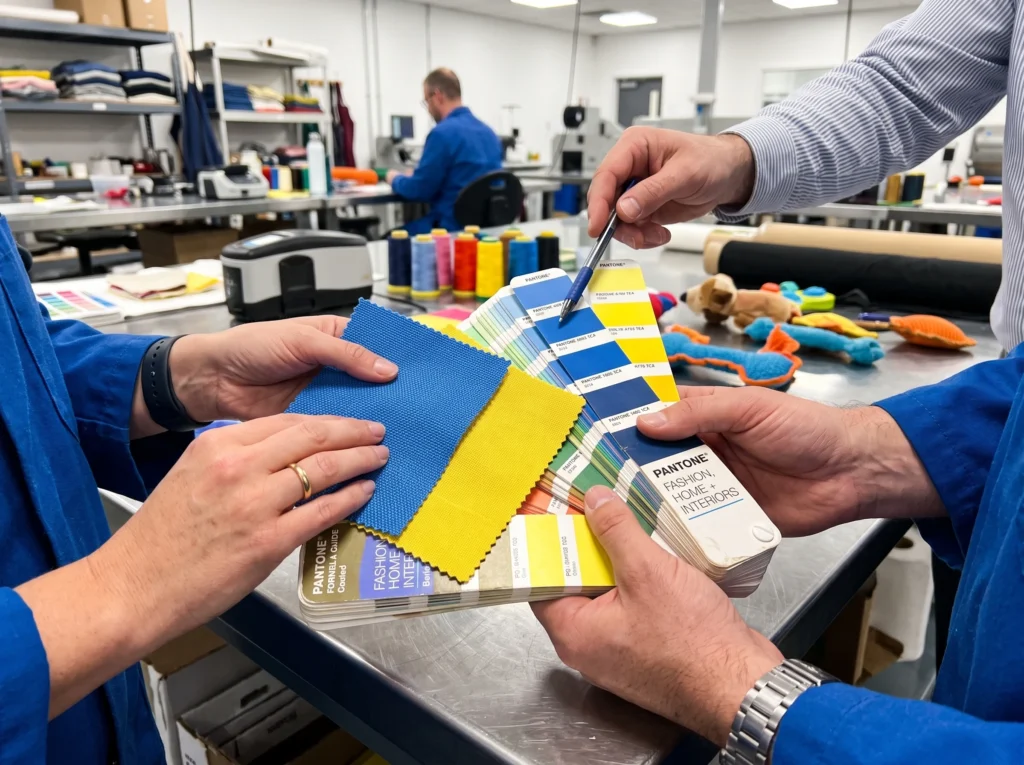
- Detailed Tech Packs: Define exact fiber densities (e.g., 300g/m² fleece), PMS thread color codes, hardware compositions, and bar-tack dimensions before sampling.
- Golden Master Sign-off: Keep two counter-signed factory prototypes. One stays on-site at the assembly line; the second remains with the importer’s inspection team.
- Mid-Production Audits (DUPRO): Check raw materials, internal squeaker integration, and initial seam stitching once 20% to 30% of bulk goods are finished.
- Final Random Inspection (FRI / AQL 2.5): Run mechanical drop tests, seam-pull assessments, and packing evaluations before signing bills of lading.
- Direct Manufacturer Relations: Working directly with experienced OEM specialists through our about us page removes trading company markups and preserves engineering transparency.
Optimizing Container Freight with Vacuum Packaging
Pet beds, plush toys, and soft accessories carry high cubic volume relative to their weight. In ocean freight, shipping uncompressed goods means paying primarily to transport trapped air.
By applying heavy-gauge industrial vacuum packaging—as detailed in our technical study on bulk pet toys shipping vacuum compression—procurement teams can compress plush products and high-loft beds by 60% to 75%.
| Packaging Method | CBM per 1,000 Donut Beds | 40ft High Cube Container Capacity | Freight Cost per Unit (Estimated) | Landed Margin Improvement |
| Standard Polybag Packaging | 45.0 CBM | ~1,500 units | High baseline freight cost | Baseline margin |
| High-Ratio Vacuum Packaging | 12.5 CBM | ~5,400 units | Decreases by up to 68% | +14% to 18% Net Gross Margin |
This packaging strategy significantly cuts landed costs per piece, helping direct-to-consumer and wholesale brands maintain competitive pricing while shielding profits against global shipping fluctuations.
Engineering Brand Differentiation via Strategic OEM/ODM Partnerships
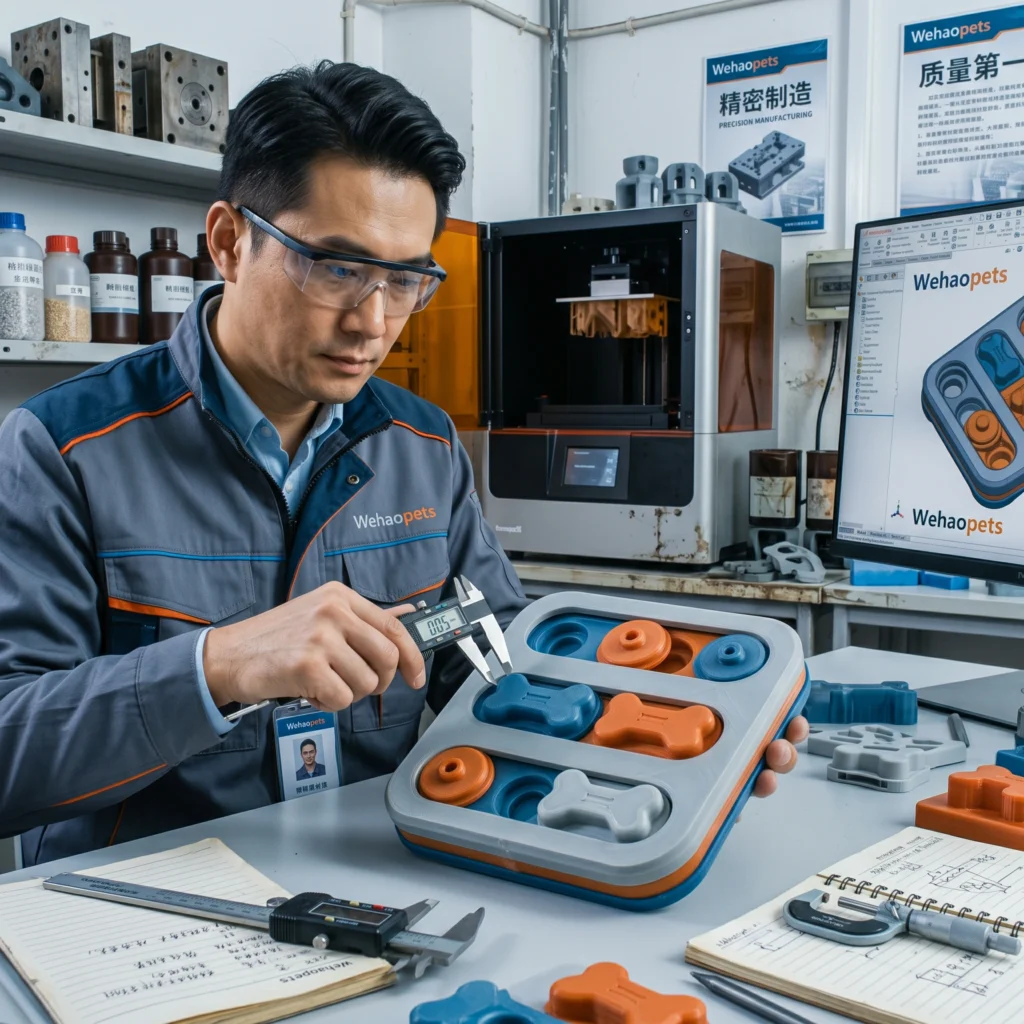
Winning market share in a competitive pet landscape requires delivering differentiated, defensible product value. Whether you are scaling an established private label or launching a specialized product line, our factory provides comprehensive engineering, prototyping, and volume production support.
Review our full product lineup across the Wehao pets master catalog, check our general wholesale product FAQ for standard order minimums, or connect directly with our production engineers via our contact us portal to begin your custom sample development.
Frequently Asked Questions
What are the standard Minimum Order Quantities (MOQ) for custom OEM pet toy manufacturing?
Standard production minimums for custom-molded plastic or rubber toys typically start at 1,000 to 2,000 units per mold to offset machine tooling setup costs. For custom plush dog and cat toys, MOQs generally start around 500 to 1,000 pieces per design, depending on custom fabric dyeing requirements and decorative embroidery details.
How do you prevent internal squeakers from becoming choking hazards during play?
Reliable production requires encasing the internal squeaker inside a reinforced secondary shell—such as vulcanized thermoplastic rubber (TPR) or a dense ballistic nylon pocket—before inserting it into the polyester fiberfill. This prevents aggressive chewers from immediately piercing or swallowing the noisemaker if the outer seam tears.
What quality certifications are required to import pet accessories into the United States and the European Union?
While pet toys lack a single dedicated regulatory framework, international buyers commonly require compliance with ASTM F963 (flammability, mechanical durability, and heavy metals) and CPSIA standards for the US market. For Europe, goods must meet EN 71 Parts 1–3 and REACH standards to verify that all textiles, leathers, and dyes are completely non-toxic.
How does industrial vacuum packing affect the recovery loft of high-pile dog beds?
Proper industrial vacuum compression removes air without crushing synthetic fibers, provided the manufacturer uses virgin, three-dimensional siliconized polyester batting. Once opened by the retailer or consumer, the bed naturally recovers 90% of its volume within 15 minutes, returning to full fluffiness within 24 to 48 hours without clumping.
Why are breakaway buckles mandatory for custom cat collar manufacturing?
Cats regularly jump, climb, and crawl through narrow spaces where traditional rigid dog buckles can catch and cause strangulation. Breakaway safety buckles are engineered to release automatically under 2.5 kg to 4.0 kg of sudden pulling force, allowing the cat to free itself safely if snagged.
What is the advantage of using TPU over standard PVC for waterproof dog collars?
Thermoplastic Polyurethane (TPU) remains flexible in sub-zero winter temperatures, offers superior abrasion resistance, and contains zero harmful phthalates or migrating chemical plasticizers. Standard PVC often stiffens and cracks in freezing conditions, emits strong chemical odors, and poses higher environmental and skin irritation risks.
Can custom branding, silicone labeling, and bespoke packaging be integrated at lower production tiers?
Yes. Custom woven brand tags, heat-transfer silicone brand labels, customized product backer cards, and retail display packaging can be integrated directly during bulk production runs. Incorporating custom packaging during initial assembly lines is far more cost-effective than handling secondary repackaging in domestic distribution warehouses.